

Divorce doesn’t have to mean expensive court battles and years of conflict. What is the purpose of mediation in divorce? It offers couples a path to resolve their differences peacefully while maintaining control over their future.
We at Mediation First NJ LLC help families navigate this process with dignity and respect. Mediation transforms what could be a destructive legal fight into a collaborative solution that works for everyone involved.
How Does Divorce Mediation Actually Work
The Mediation Process Step by Step
Divorce mediation operates as a structured conversation where both spouses meet with a trained neutral professional to resolve their differences outside court. The process typically requires 2 to 6 sessions over a few weeks or months, with couples who complete their agreements in 2-3 months compared to 12-18 months for traditional litigation. Each session addresses specific issues like property division, child custody, and support arrangements. Both parties present their perspectives while the mediator helps identify common ground and practical solutions that work for the entire family.
Your Mediator Acts as a Neutral Guide
The mediator never takes sides or makes decisions for you. Instead, they manage the conversation flow, help clarify issues, and suggest creative solutions you might not have considered. Mediation provides couples with effective tools to reach agreements, with participants who report significantly higher satisfaction rates than those who went through court battles. Your mediator keeps discussions focused on problem-solving rather than past grievances (which reduces emotional conflict and speeds up resolution).
Mediation Gives You Complete Control
Traditional litigation hands your family’s future to a judge who knows nothing about your unique circumstances. Mediation lets you craft personalized agreements that reflect your family’s specific needs and values. You schedule sessions at your convenience, discuss issues privately without public records, and can pause the process if needed. Parents who mediate often maintain better post-divorce relationships than those who litigate (this proves that collaborative approaches produce better long-term outcomes for families).
What Makes Mediation Sessions Effective
Successful mediation sessions follow a clear structure that keeps conversations productive. The mediator opens each session with an agenda, reviews previous agreements, and addresses new concerns that arise. Both spouses participate equally in discussions while the mediator maintains neutrality and prevents conversations from becoming arguments. This structured approach helps couples stay focused on solutions rather than blame, which creates momentum toward final agreements.

The benefits of this collaborative approach extend far beyond the immediate resolution of divorce issues.
Why Mediation Saves Money and Time
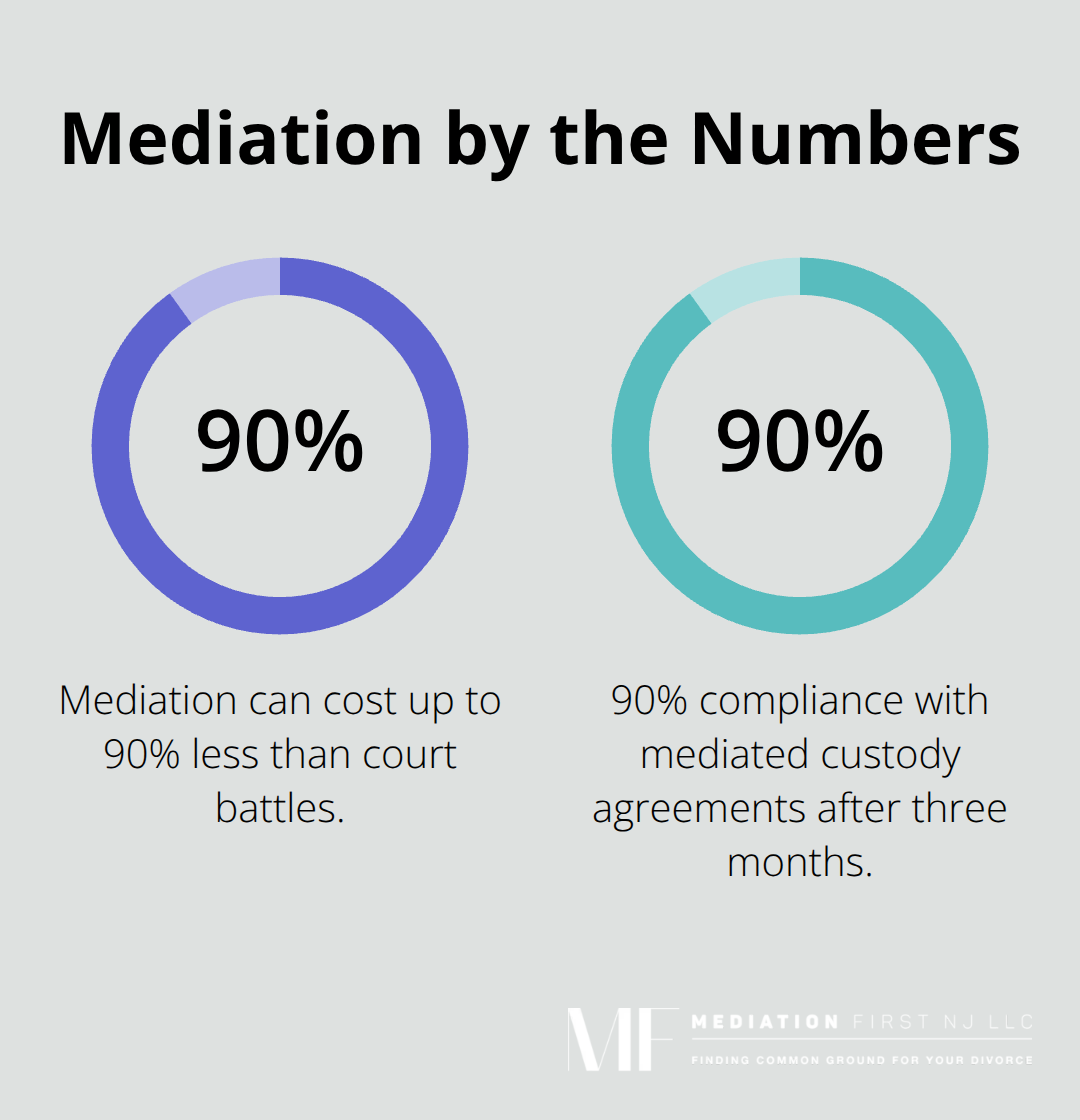
Mediation Costs 90% Less Than Court Battles
Traditional divorce litigation averages $11,300 per spouse according to recent data, while mediation typically costs $6,000 to $10,000 total for both parties. Court cases drain savings through attorney fees that range from $250 to $500 per hour, plus court fees, expert witness costs, and document preparation expenses. Mediation sessions cost $150 to $300 per hour split between both spouses, with most couples who complete their agreements in 10 to 15 hours total. The American Bar Association reports that mediation can reduce the cost of divorce by 50-70% compared to litigation, which helps couples avoid the astronomical costs of trial preparation and courtroom proceedings.
Complete Your Divorce in 3 Months Instead of 18
Litigation forces couples to wait for court availability, which creates delays of 12 to 18 months for contested divorces. Mediation operates on your schedule with sessions booked within days or weeks of your initial contact. Research shows that mediated divorces can reach agreements faster than litigated cases because couples address issues directly rather than through attorney intermediaries. Court calendars stay backlogged for months while mediation appointments happen at your convenience (even on evenings and weekends). This speed prevents the emotional exhaustion that builds during prolonged legal battles and allows families to move forward with their lives quickly.
Mediation Eliminates the Adversarial Stress of Court
Courtroom proceedings create winner-loser dynamics that destroy communication between spouses and harm children caught in the middle. The Journal of Consulting and Clinical Psychology shows that parents who mediate maintain 3 times more involvement in their children’s lives post-divorce compared to those who litigate. Mediation sessions happen in private conference rooms where both spouses speak directly about their concerns without cross-examination or hostile questions. This collaborative environment reduces anxiety levels and preserves dignity during an already difficult transition (which creates better outcomes for everyone involved).
These financial and emotional advantages make mediation particularly effective for resolving the specific issues that matter most to your family’s future.
What Specific Issues Can Mediation Resolve
Property and Financial Matters Get Settled Efficiently
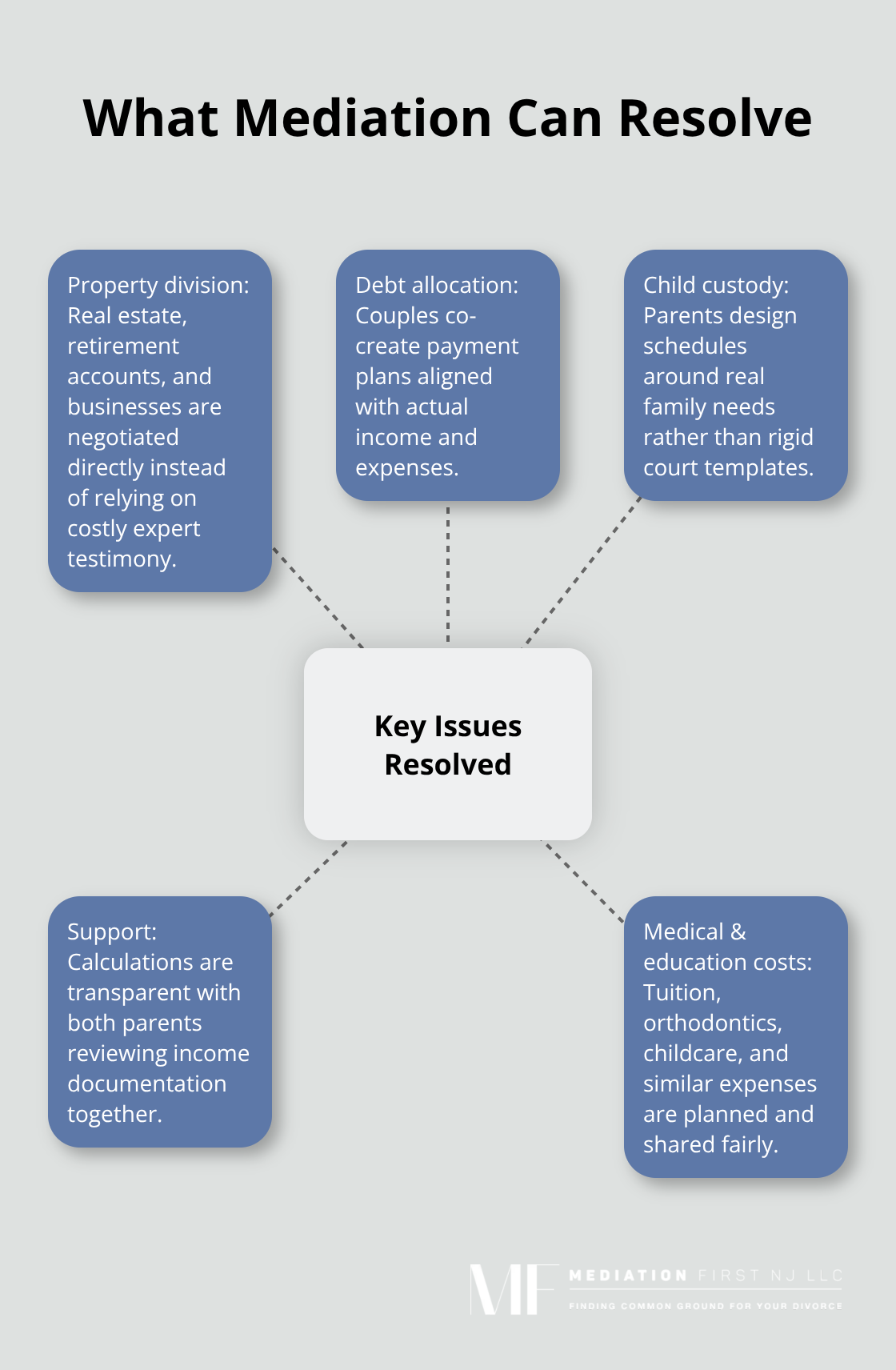
Mediation handles complex property division with precision that courts often lack. Real estate appraisals, retirement account divisions, and business valuations receive attention through direct negotiation rather than expensive expert testimony. Each party would have to hire their lawyers for the litigation process, which will undoubtedly add significant time and cost to your case. Debt allocation becomes straightforward when both spouses participate in payment plan creation that reflects their actual income and expenses. Stock options, pension benefits, and inheritance issues find resolution through creative solutions that judges rarely consider in standard court orders.
Child Custody Arrangements Work Better Through Collaboration
Mediation produces custody agreements that actually work for children because parents design schedules around their family’s real needs rather than rigid court templates. The Community Mediation Center in Harrisonburg reported compliance with 90% of the agreements reached in its program after three months. Holiday schedules, school pickups, and extracurricular activities receive planning with input from both parents who understand their children’s personalities and preferences. Support calculations happen transparently with both parents who review income documentation together rather than through adversarial discovery processes.
Medical and Educational Expenses Find Fair Solutions
Medical expenses, educational costs, and childcare responsibilities receive allocation based on each parent’s financial capacity and involvement level. Private school tuition, orthodontic treatments, and summer camp fees become manageable when both parents participate in decision-making processes. Insurance coverage decisions happen collaboratively rather than through court mandates that may not fit your family’s actual healthcare needs. These agreements create sustainable arrangements that reduce future conflicts and modification requests (which saves both time and money for families who want to focus on their children’s wellbeing).
Final Thoughts
What is the purpose of mediation in divorce? The evidence speaks clearly. Mediation transforms destructive legal battles into collaborative solutions that protect families and finances. Parents who mediate see their children 3 times more often post-divorce than those who litigate, while they save 90% on legal costs compared to court proceedings.
The University of Virginia found that mediated agreements create stronger co-parenting relationships because both parents participate in crafting solutions that work for their specific circumstances. Children benefit from reduced conflict and parents who communicate effectively about their needs. These collaborative skills extend far beyond divorce proceedings and improve family dynamics for years to come (which creates lasting positive impacts for the entire family).
Court battles create permanent damage between former spouses that affects children’s emotional wellbeing and family stability. Mediation builds communication foundations that help families navigate future challenges together rather than through expensive legal interventions. We at Mediation First NJ LLC guide New Jersey families toward amicable agreements that serve everyone’s best interests through our confidential process that empowers you to make informed decisions about your family’s future.