

Divorce mediation offers many benefits, but it’s not the right choice for every couple. Understanding what are the disadvantages of divorce mediation helps you make an informed decision about your divorce process.
We at Mediation First NJ LLC believe in transparency about both the strengths and limitations of mediation. Some situations require different approaches to reach fair resolutions.
When Divorce Mediation Fails
Domestic Violence Makes Mediation Dangerous
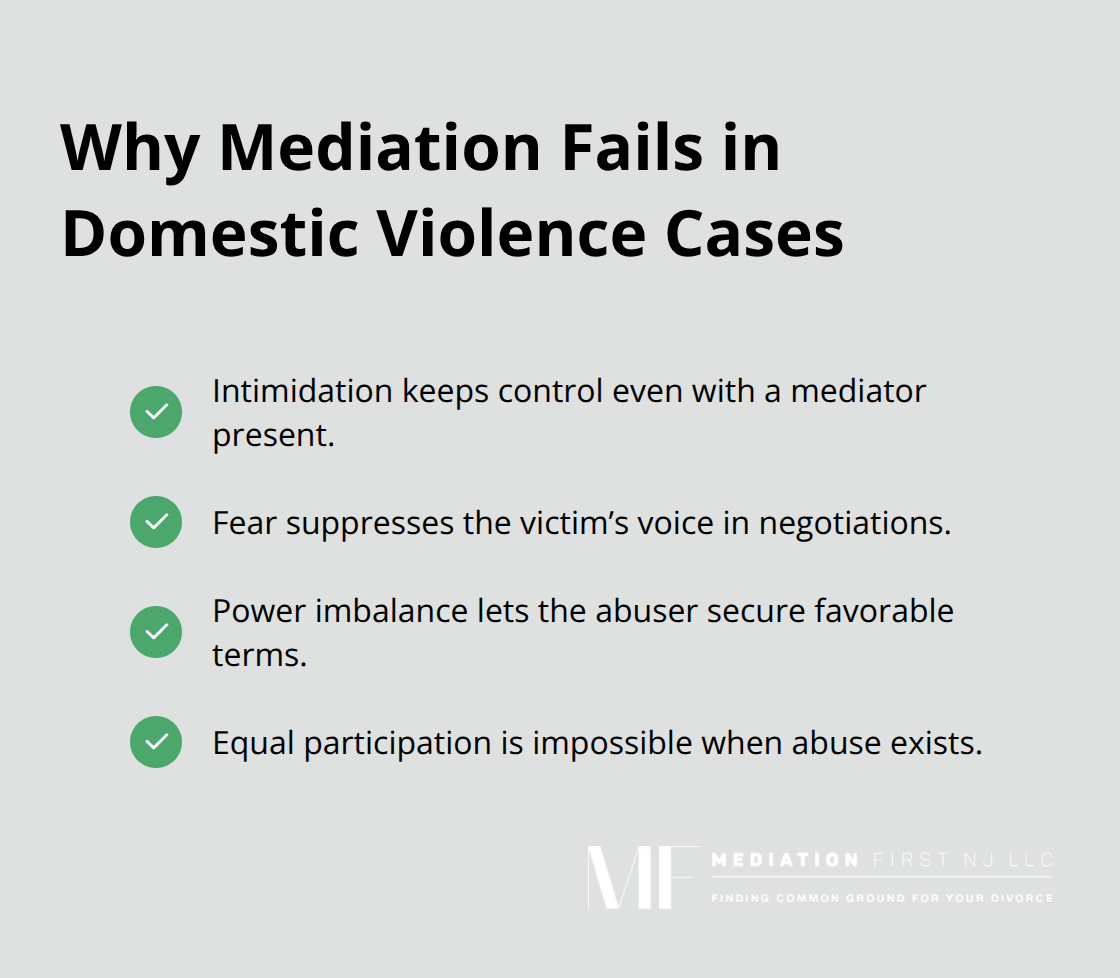
Divorce mediation fails when domestic violence exists between spouses. The CDC reports that intimate partner violence affects millions of Americans, with over 61 million women and 53 million men experiencing psychological aggression by an intimate partner in their lifetime. Victims cannot negotiate freely when they fear their abuser, and the power dynamic prevents fair agreements. Courts recognize this reality and often prohibit mediation in domestic violence cases.
The abuser maintains control through intimidation, even in a mediator’s presence. Fear silences the victim’s voice during negotiations, and the abuser exploits this advantage to secure favorable terms. Mediation requires equal participation from both parties, but domestic violence destroys this foundation completely.
High-Conflict Couples Refuse to Compromise
Couples locked in bitter disputes rarely succeed in mediation because the process demands willingness to compromise. High-conflict divorces involve constant arguments, threats, or vindictive behavior, making collaborative discussion impossible. These spouses view divorce as warfare rather than problem-solving.
One spouse may attend mediation sessions only to gather information for future litigation rather than genuinely seek resolution. They use the process as reconnaissance, not negotiation. The other spouse wastes time and money while their opponent prepares for battle.
Complex Assets Overwhelm the Process
Complex business valuations, hidden assets, and intricate financial portfolios demand forensic accounting that mediation cannot provide. Divorce cases with business ownership, stock options, or international assets need formal discovery procedures available only through litigation. High-asset divorces often require expert witnesses and extensive financial investigation.
Mediators cannot subpoena records or compel disclosure, which leaves financially disadvantaged spouses vulnerable to incomplete information. When one spouse owns multiple businesses or has complex compensation structures, mediation lacks the tools to uncover true asset values. The financially weaker spouse enters negotiations blind while their partner holds all the cards.
These fundamental limitations reveal why mediation cannot solve every divorce situation, but the process itself also contains structural weaknesses that affect even suitable cases.
Why Mediation Lacks Real Power
Agreements Hold No Legal Weight
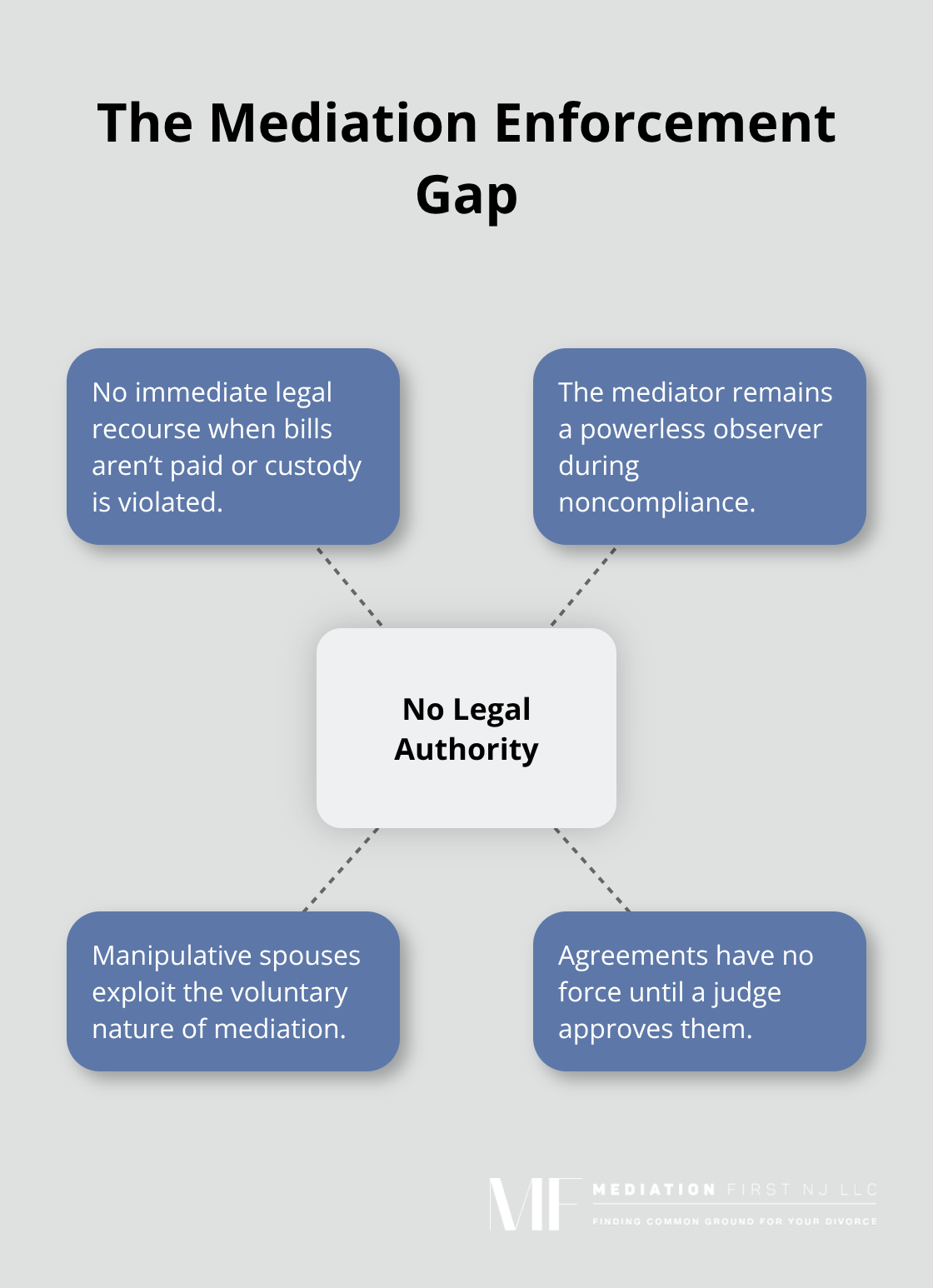
Mediation agreements carry no legal authority until a judge approves them, which creates a dangerous gap between negotiation and enforcement. Research shows that mediated agreements face significant challenges, with studies indicating substantial rates of breakdown in the mediation process. Mediators cannot force compliance with temporary agreements about child support or property access during the mediation process.
Your spouse can stop paying bills or violate custody arrangements while mediation continues, and you have no immediate legal recourse. The mediator becomes a powerless observer while one party manipulates the situation. This enforcement gap exposes the fundamental weakness of voluntary agreements without court backing.
Financial Secrets Stay Hidden
Mediation operates on trust rather than legal compulsion, which makes financial transparency optional instead of mandatory. Courts can subpoena bank records, business documents, and tax returns, but mediators cannot force disclosure of hidden assets or offshore accounts. Asset concealment represents a significant challenge in divorce proceedings, with research documenting fraudulent practices involving hiding or shielding assets from the marital estate.
Spouses who control family finances exploit this weakness when they present incomplete financial pictures while their partners negotiate from ignorance. Forensic accountants and private investigators remain unavailable in mediation (unlike litigation), which leaves complex financial structures unexplored. When significant assets disappear or business valuations seem suspicious, mediation provides no tools to investigate further. Proper financial planning becomes nearly impossible without complete disclosure.
Voluntary Participation Creates Strategic Disadvantages
Mediation depends entirely on both parties demonstrating good faith, but nothing prevents strategic manipulation of the process. One spouse can attend sessions while secretly preparing for litigation, which turns mediation into free discovery to learn their partner’s negotiation strategy. The other spouse reveals their priorities and bottom lines while their opponent gathers intelligence for future court battles.
This asymmetric information exchange creates unfair advantages that skilled manipulators exploit ruthlessly. The voluntary nature that makes mediation appealing also makes it vulnerable to abuse by dishonest participants, particularly when power imbalances exist. These structural weaknesses compound when couples face additional financial pressures that mediation cannot address.
How Much Does Failed Mediation Really Cost
Mediation presents significant financial risks that couples often underestimate when they begin the process. The American Bar Association reports that mediation typically costs 40-60% less than litigation, but this represents money spent without any guarantee of resolution. Failed mediation forces couples into litigation anyway, which creates a double financial burden that can exceed $15,000 in total legal expenses. The initial mediation investment becomes a sunk cost when negotiations break down, and couples must start over with attorneys while they face depleted resources.
Litigation Becomes More Expensive After Failed Mediation

Attorneys charge higher fees when they inherit cases from failed mediation because they must review all previous negotiations and restart discovery from scratch. Legal professionals typically bill $300 to $500 per hour for divorce litigation, and post-mediation cases require additional time to understand what transpired during private negotiations. The opposing party knows your settlement priorities from mediation discussions, which weakens your litigation position and extends the legal process. Court schedules create additional delays that increase attorney fees, with complex divorce cases requiring extended time in New Jersey family courts.
Time Investment Yields No Guaranteed Results
Mediation sessions consume 10 to 20 hours of preparation and attendance time over several months, which represents lost wages and emotional energy that produces no agreement. Couples often spend six months in mediation before they acknowledge failure, during which time financial circumstances change and custody arrangements remain uncertain. The voluntary nature of mediation means either party can withdraw at any moment, which renders all previous time investment worthless. Professional mediators cannot predict success rates for individual cases (which makes the time commitment a gamble rather than an investment).
Hidden Costs Accumulate During Extended Negotiations
Additional expenses emerge when mediation drags on without resolution, particularly when couples need financial experts or child specialists to address complex issues. These professionals charge separate fees that add thousands to the total cost, yet their recommendations carry no legal weight if mediation fails. Temporary support arrangements often break down during extended mediation, which forces one spouse to cover all household expenses while negotiations continue. The emotional toll of prolonged uncertainty affects work performance and family relationships, creating indirect costs that couples rarely calculate when they enter mediation.
Final Thoughts
Domestic violence cases, significant power imbalances, and complex financial situations require the formal protections that only courts can provide. High-conflict couples who refuse to compromise waste time and money in mediation when they need judicial intervention. What are the disadvantages of divorce mediation becomes clear when you face these challenging circumstances that demand legal authority rather than voluntary cooperation.
Mediation works best when both spouses demonstrate good faith and show willingness to negotiate fairly. The process cannot force compliance or uncover hidden assets, which makes transparency essential for success. Realistic expectations prevent costly mistakes and help you choose the right path for your specific situation.
We at Mediation First NJ LLC help suitable couples reach amicable agreements through constructive communication and collaboration. Our professional mediation services guide families toward mutually acceptable resolutions for custody, support, and property division in a confidential environment (when circumstances allow for successful mediation). Complex assets, safety concerns, or unwillingness to compromise signal that traditional court proceedings may better protect your interests and achieve fair results.