

Navigating the NJ divorce timeline can be overwhelming for many couples. At Mediation First NJ LLC, we understand the complexities and emotional challenges involved in this process.
Our goal is to provide you with a clear understanding of what to expect during your divorce journey in New Jersey. From filing to settlement, we’ll guide you through each crucial step, helping you make informed decisions along the way.
How to File for Divorce in New Jersey
Filing for divorce in New Jersey initiates a significant life transition. The process involves several key steps and considerations that will impact the course of your divorce proceedings.
Grounds for Divorce in New Jersey
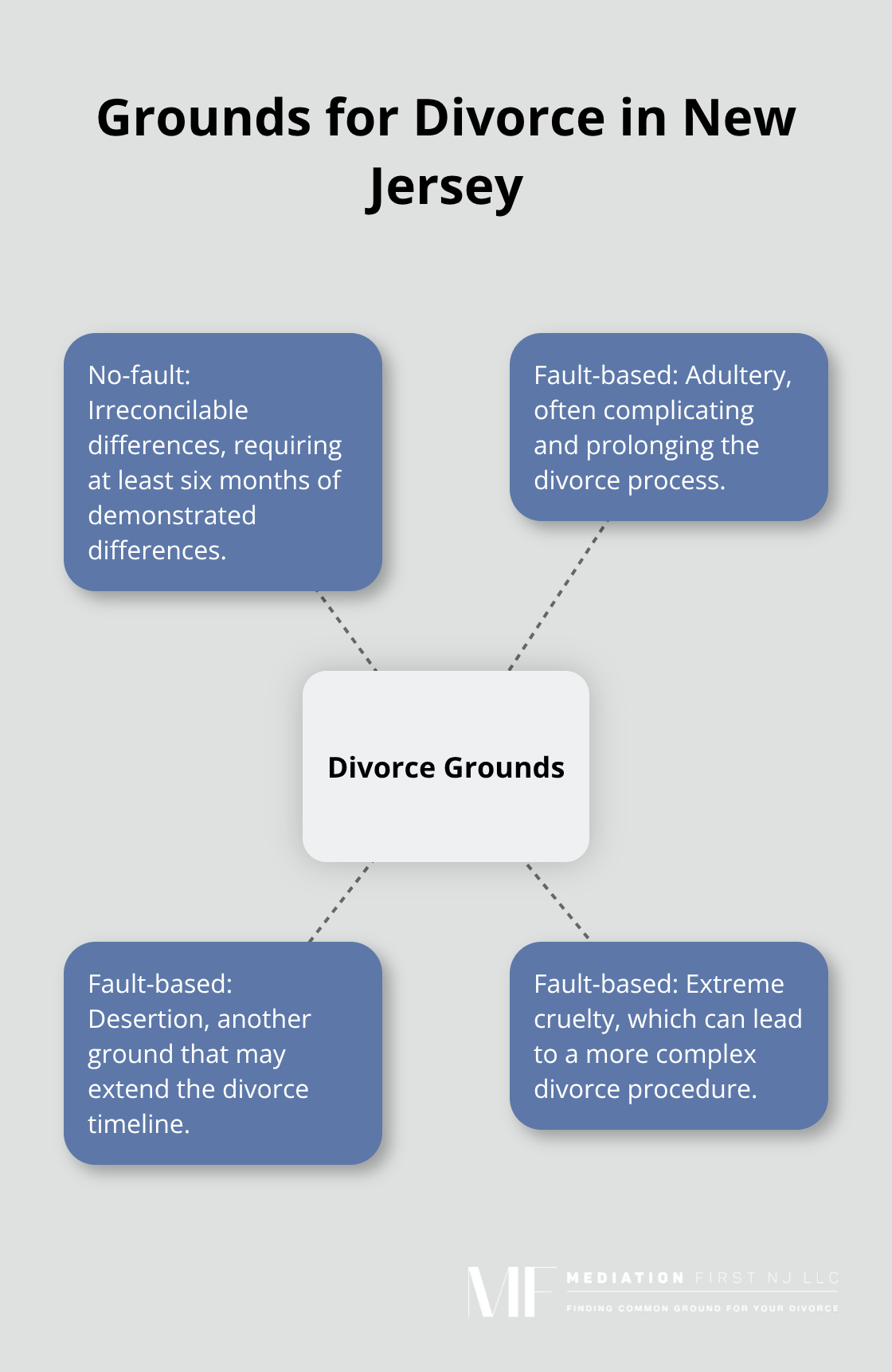
New Jersey recognizes both fault and no-fault grounds for divorce. The most common no-fault ground is “irreconcilable differences,” which requires a period of at least six months of demonstrated differences. This option often leads to a smoother process, as it doesn’t require proving specific misconduct.
Fault-based grounds include adultery, desertion, and extreme cruelty. While these may seem appealing for those feeling wronged, they often complicate and prolong the divorce process. Many legal professionals typically advise clients to consider no-fault options to minimize conflict and expedite resolution.
Essential Documents and Filing Process
To initiate a divorce in New Jersey, you must prepare and file several documents with the court. These include:
- Complaint for Divorce
- Summons
- Confidential Litigant Information Sheet
- Certification of Insurance Coverage
The Complaint for Divorce outlines the basic information about your marriage and the reasons for seeking divorce. Accuracy and thoroughness in this document are paramount, as it sets the tone for your case.
Understanding Filing Fees and Costs
As of 2025, filing fees for a divorce complaint in New Jersey may vary. It’s important to check the current fees with the court or their official website.
For those facing financial hardship, fee waivers are available. You must file a request with the court and provide proof of your financial situation.
It’s important to note that filing fees are just the beginning of potential costs. Legal representation, mediation services, and expert evaluations can significantly increase the overall expense of divorce. This is why many couples in New Jersey turn to mediation services (such as those offered by Mediation First NJ LLC), which can help reduce both emotional and financial costs.
Choosing the Right Approach
When filing for divorce, you have several options to consider:
- Do-it-yourself divorce (rare and not recommended for complex cases)
- Traditional litigation
- Collaborative divorce
- Mediation (often the most cost-effective and amicable option)
Each approach has its pros and cons, and the best choice depends on your specific circumstances. For instance, mediation can be particularly beneficial for couples who want to maintain a cordial relationship (especially important for co-parenting) and control costs.
Next Steps After Filing
Once you’ve filed your divorce papers, the court will assign a docket number to your case. Your spouse (now the defendant) will receive the divorce papers and have 35 days to respond. This response will shape the next phase of your divorce process, leading into the discovery phase where both parties exchange important financial and personal information.
The Discovery Phase in New Jersey Divorce
The discovery phase plays a vital role in the New Jersey divorce process. During this stage, both parties exchange essential information about their finances, assets, and other relevant details. This phase can significantly impact the outcome of your divorce, so it’s important to approach it with care and thoroughness.
Financial Disclosure Requirements
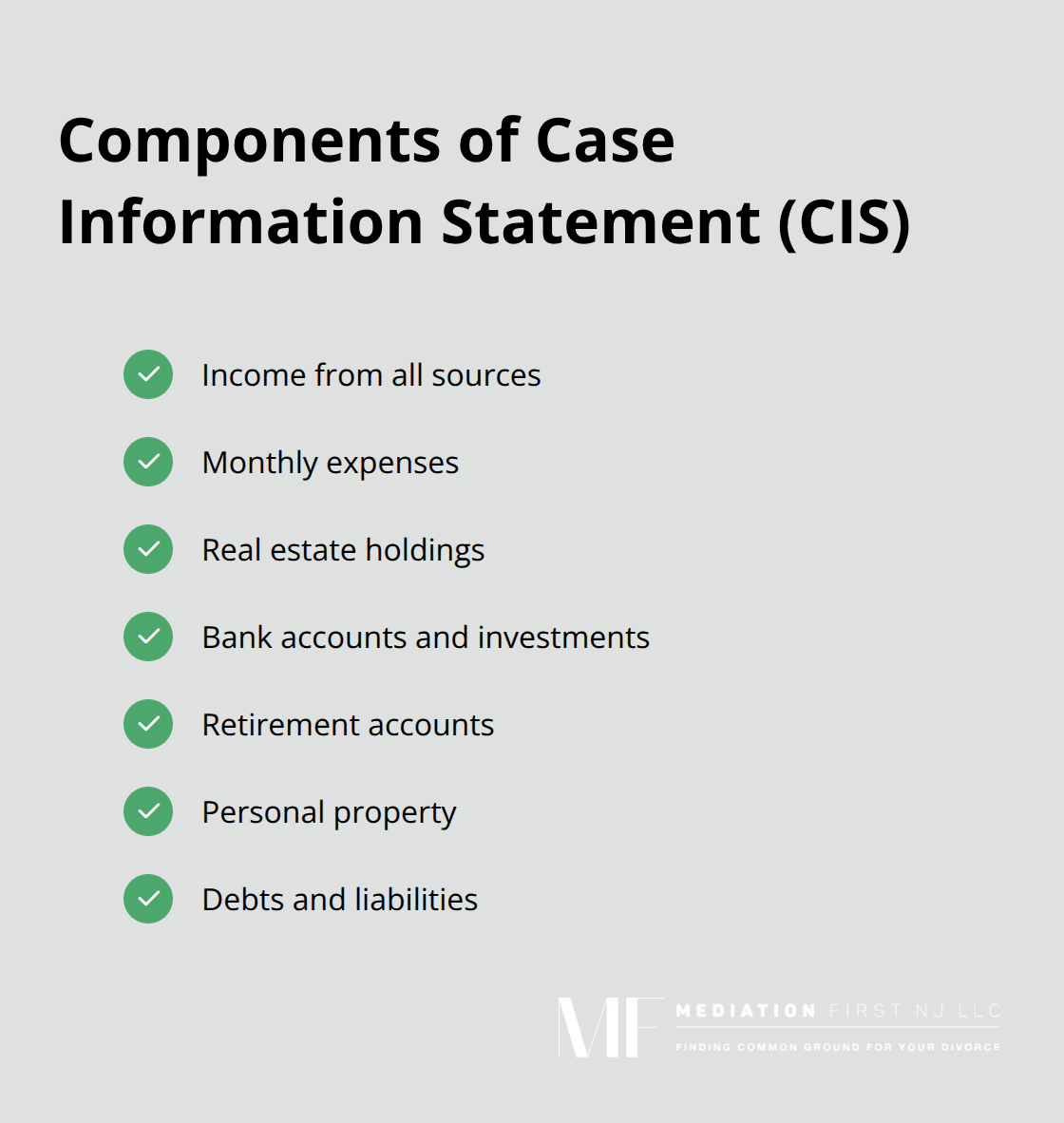
In New Jersey, both spouses must complete a Case Information Statement (CIS). This comprehensive document details your income, expenses, assets, and liabilities. Accuracy and thoroughness are paramount when filling out your CIS. Any omissions or inaccuracies can lead to delays, disputes, or even legal consequences.
The CIS typically includes:
Many clients underestimate the importance of the CIS. However, this document forms the foundation for negotiations on property division, alimony, and child support. We recommend that you gather all relevant financial documents well in advance to ensure accuracy.
Depositions and Interrogatories
Depositions and interrogatories serve as tools to gather additional information during the discovery phase. Depositions involve in-person questioning under oath, while interrogatories are written questions that must be answered in writing.
These processes can consume time and create stress. However, they’re often necessary to uncover hidden assets or verify disputed information. Couples who opt for mediation often find these processes less adversarial and more efficient.
Temporary Orders for Support and Custody
During the discovery phase, either spouse can request temporary orders for support or custody. These legal directives are issued by the court to address immediate issues that arise while a divorce case is pending.
Temporary orders may cover:
- Spousal support
- Child support
- Child custody and visitation schedules
- Use of the marital home
- Payment of household bills
The court considers various factors when issuing these orders, including each spouse’s income, the children’s needs, and the standard of living during the marriage. Couples who can agree on these temporary arrangements often experience a smoother divorce process overall.
Expert Evaluations
In some cases, expert evaluations become necessary during the discovery phase. These evaluations can include:
- Business valuations (for couples with shared business interests)
- Real estate appraisals
- Custody evaluations (in complex child custody cases)
- Forensic accounting (if hidden assets are suspected)
Expert evaluations provide objective, professional assessments that can help resolve disputes and ensure fair settlements. However, they can also add time and expense to the discovery process.
Navigating the Discovery Phase
The discovery phase can present challenges, but it serves a critical purpose in ensuring a fair and equitable divorce settlement. Whether you choose litigation or mediation, understanding this phase can help you navigate it more effectively. As we move forward, we’ll explore how the information gathered during discovery informs the next crucial step: negotiation and settlement.
Reaching a Fair Settlement Through Negotiation
The Power of Mediation in NJ Divorces
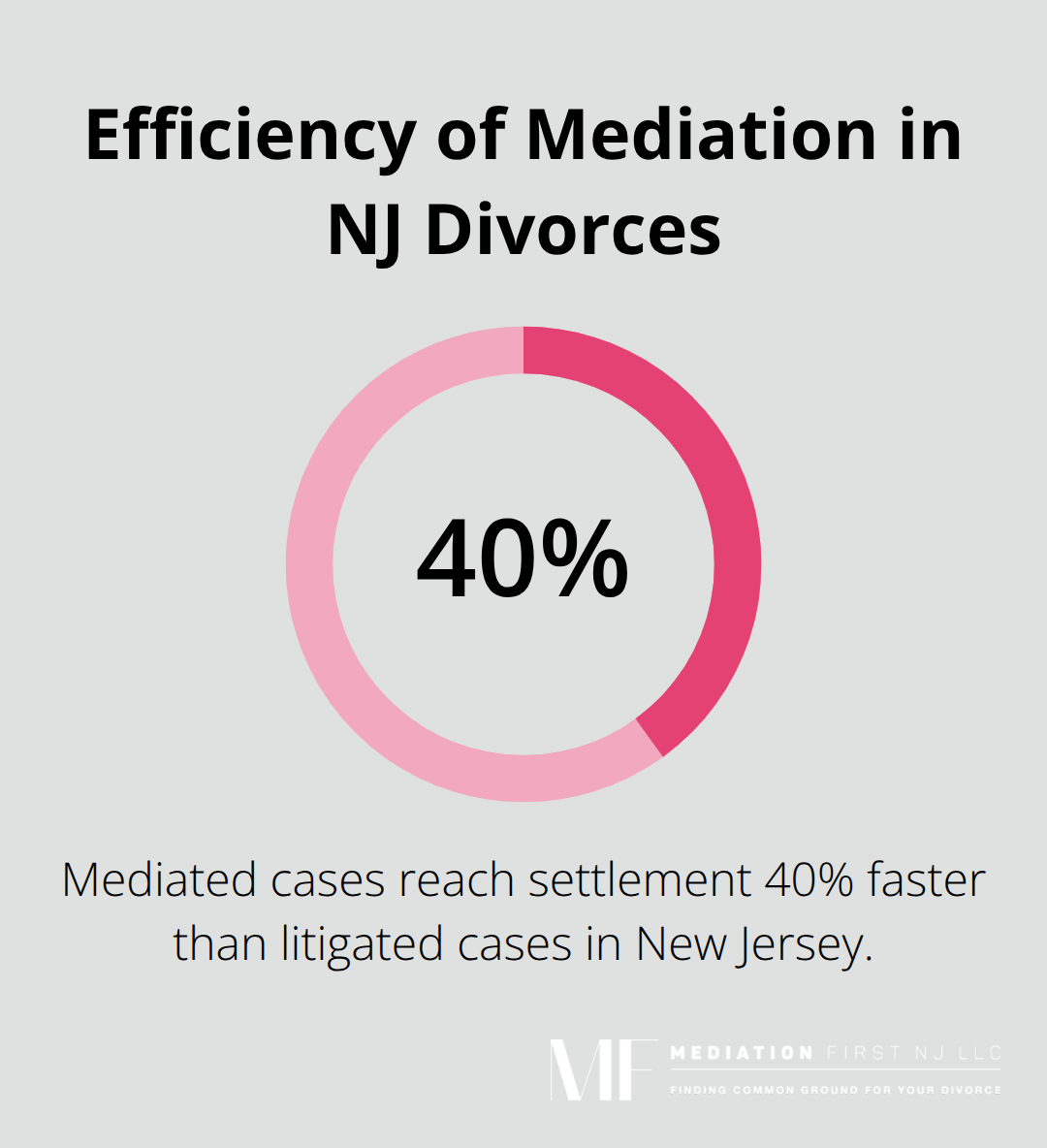
Mediation has become a popular choice for divorcing couples in New Jersey. The New Jersey Administrative Office of the Courts reports that mediated cases reach settlement 40% faster than litigated cases. This process involves a neutral third party who facilitates discussions between spouses to reach mutually agreeable terms.
Mediation often leads to more satisfying outcomes for both parties, as they maintain control over the decisions that will shape their future. The New Jersey Association of Professional Mediators states that mediation typically costs 40-60% less than traditional litigation.
Collaborative Divorce: A Team Approach
Couples seeking an alternative to both mediation and litigation might consider collaborative divorce. This process is a friendlier, kinder, gentler approach that provides a step-by-step guide for you and your spouse.
The New Jersey Collaborative Law Group found that 93% of participants were satisfied with the process. They cited reduced conflict and better post-divorce relationships as key benefits.
Crafting Your Marital Settlement Agreement
The marital settlement agreement (MSA) outlines all terms of your divorce, including:
- Division of assets and debts
- Alimony or spousal support
- Child custody and parenting time
- Child support
A study by the New Jersey Family Law Practice revealed that well-drafted MSAs reduce post-divorce litigation by up to 30%. To create a comprehensive MSA, you should:
- List all assets and debts (including those acquired during the marriage)
- Develop a detailed parenting plan if you have children
- Consider future scenarios, such as job changes or relocations
- Consult with a financial advisor to understand long-term implications
Negotiation Strategies for Success
Effective negotiation requires preparation and a clear understanding of your priorities. You should:
- Identify your non-negotiable items
- Prepare to compromise on less important issues
- Stay focused on long-term goals rather than short-term wins
- Maintain open communication with your spouse (or through your mediator)
The Role of Legal Counsel
While mediation and collaborative divorce emphasize cooperation, it’s still important to understand your legal rights. Many couples choose to consult with attorneys separately to review agreements before finalizing them. This step ensures that both parties fully understand the implications of their settlement.
Final Thoughts
The NJ divorce timeline involves complex steps that require careful consideration. Professional guidance can help you navigate this process with confidence, reducing stress and conflict. An experienced mediator facilitates productive discussions and works towards mutually beneficial solutions.
Mediation offers numerous benefits for couples going through divorce in New Jersey. It provides a collaborative approach, often resulting in faster resolutions and lower costs compared to traditional litigation. Mediation First NJ LLC specializes in guiding clients through this process, offering professional services that prioritize constructive communication.
Choosing mediation allows you to maintain control over the outcome of your divorce. You can create solutions tailored to your family’s unique needs and lay the groundwork for positive post-divorce relationships. This approach particularly benefits couples with children, as it fosters a cooperative co-parenting dynamic (which is essential for long-term family harmony).