

At Mediation First NJ LLC, we understand that divorce can be a challenging process. The NJ divorce mediation process offers a more amicable and cost-effective alternative to traditional litigation.
This guide will walk you through the key steps, benefits, and common issues addressed in divorce mediation. We’ll also provide insights on how to choose the right mediator for your unique situation.
What Is NJ Divorce Mediation?
Definition and Process
Divorce mediation in New Jersey offers a voluntary alternative to traditional litigation. A neutral third party (the mediator) assists couples in negotiating their divorce terms. This process differs from litigation by promoting collaboration rather than confrontation.
During mediation sessions, both parties meet with a trained mediator to address issues such as property division, child custody, and financial support. The mediator doesn’t make decisions for the couple but facilitates productive conversations and helps identify mutually acceptable solutions.
Statistical Effectiveness
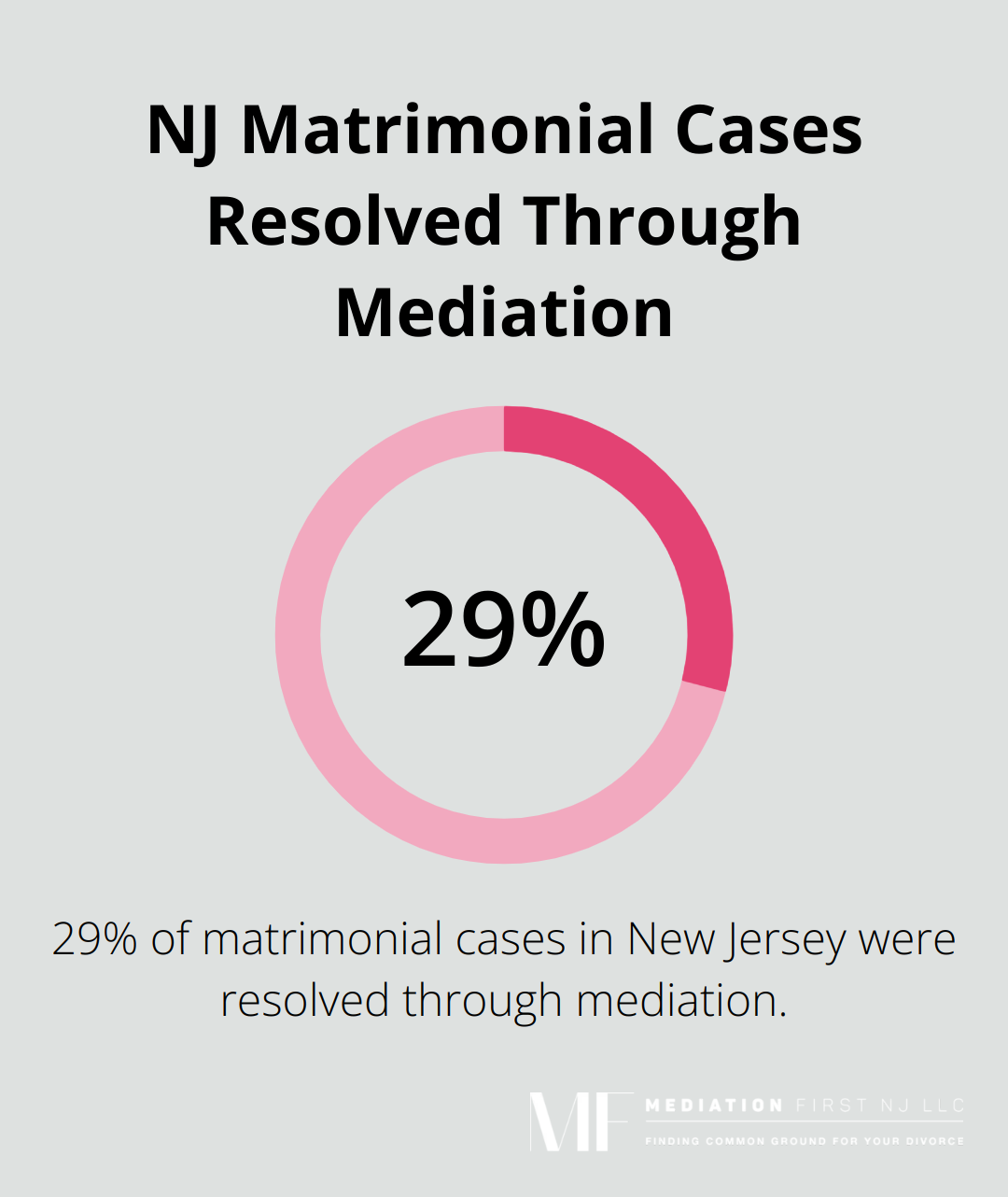
About 29% of matrimonial cases in New Jersey were resolved in mediation. This statistic highlights mediation’s effectiveness in reaching agreements that work for both parties.
Benefits of Mediation
Mediation provides several advantages over litigation:
- Time-efficient: While a litigated divorce in New Jersey can exceed two years, mediation often concludes within a few months.
- Cost-effective: Mediation costs in New Jersey typically range between $350 and $500 per hour.
- Control over outcomes: Couples create tailored solutions instead of having a judge impose decisions.
- Collaborative approach: This method often leads to more satisfying and sustainable agreements.
The Mediator’s Role
A skilled mediator plays a pivotal role in the success of the process. They:
- Create a neutral environment where both parties feel heard and respected.
- Identify common ground and clarify misunderstandings.
- Guide discussions toward productive resolutions.
- Balance power dynamics between parties.
Mediators with extensive training in conflict resolution and a deep understanding of New Jersey family law (such as those at Mediation First NJ LLC) provide valuable insights and ensure agreements comply with state legal requirements.
Preparing for Mediation
To maximize the benefits of mediation, couples should:
- Gather relevant financial documents (e.g., tax returns, bank statements, property valuations).
- Reflect on their priorities and goals for the divorce settlement.
- Consider consulting with individual attorneys for legal advice before and during the mediation process.
As we move forward, we’ll explore the key steps involved in the NJ divorce mediation process, providing a roadmap for couples considering this approach.
How Does the NJ Divorce Mediation Process Work?
The New Jersey divorce mediation process follows a structured approach to help couples reach mutually beneficial agreements. This method offers a more efficient and cost-effective alternative to traditional litigation. Mediation also grants spouses greater control over the final outcome, unlike traditional litigation where a judge has the last word.
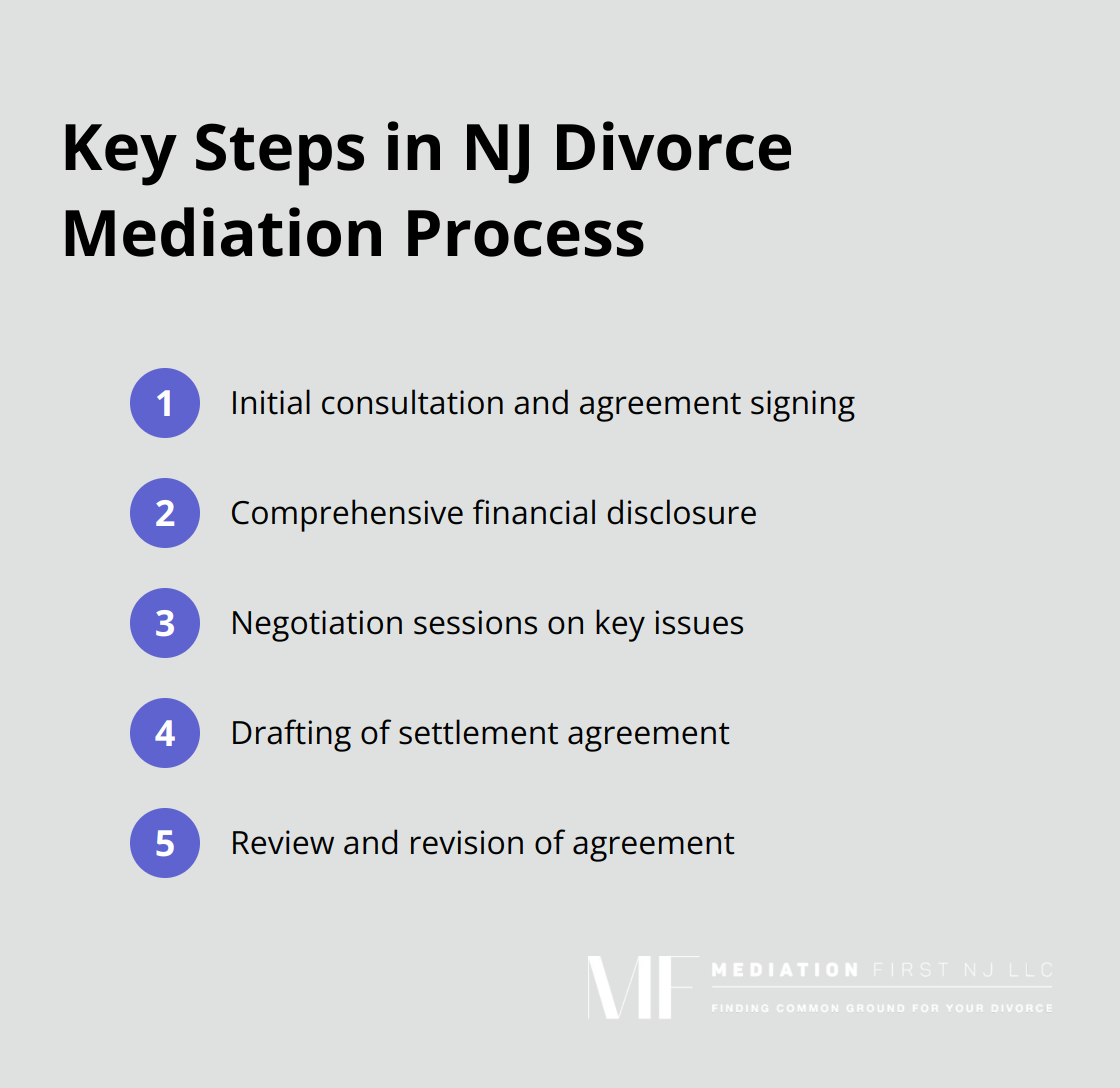
Initial Consultation and Agreement
The process starts with an initial consultation where both parties meet the mediator. This meeting serves to:
- Explain the mediation process
- Answer questions
- Assess the couple’s willingness to participate
If both parties agree to proceed, they sign a mediation agreement. This document outlines the process, confidentiality terms, and fees.
Financial Disclosure
Full financial disclosure forms a cornerstone of a fair settlement. Both parties must gather and share comprehensive financial information, including:
- Income statements
- Bank account records
- Investment portfolios
- Retirement accounts
- Real estate holdings
- Business valuations
- Debts and liabilities
This step typically takes 2-4 weeks (depending on the complexity of the couple’s finances). Mediators often provide checklists to ensure all necessary documents are collected.
Negotiation and Agreement
With financial information in hand, the couple attends a series of mediation sessions. These sessions focus on key issues such as:
- Asset division
- Child custody
- Support arrangements
The mediator facilitates discussions, helps the couple explore options, and finds common ground. On average, couples in New Jersey complete mediation in 3-6 sessions, each lasting about 2-3 hours. However, complex cases may require additional sessions.
Settlement Agreement Drafting
Once all issues are resolved, the mediator drafts a comprehensive settlement agreement. This document outlines all decisions made during mediation and serves as the basis for the final divorce decree.
Both parties review the draft agreement with their respective attorneys. This review typically takes 1-2 weeks. The mediator makes any necessary revisions to ensure the agreement accurately reflects the couple’s intentions and complies with New Jersey law.
The NJ divorce mediation process offers a structured yet flexible approach to resolving disputes. This method allows couples to achieve a fair and lasting agreement in a fraction of the time and cost of traditional litigation. As we move forward, we’ll explore the common issues addressed in NJ divorce mediation, providing insight into the range of topics couples can expect to discuss during this process.
What Issues Does NJ Divorce Mediation Address?
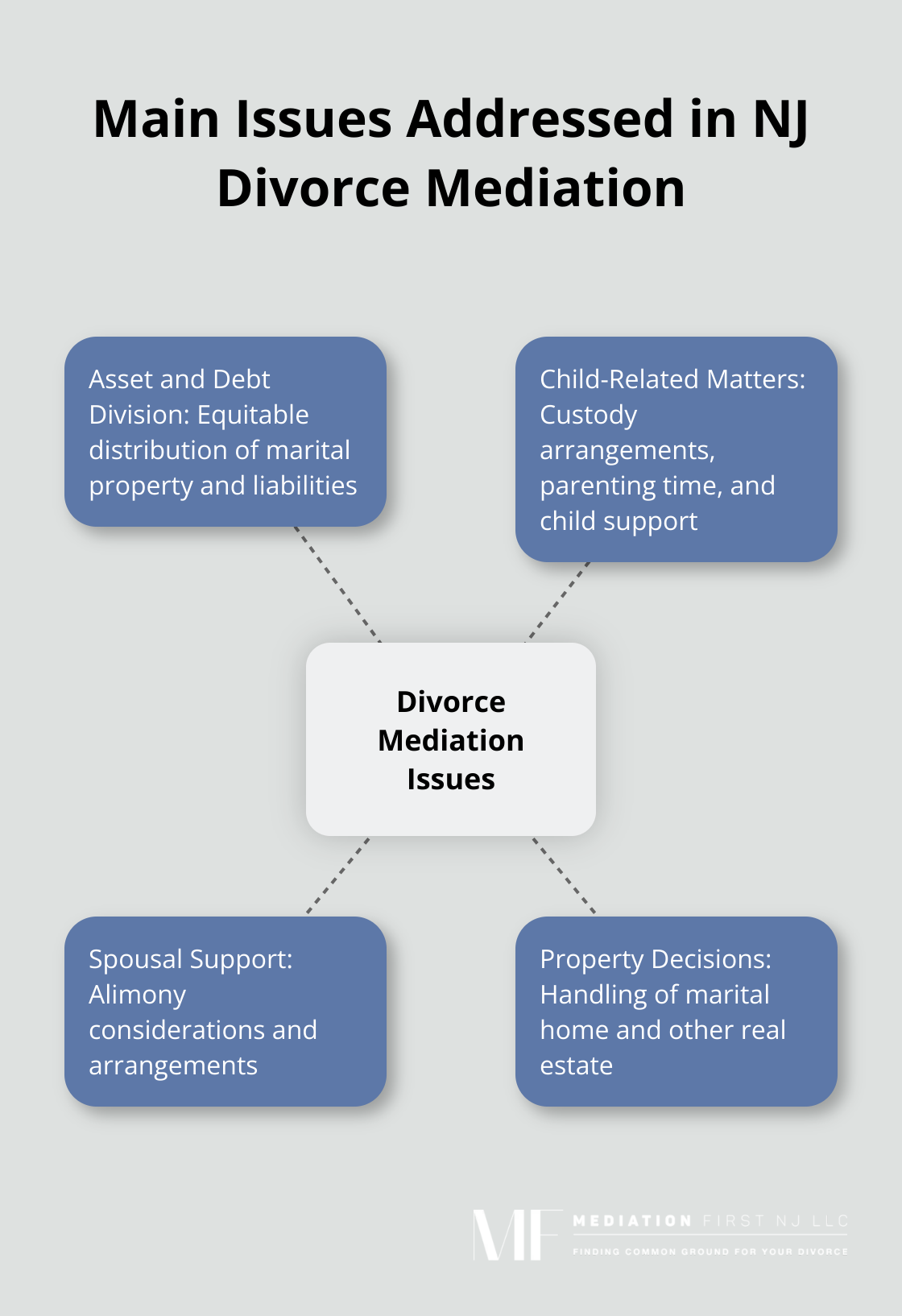
Asset and Debt Division
Divorce mediation in New Jersey tackles the complex task of dividing marital assets and debts. New Jersey follows equitable distribution laws, which means that the distribution should be fair but not necessarily equal. Mediation allows couples to create a fair division that considers factors such as:
- Marriage duration
- Each spouse’s economic circumstances
- Contributions to asset acquisition
- Tax implications of asset transfers
For instance, a couple married for 20 years might decide that the lower-earning spouse keeps the family home, while the higher-earning spouse retains a larger portion of retirement accounts. This approach balances immediate housing needs with long-term financial security.
Child-Related Matters
When children are involved, mediation addresses custody and parenting time arrangements. New Jersey courts prefer that parents develop a parenting plan that serves the children’s best interests. Parenting time mediation stands as a constructive and child-focused alternative for couples navigating divorce or separation in New Jersey.
A typical arrangement might include alternating weekends and mid-week visits, with provisions for holidays and school breaks. The flexibility of mediation allows parents to craft creative solutions, such as a 2-2-5-5 schedule (where each parent has two weekdays, then five days, alternating each week).
Child support is another critical issue addressed in mediation. While New Jersey has guidelines for calculating child support, mediation allows parents to consider additional factors (like extracurricular activities or private school tuition).
Spousal Support Considerations
Alimony, or spousal support, often becomes a contentious issue in divorce. In mediation, couples can explore various types of alimony, including:
- Open durational alimony for long-term marriages
- Limited duration alimony for shorter marriages
- Rehabilitative alimony to support a spouse’s re-entry into the workforce
Mediation allows for creative solutions. Instead of monthly payments, a couple might agree to a lump-sum alimony payment or the transfer of specific assets.
Property Decisions
Handling the marital home often proves emotionally and financially challenging. Mediation provides a forum to explore options such as:
- Selling the home and dividing proceeds
- One spouse buying out the other’s interest
- Continuing co-ownership for a set period
For other properties, like vacation homes or rental units, couples can discuss whether to sell, divide, or continue joint ownership with specific management agreements.
Final Thoughts
The NJ divorce mediation process offers a path to resolution that prioritizes collaboration, efficiency, and cost-effectiveness. Couples can maintain control over their divorce outcomes while minimizing the emotional and financial toll often associated with traditional litigation. This approach saves time and money, and lays the groundwork for more amicable post-divorce relationships.
A skilled mediator brings expertise in New Jersey family law, conflict resolution techniques, and the ability to facilitate productive conversations between parties. Mediation First NJ LLC provides professional mediation services tailored to the unique needs of each family. Our team specializes in guiding clients through complex issues such as asset division, child custody arrangements, and support considerations.
We encourage couples facing divorce to consider mediation as a viable alternative to traditional court proceedings. The NJ divorce mediation process empowers individuals to make informed decisions that serve their family’s best interests (while fostering open communication and mutual understanding). Mediation offers a flexible framework to address specific concerns and reach mutually satisfactory agreements.