

Child custody disputes drain families emotionally and financially. Court battles can stretch on for years, leaving children caught in the middle of conflict.
We at Mediation First NJ LLC believe there’s a better way. This guide covers practical mediation custody tips that help parents reach agreements faster, cheaper, and with less damage to their relationships.
Why Custody Disputes Become Court Battles
The reality is that most families don’t choose litigation because they want to fight in court. They end up there because they run out of options or lack information about alternatives. When parents can’t agree on custody arrangements, the legal system treats it as a dispute requiring a judge’s decision. This default path is expensive and slow. Contested custody litigation in New Jersey costs between $15,000 and $50,000 per parent when cases proceed through trial. The timeline is equally brutal. A contested custody case typically takes 6 to 18 months to resolve, and complex cases with multiple hearings can stretch beyond two years. During this entire period, parents remain locked in an adversarial dynamic where their lawyers present competing arguments rather than exploring shared solutions.
The Financial Toll on Families
Litigation consumes resources that families could redirect toward their children’s education, healthcare, or stability. Beyond attorney fees, families pay court filing fees, expert witness costs, and custody evaluation expenses. Parents also lose work time attending hearings and meetings with lawyers. The adversarial structure incentivizes spending more money to win rather than less money to settle. Judges make custody decisions based on evidence presented in court, which means parents feel pressured to hire the best lawyers, gather extensive documentation, and prepare for trial. This competitive spending escalates quickly. Meanwhile, the child’s actual needs disappear under legal arguments about parental fitness and rights. The financial stress of litigation often spills into the home, creating tension that directly harms the children the custody battle supposedly protects.
How Court Proceedings Damage Parent-Child Relationships
Court battles force parents into opposite corners. Lawyers advise clients to document every parenting mistake the other parent makes, to question the other parent’s character, and to present the most compelling case for why they deserve custody. This creates an environment where cooperation becomes impossible. Children sense this hostility. Research on family conflict shows that high-conflict custody disputes increase anxiety and behavioral problems in children, regardless of the ultimate custody arrangement. Once a judge makes a decision, one parent feels defeated and the other feels vindicated, but neither parent has invested in building a cooperative relationship. If circumstances change and parents need to modify the custody arrangement, they often return to court rather than discussing adjustments directly. This cycle perpetuates conflict for years. The damage to the parent-child relationship with the non-custodial parent proves particularly severe because the court process itself reinforces the adversarial framing rather than encouraging ongoing involvement from both parents.
The Path Forward Through Mediation
The court system wasn’t designed to help families cooperate-it was designed to resolve disputes through a winner-and-loser framework. That framework works against everything children need from their parents after separation. Mediation offers a fundamentally different approach. Instead of competing in court, parents work with a neutral mediator to explore solutions that serve their children’s actual interests. This shift from adversarial to collaborative changes everything about how parents interact and what outcomes they can reach.
Why Mediation Keeps Parents Focused on What Actually Matters
The Structural Difference Between Mediation and Court
Mediation removes the structural incentive to attack the other parent. In court, your lawyer’s job is to present evidence that supports your position and undermines theirs. This means documenting every mistake, every late pickup, every parenting choice you disagree with. The system rewards this behavior because judges base decisions on the evidence presented. Mediation works differently. A mediator’s role is to help both parents communicate about what the children actually need, not to judge who is the better parent. This distinction matters enormously.
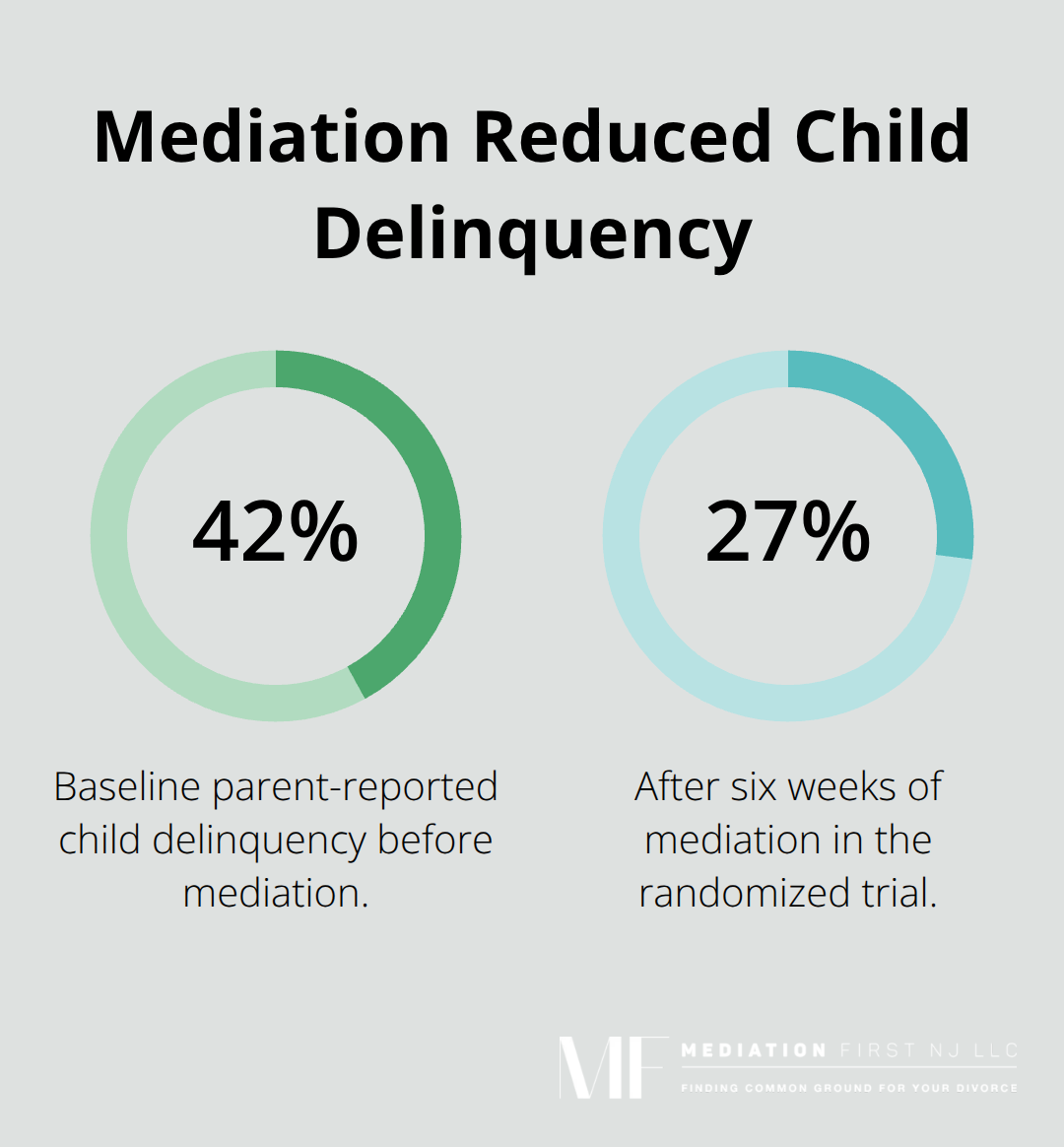
When parents sit down to discuss custody arrangements without a judge deciding the outcome, they naturally shift toward problem-solving. A randomized controlled trial with 111 families showed that mediation reduced parent-reported child delinquency from 42% at baseline to 27% after six weeks, compared to minimal changes in a control group. The parents in mediation sessions reported higher satisfaction with the process and agreed that mediators were respectful and did not take sides.
How Mediation Addresses Real Family Needs
This collaborative environment allows parents to discuss their children’s actual schedules, school needs, and extracurricular commitments instead of arguing about parental fitness. You bring your child’s school calendar, your work schedule, and specific logistical concerns to the table. The mediator helps you find arrangements that work for everyone’s real life, not theoretical positions about custody rights.
The shift from adversarial positioning to practical problem-solving produces parenting plans that actually function. Parents who work through mediation develop schedules that account for work commitments, school calendars, and the child’s activities. You address decision-making authority for healthcare and education directly, rather than waiting for a judge to impose a framework. This hands-on approach means the agreement reflects your family’s specific circumstances.
The Financial and Timeline Advantages
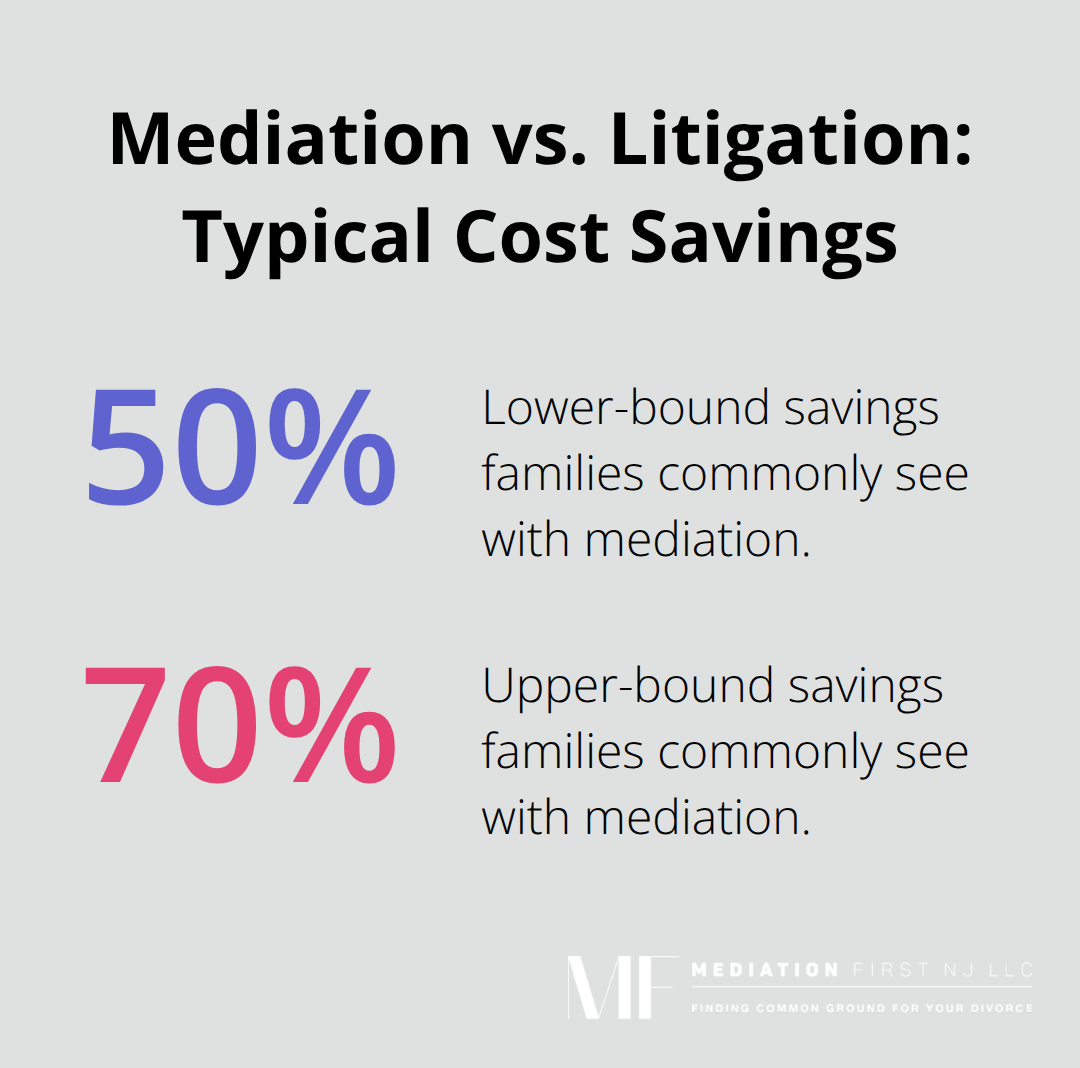
The financial difference between mediation and litigation is substantial enough to change your family’s trajectory. Contested custody litigation in New Jersey costs $15,000 to $50,000 per parent, while mediation typically costs 50-70% less. A typical mediation process involves an initial session where the mediator explains ground rules and identifies your main concerns, followed by sessions where both parents explore possible custody arrangements.
During these sessions, you and the other parent work together to develop a parenting plan that covers schedules, decision-making authority, and how costs are shared. If you reach an agreement, the mediator helps draft a written plan that you present to the court for approval. Most courts will sign off on agreements both parents accept because the judge’s primary goal is finding an arrangement that serves the child’s interests, not winning a legal battle.
Speed Matters for Your Family’s Stability
This speed matters significantly. While contested custody cases typically take 6 to 18 months to resolve through court, mediation often produces an agreement in weeks or a few months. You and your children avoid the prolonged stress of ongoing litigation, ongoing conflict, and the uncertainty of waiting for a judge’s decision. The money you save stays in your family’s budget for your children’s actual needs instead of disappearing into legal fees.
Once you reach an agreement in mediation, the next step involves presenting your parenting plan to the court for formal approval. Understanding what happens after mediation and how courts evaluate these agreements helps you prepare the strongest possible plan for your family’s future.
What Happens During Mediation Sessions
The Initial Session Sets the Foundation
The mediation process starts with an initial session where the mediator explains how mediation works, establishes ground rules, and learns about your family’s situation. This first meeting typically lasts 1-2 hours and sets the tone for everything that follows. The mediator asks about your children’s ages, their current routines, your work schedules, and your main concerns about custody arrangements.
This isn’t a time to argue your case or attack the other parent. Instead, you provide factual information that helps the mediator understand what needs to be resolved. Ground rules established in this session matter significantly because they prevent mediation from becoming another conflict. Most mediators require that both parents communicate respectfully, avoid personal attacks, and stay focused on your children’s needs rather than rehashing relationship grievances.
If there’s a history of domestic violence or safety concerns, you can request separate rooms or different timing to feel secure during the process. The mediator’s impartiality is essential here. Your job is to be honest about your schedule, your parenting capacity, and what arrangement would actually work for your family, not to present the most compelling case for why you deserve more custody.
Exploring Custody Arrangements in Substantive Sessions
After the initial session, mediation moves into substantive meetings where you and the other parent explore actual custody arrangements. The mediator helps you discuss legal custody and physical custody separately-legal custody involves each parent’s right to make major decisions about healthcare, education, and religion, while physical custody involves the time that each parent spends with the child.
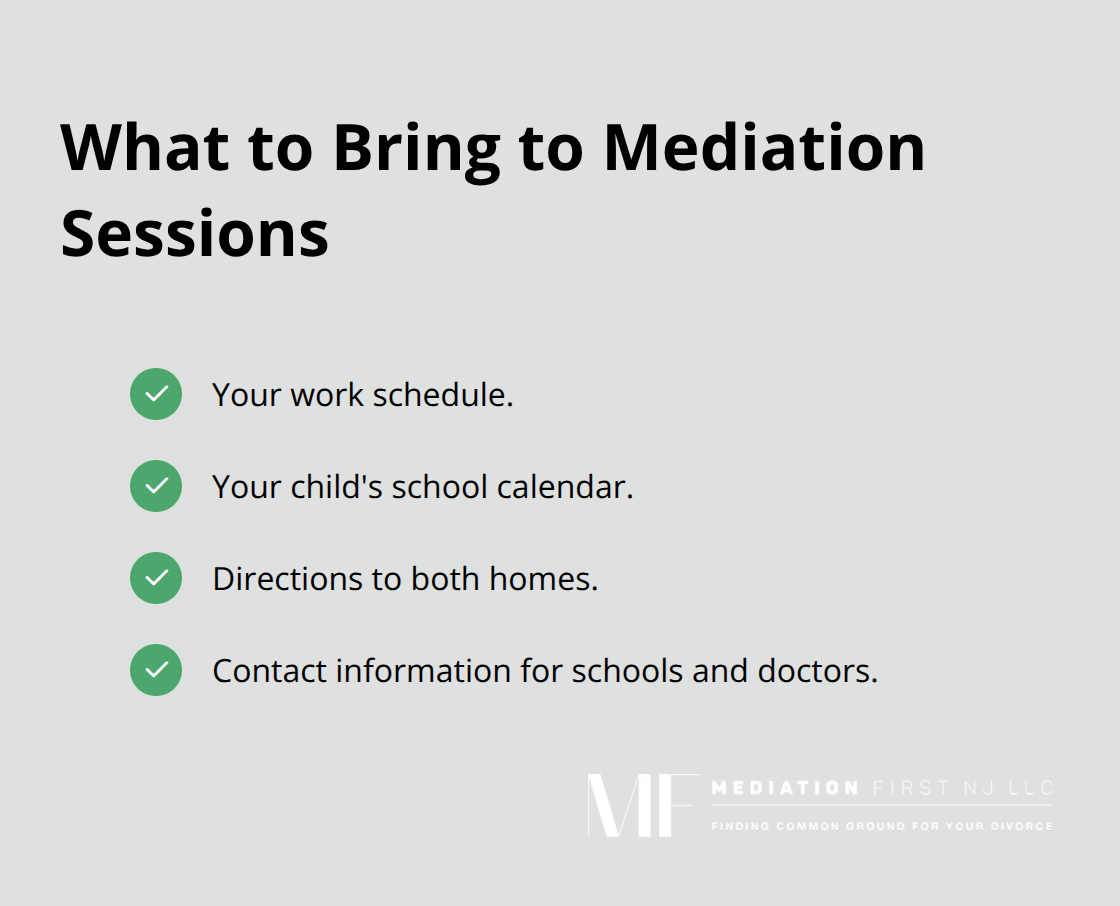
You develop a detailed parenting plan that accounts for your work hours, your child’s school calendar, extracurricular activities, and realistic transitions between homes. Bring specific documents to these sessions: your work schedule, your child’s school calendar, directions to both homes, and contact information for schools and doctors. The mediator won’t decide these issues for you. Instead, they ask questions that help you and the other parent think through logistics.
Where will pickups happen? How will you handle schedule changes when work demands shift? What happens during school vacations? The more concrete you are, the more functional your agreement becomes. Typical mediation sessions last two hours, though some families resolve their custody arrangements in a single meeting while others require multiple sessions to work through all the details.
Addressing Financial and Practical Details
Once you’ve explored the main custody questions, you address the financial and practical details. How will you share the costs of transportation between homes? Who pays for activities and camps? What happens if one parent needs to relocate for work? These specifics prevent conflicts later because you’ve already decided how to handle them.
The mediator helps you draft a written parenting plan that documents your agreement. This plan isn’t legally binding until a judge reviews and approves it, but it becomes the foundation for your court order. If you reach agreement, the process typically moves to court approval within weeks rather than months.
What Happens If You Can’t Reach Full Agreement
If you and the other parent can’t agree on specific issues, the mediator will note where you disagree and you’ll return to court for a judge to decide those remaining questions. This partial agreement still saves time and money because the judge only needs to resolve contested points rather than the entire custody arrangement.
Final Thoughts
Mediation transforms how families resolve custody disputes by replacing adversarial court battles with collaborative problem-solving. Instead of spending $15,000 to $50,000 per parent on litigation that stretches across 6 to 18 months, you work with a neutral mediator to build a parenting plan that reflects your family’s actual life. The financial savings alone justify exploring mediation, but the real benefit runs deeper-when parents collaborate rather than compete, children experience less stress and anxiety.
The mediation custody tips that work best share a common thread: they keep your focus on what your children actually need instead of what you can win in court. Bring your work schedule, your child’s school calendar, and specific logistical concerns to the table. Listen to the other parent’s constraints and needs, and stay willing to adjust your initial proposals when you find arrangements that work better for everyone.
Contact Mediation First NJ LLC to move past conflict toward sustainable solutions that serve your children’s best interests. We help families in New Jersey navigate custody disputes through a collaborative process that preserves your ability to co-parent effectively for years to come.