

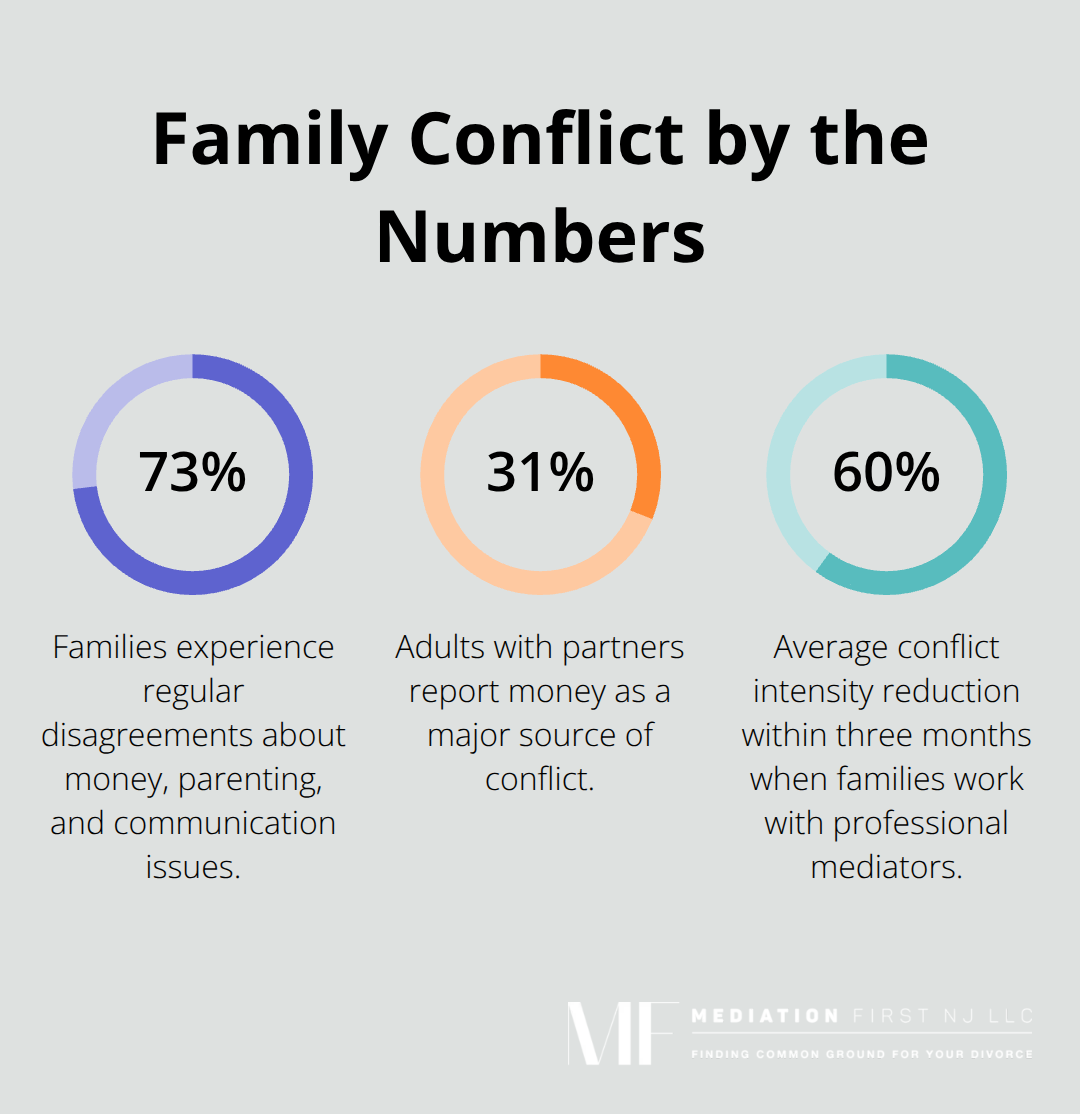
Family conflicts happen in every household, creating stress and damaging relationships. Research shows that 73% of families experience regular disagreements about money, parenting, and communication issues.
We at Mediation First NJ LLC understand that effective family conflict resolution strategies can transform these challenging situations into opportunities for stronger bonds. The right approach makes all the difference in restoring harmony to your home.
What Triggers Most Family Fights
Money Fights Start Small But Explode Fast
Financial disagreements account for 31% of adults with partners reporting money as a major source of conflict according to the American Psychological Association, yet most families avoid money discussions until tensions reach a breaking point. The pattern always follows the same path: small spending decisions create resentment, different financial priorities clash, and suddenly you argue about everything except the real issue.
Couples who earn between $50,000-$75,000 annually report the highest rates of money-related arguments because they have enough to disagree about spending but not enough to avoid tough choices. Research shows that family members develop predictable response patterns around financial stress that influence their interactions.
Communication Breaks Down When Emotions Take Over
The biggest myth about family communication claims that love automatically creates understanding. Research from the Dynamics of Family Conflict study (which involved 2,871 families) shows that parents and children perceive conflict severity completely differently, with parents consistently underestimating the emotional impact on kids.
Families fall into what experts call unwanted repetitive episodes where the same arguments replay endlessly because no one changes their response pattern. The most destructive communication happens when family members assume they know what others think instead of asking direct questions.
Parenting Disputes Create Long-Term Damage
Disagreements about discipline, screen time, and educational choices don’t just create temporary friction – they undermine children’s emotional security and create lasting behavioral issues. The FamC study demonstrates that children’s anxiety levels directly correlate with the intensity of parenting disputes they witness, not the topics discussed.
Parents who present conflicting rules or expectations force children to choose sides, which creates loyalty conflicts that damage family bonds for years. Financial stress makes parenting disagreements more likely to escalate into hostile confrontations that require professional intervention to resolve.
These conflict patterns don’t have to define your family’s future. Specific communication strategies can break these destructive cycles and transform how your family handles disagreements.
How Do You Change Destructive Family Arguments?
The most effective families don’t avoid conflict – they change how they respond during heated moments. Research shows that our own behavior significantly influences how others treat us, which means you control more of the conversation than you realize. Families stuck in repetitive argument cycles can break free when they identify choice points where one person changes their typical response pattern.
Stop the Rewind Button on Family Fights
Successful conflict resolution requires families to recognize when conversations enter what researchers call unwanted repetitive episodes. These predictable patterns trap families in the same arguments about curfews, chores, or money because everyone delivers their expected lines. The moment someone notices the familiar script starts, they can pause and ask a different question or acknowledge validity in the other person’s perspective. Families who practice alternative responses to anticipated conflicts report fewer emotionally charged confrontations within three months.
Create Physical and Emotional Safety First
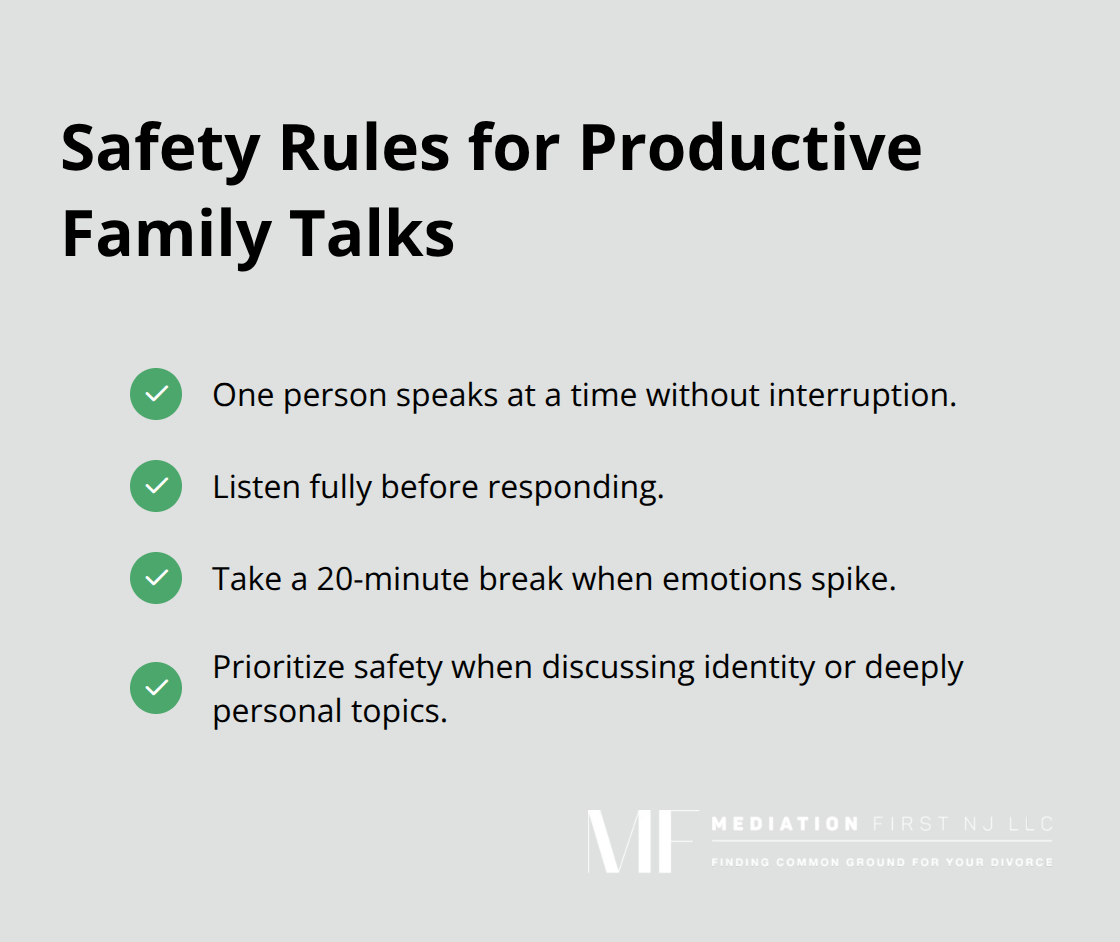
Productive family discussions happen only when everyone feels psychologically safe to express their real concerns without ridicule or punishment. This means families establish ground rules where one person speaks without interruption while others listen completely before they respond. Take mandatory breaks when emotions escalate beyond productive levels – research shows that families who return to discussions after 20 minutes of separation achieve more constructive outcomes. The Trevor Project emphasizes that safety considerations become even more important when family members discuss identity or deeply personal topics that challenge existing family beliefs.
Practice Strategic Emotional Response
Families who address conflicts within 24 hours of the incident resolve issues faster than those who let resentment build over weeks. Focus conversations on single topics rather than multiple unresolved issues simultaneously, which overwhelms family members and prevents meaningful progress. When you discuss sensitive subjects, start by stating your commitment to the relationship and family values before you address the specific behavior or situation that needs attention.
Professional mediation services can provide the neutral framework that families need when these strategies alone don’t resolve deeper conflicts.
When Does Your Family Need Professional Help
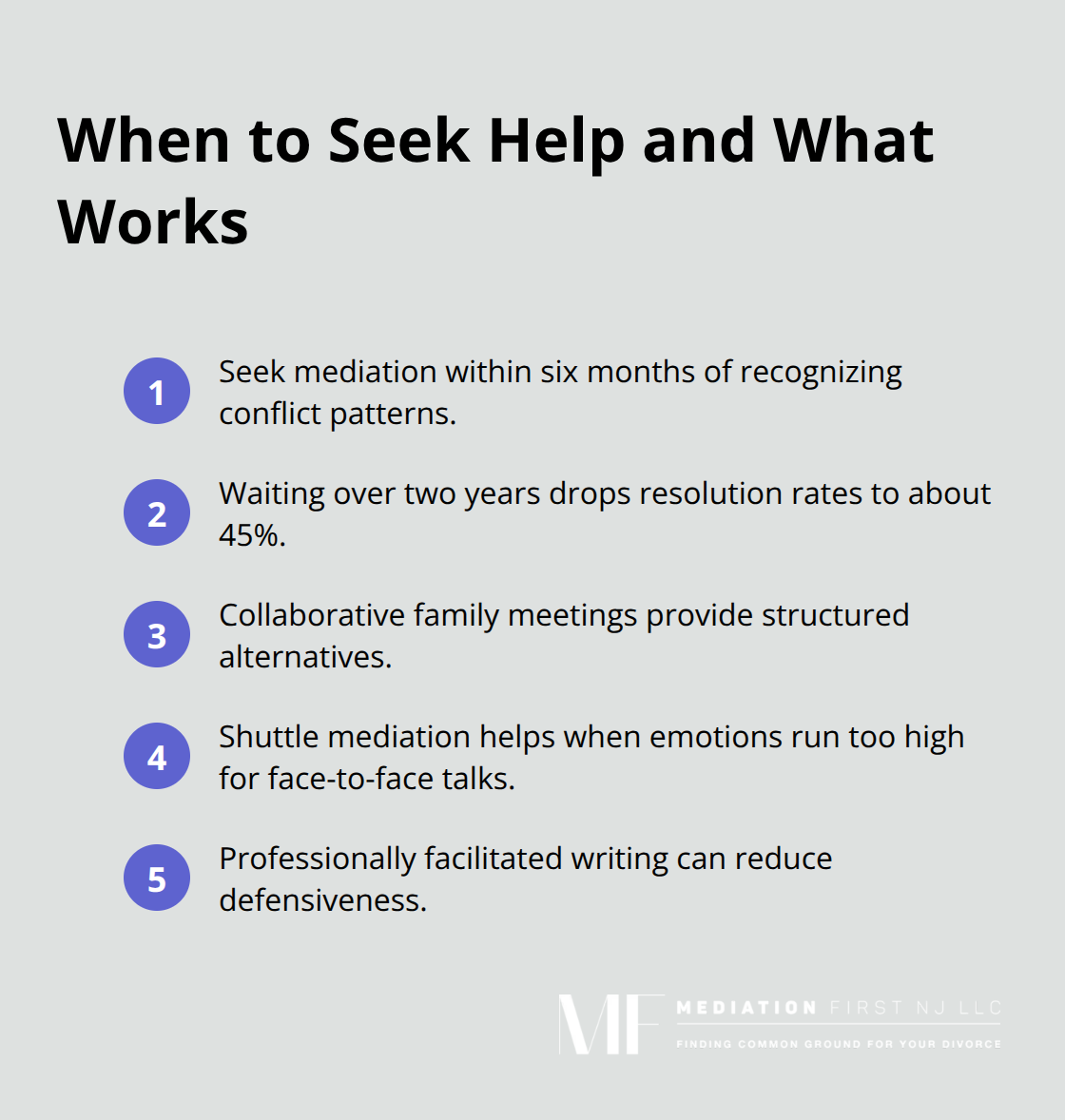
Most families wait until relationships reach a breaking point before they consider professional mediation, but research shows that families receiving mediation show statistically significant improvements from baseline. Families benefit most from mediation when communication patterns become destructive but before positions harden into permanent divisions. The Norwegian Family Conflict study found that families who seek professional support within six months of recognition of conflict patterns achieve resolution rates above 80%, compared to just 45% for families who wait over two years.
Professional Mediators Break Destructive Communication Cycles
Trained mediators provide the structured environment that families need when emotional reactivity prevents productive conversations. Unlike family therapy that focuses on past trauma, mediation addresses specific current disputes through neutral facilitation that keeps discussions focused on solutions rather than blame. Professional mediators interrupt unwanted repetitive episodes that trap families in circular arguments when they teach family members to recognize choice points where they can change their typical responses. The FamC study demonstrates that families who work with professional mediators reduce conflict intensity by an average of 60% within three months because neutral third parties can identify communication patterns that family members cannot see themselves.
Alternative Resolution Methods Work When Traditional Approaches Fail
Collaborative family meetings with trained facilitators offer structured alternatives when informal family discussions repeatedly fail. Some families benefit from shuttle mediation where the mediator meets with family members separately before the mediator brings them together (particularly when emotional wounds run too deep for immediate face-to-face conversations). Written communication facilitated by professionals can help family members express concerns safely when verbal discussions trigger defensive reactions.
Court Systems Create Winners and Losers
Traditional litigation forces families into adversarial positions where one person wins and another loses, which destroys relationships that need to continue after the legal process ends. Family court judges make decisions based on limited information and legal precedents rather than the specific needs and dynamics of individual families. Family court cases involve lawyers who typically charge hourly for their services, while mediation typically resolves disputes in 3-6 sessions at a fraction of the cost.
Professional Mediation Preserves Family Relationships
Mediation creates space for family members to express their real concerns without the formal rules and time constraints that characterize courtroom proceedings. Families who choose mediation report higher satisfaction rates with their agreements because they participate directly in crafting solutions rather than having decisions imposed on them. We at Mediation First NJ LLC help New Jersey families navigate these challenging dynamics through confidential mediation that prioritizes constructive communication and mutually acceptable agreements outside traditional court systems.
Final Thoughts
Family conflict resolution strategies work best when families commit to change their response patterns rather than wait for others to change first. Research shows that 75% of how people treat us stems from our own behavior, which means you have more control over family dynamics than you realize. Successful families practice these core principles consistently: they address conflicts within 24 hours, focus on single issues during discussions, and create safe spaces where everyone can express concerns without fear of ridicule.
When family members recognize choice points in conversations and respond differently than expected, they break destructive cycles that trap families in repetitive arguments. Professional mediation becomes necessary when families cannot break these patterns independently. The Norwegian Family Conflict study demonstrates that families who seek help within six months achieve 80% resolution rates (compared to 45% for those who wait longer).
We at Mediation First NJ LLC provide New Jersey families with confidential mediation services that prioritize constructive communication and mutually acceptable agreements outside traditional court systems. Strong family relationships require ongoing commitment to these communication strategies and recognition that conflict can strengthen bonds when handled properly. Professional support becomes valuable when families need neutral guidance to navigate complex dynamics.