

Divorce can be a challenging process, but mediation offers a more collaborative approach to resolving disputes. At Mediation First NJ LLC, we’ve seen firsthand how proper preparation can make a significant difference in the outcome of divorce mediation.
This guide will walk you through the essential steps to prepare for divorce mediation, helping you navigate this important process with confidence and clarity.
What Is Divorce Mediation?
The Mediation Process
Divorce mediation is a voluntary process where a neutral third party (the mediator) helps couples negotiate the terms of their separation. Both parties meet with a mediator to discuss and resolve issues such as property division, child custody, and financial support. The mediator doesn’t make decisions but facilitates communication and helps identify mutually acceptable solutions. This process typically takes several sessions, each lasting a few hours.
Advantages Over Litigation
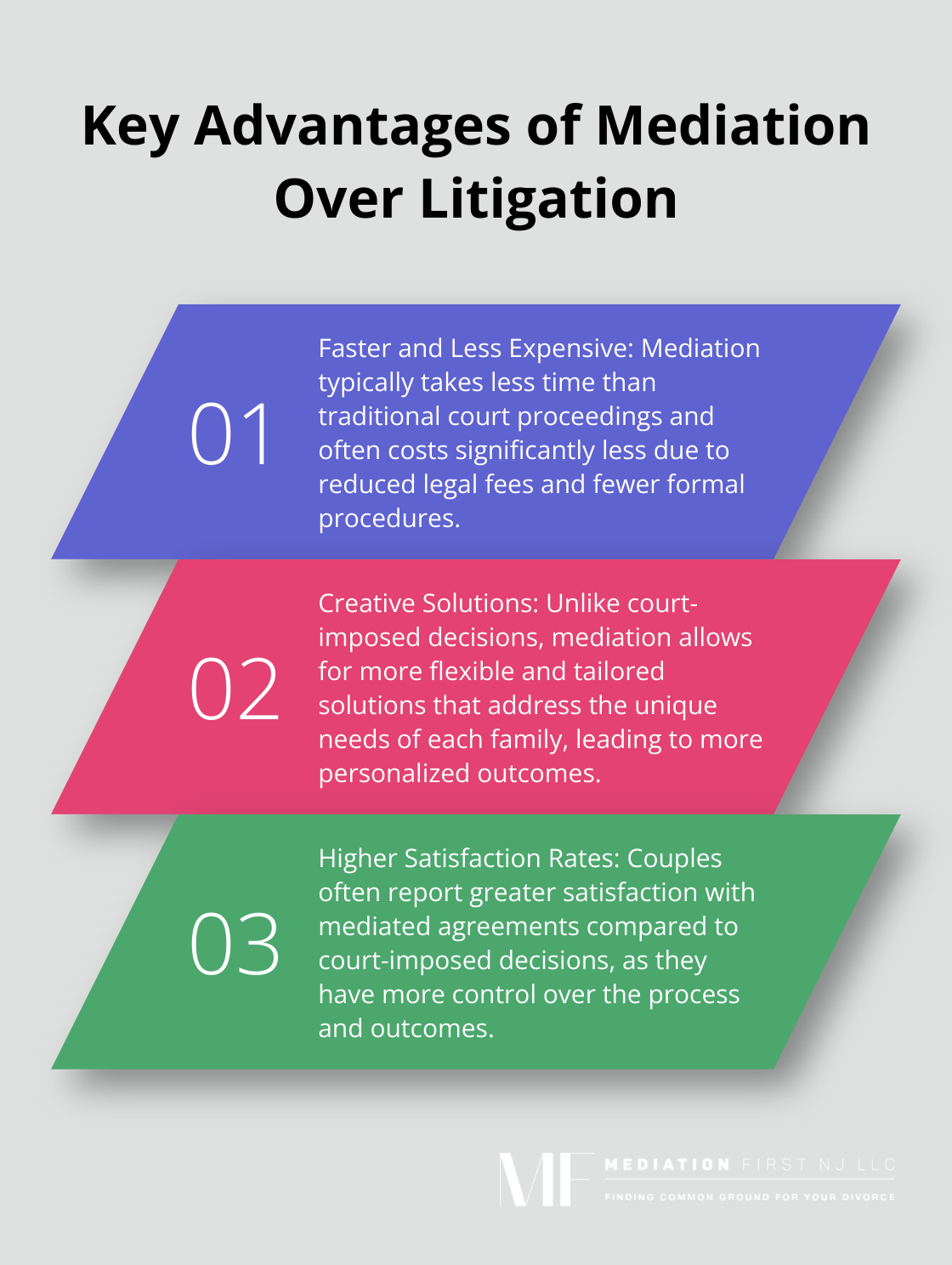
Mediation offers several benefits compared to traditional court proceedings. It’s generally faster and less expensive than litigation. Mediation also allows for more creative solutions tailored to your family’s unique needs. Unlike court-imposed decisions, mediated agreements often lead to higher satisfaction rates.
The Mediator’s Role
A skilled mediator acts as a neutral facilitator, not an advocate for either party. They help manage emotions, ensure balanced discussions, and keep negotiations on track. Mediators also provide information about legal processes and typical outcomes, but they don’t give legal advice.
Suitability for Different Situations
While mediation can be highly effective, it’s not suitable for every situation. Cases involving domestic violence or severe power imbalances may require different approaches. It’s important to consult with a legal professional to determine the best path forward for your specific circumstances.
Preparing for the Next Steps
Understanding the mediation process is the first step in preparing for your divorce mediation. The next crucial phase involves gathering all necessary documents and information to ensure a smooth and productive mediation process. This preparation will help you make informed decisions and contribute to a more efficient resolution of your divorce.
What Documents Do You Need for Divorce Mediation?
Financial Records and Statements
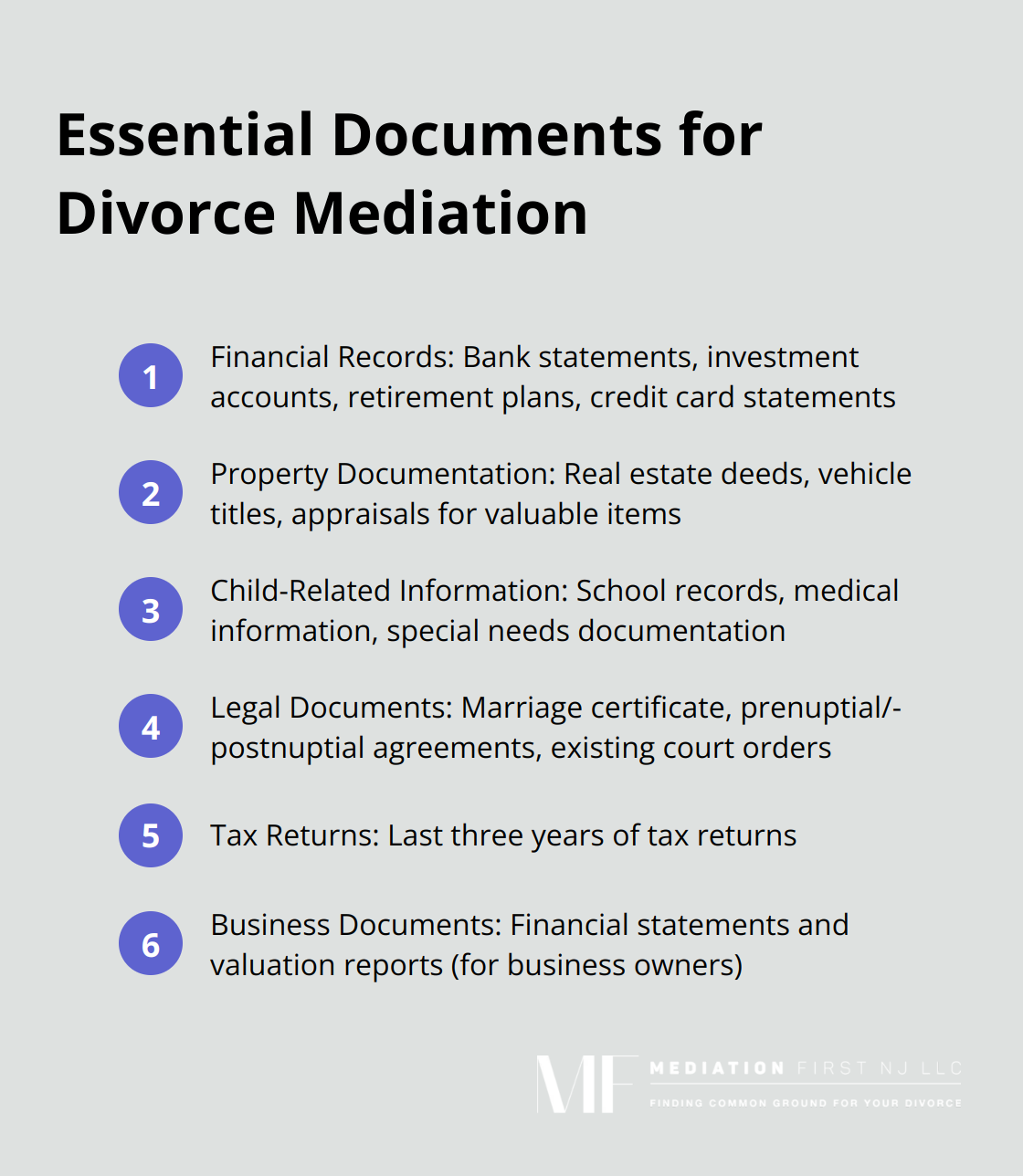
Divorce mediation requires a comprehensive collection of financial documents. You should gather bank statements, investment accounts, retirement plans, and credit card statements for the past three years. Include loan documents, mortgage statements, and any other debts. Tax returns for the last three years provide a clear picture of your financial situation, which is essential for fair asset division.
Property and Asset Documentation
A thorough list of all your assets is necessary. This includes real estate deeds, vehicle titles, and appraisals for valuable items (such as jewelry or artwork). Business owners need to provide financial statements and valuation reports. For real estate, recent property tax assessments and mortgage statements are important. These documents ensure all assets are accounted for and properly valued.
Child-Related Information
Parents must collect relevant documents about their children. This includes school records, medical information, and any special needs documentation. Details about extracurricular activities and associated costs are also important. This information is vital for discussions about child custody, support, and parenting plans. Research has documented that parental divorce/separation is associated with an increased risk for child and adolescent adjustment problems.
Legal Documents Related to the Marriage
All legal documents related to your marriage are necessary for mediation. Bring your marriage certificate, prenuptial or postnuptial agreements (if applicable), and any existing court orders. If you’ve already initiated the divorce process, include any filed paperwork. These documents provide the legal framework for your mediation.
Organizing Your Documents
Create a system to organize all these documents. You can use a binder with labeled sections or digital folders on your computer. This organization will help you quickly access information during mediation sessions. It also demonstrates your commitment to a transparent and efficient process.
The more organized and comprehensive your documentation, the smoother your mediation process will be. This preparation not only saves time during sessions but also helps ensure that no important details are overlooked. As you complete this document-gathering phase, you’ll be well-prepared to address the emotional and mental aspects of divorce mediation.
How Can You Prepare Emotionally for Divorce Mediation?
Divorce mediation involves more than paperwork and legal procedures; it’s an emotional journey. Emotional preparedness can significantly impact the mediation process. Here’s how you can prepare yourself emotionally for this important step.
Set Realistic Expectations
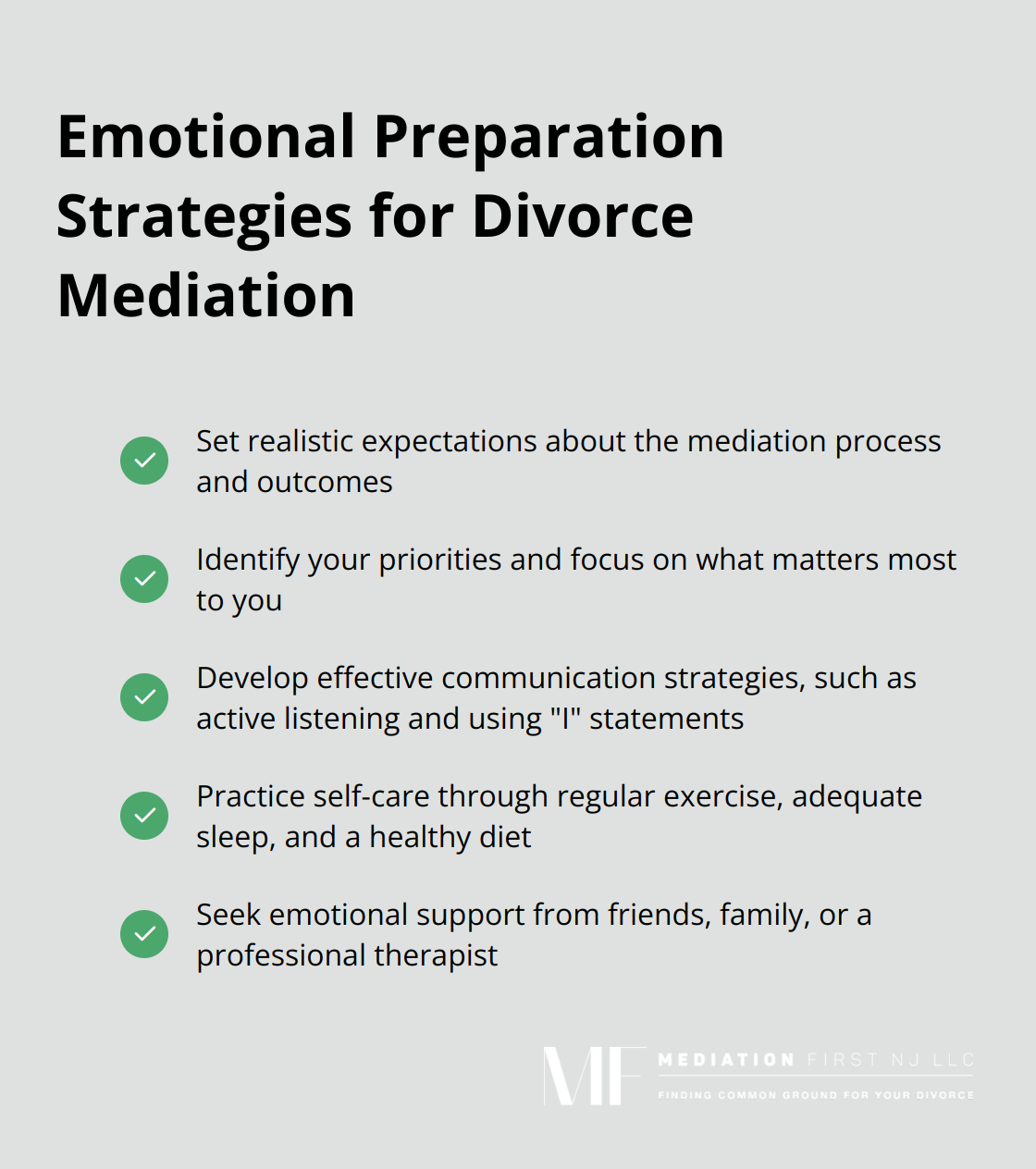
Divorce mediation isn’t about winning or losing. It focuses on finding mutually acceptable solutions. You should understand that you might not get everything you want, but you can work towards a fair compromise. Research indicates that satisfaction with mediation was higher among those who reached agreement than among those who did not. This high satisfaction rate stems from realistic expectations and a willingness to collaborate.
Identify Your Priorities
Before you enter mediation, take time to reflect on what matters most to you. Is it maintaining a good co-parenting relationship? Financial stability? Keeping the family home? Knowing your priorities helps you focus on what’s truly important during negotiations.
Develop Effective Communication Strategies
Communication can become strained during divorce. You should practice active listening and express yourself calmly and clearly. Try to avoid blame and focus on solutions. The Harvard Negotiation Project suggests using “I” statements instead of “you” statements to reduce defensiveness. For example, say “I feel overwhelmed by the financial responsibilities” rather than “You never help with the bills.”
Practice Self-Care
Divorce creates stress, and stress can cloud your judgment. You should prioritize self-care during this time. Regular exercise, adequate sleep, and a healthy diet can significantly improve your emotional resilience.
Seek Support
Don’t go through this alone. You should lean on friends, family, or a professional therapist for emotional support. Many people find divorce support groups helpful. These groups provide a safe space to share experiences and coping strategies.
Final Thoughts
Divorce mediation preparation requires attention to practical and emotional aspects. You must gather comprehensive financial records, property documentation, and child-related information to lay the groundwork for productive negotiations. You should set realistic expectations, identify priorities, and develop effective communication strategies to prepare emotionally for the process.
Thorough preparation empowers you to make informed decisions about your future. It helps you approach mediation with clarity and confidence, increasing the likelihood of reaching a fair agreement. Professional guidance can provide invaluable support during this challenging transition.
At Mediation First NJ LLC, we offer expert mediation services to guide New Jersey families through divorce and family-related disputes outside the traditional court system. We create a respectful environment where you can work towards mutually acceptable solutions. You should prepare thoroughly (both practically and emotionally) to navigate the mediation process effectively.