

Custody disputes drain your time, money, and emotional energy. The good news is that mediation offers a faster, less adversarial path forward than court litigation.
We at Mediation First NJ LLC have helped countless parents navigate this process successfully. This guide walks you through preparing for custody mediation so you can reach an agreement that works for your family.
What Actually Happens in a Mediation Room
The Mediator’s Role and Your Control
Mediation is not a courtroom, and that distinction matters more than you might think. A mediator sits with both parents and facilitates conversation toward a written agreement, but the mediator does not decide custody outcomes. You and the other parent make all decisions. This fundamentally changes the dynamic. Instead of presenting arguments to a judge who will impose terms, you negotiate directly with the other parent while the mediator keeps the conversation productive.
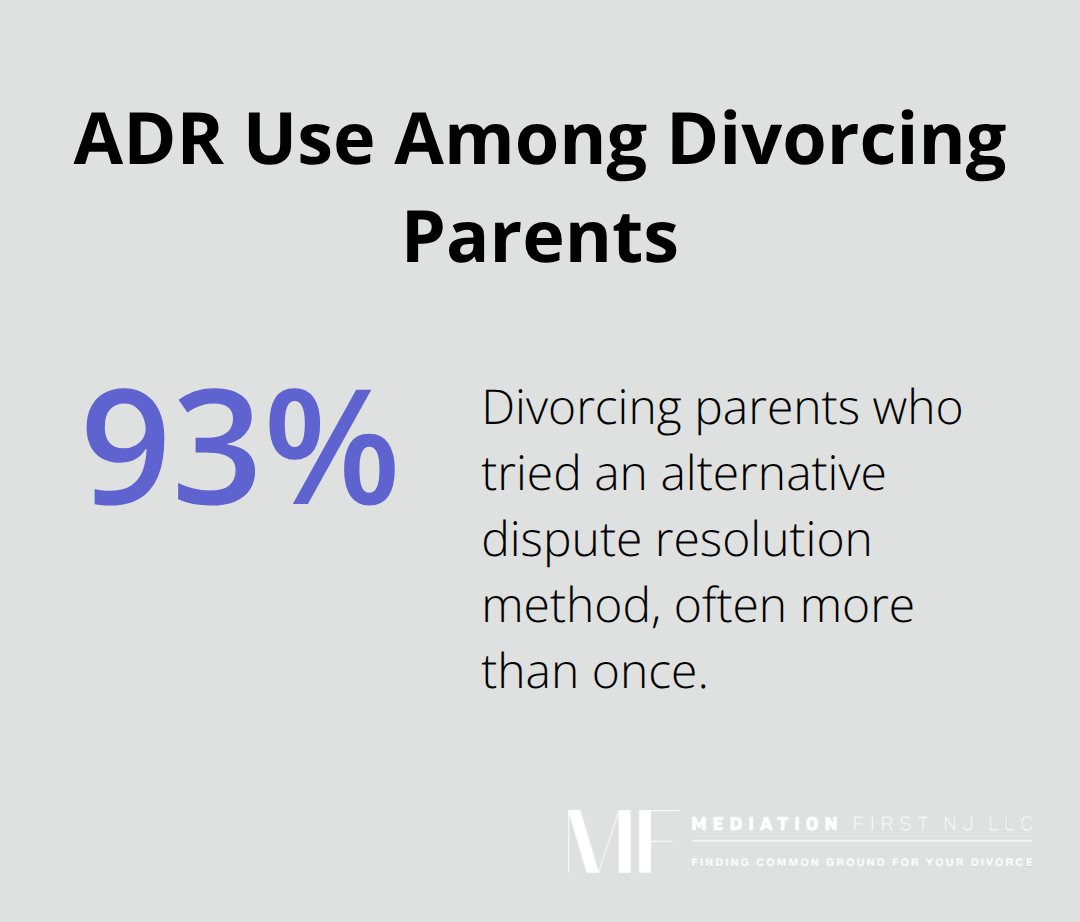
93 percent of divorcing parents tried an alternative dispute resolution method, often more than once. This statistic removes a major source of anxiety when you understand what to expect inside that room. The mediator’s job is to guide productive conversation, not impose solutions. This means success depends heavily on your preparation and willingness to collaborate.
What Happens During Your Session
When you walk in, the mediator explains confidentiality rules, outlines the agenda, and sets ground rules for respectful communication. Many mediators begin by asking each parent to state their priorities without interruption. This opening phase typically lasts 30 to 60 minutes depending on complexity.
The mediator then moves into substantive negotiation, often using separate sessions called shuttle mediation if tensions run high. You present your proposed parenting schedule, explain your reasoning, and listen to the other parent’s perspective. Concrete details matter here. Bring your child’s school calendar, your work schedule, and specific custody proposals rather than vague ideas about what fairness looks like. The mediator asks clarifying questions, points out scheduling conflicts, and suggests compromises. If you reach agreement on an issue, the mediator documents it. If you stall, the mediator might reframe the problem or suggest a break to let emotions settle.
The Cost Advantage Over Court
The cost difference between mediation and court is substantial. Court litigation for custody disputes typically runs $15,000 to $30,000 or more per parent when attorney fees accumulate, whereas mediation averages $1,500 to $3,000 total depending on case complexity and your mediator’s hourly rate. A mediator with divorce-specific training and credentials as a licensed mental health professional or attorney brings real value.
Mediation works best when both parents prioritize the child’s best interests and come ready to discuss concrete scheduling options. This collaborative approach produces faster results and lower costs than adversarial court proceedings.
Safety Considerations and Accommodations
If safety concerns exist, such as substance abuse or domestic violence, inform the mediator before the session begins. Some mediators offer shuttle mediation or online sessions to manage power imbalances and protect safety while still allowing negotiation. These accommodations cost more than standard mediation yet remain far less expensive than court.
The written agreement you reach during mediation becomes binding once submitted to the court for approval. This finality is powerful. You avoid the unpredictability of a judge’s decision and retain control over the outcome your family actually lives with.
Moving Forward With Your Strategy
Now that you understand the mediation room itself, the next step is preparing the documentation and financial information that will anchor your negotiations. What you bring to that table-and how organized you are-directly influences whether you reach agreement quickly or spend additional sessions resolving preventable disputes.
Prepare Your Documentation Before Mediation
Walking into mediation unprepared wastes time and money. Mediators watch this happen constantly: parents arrive without their child’s school calendar, without income documentation, without any concrete custody proposal. Then they spend two hours in a $300-per-hour mediation session scrambling through basic facts that should have been organized weeks earlier. You control whether this happens to you.
Organize Your Custody and Parenting Time Records
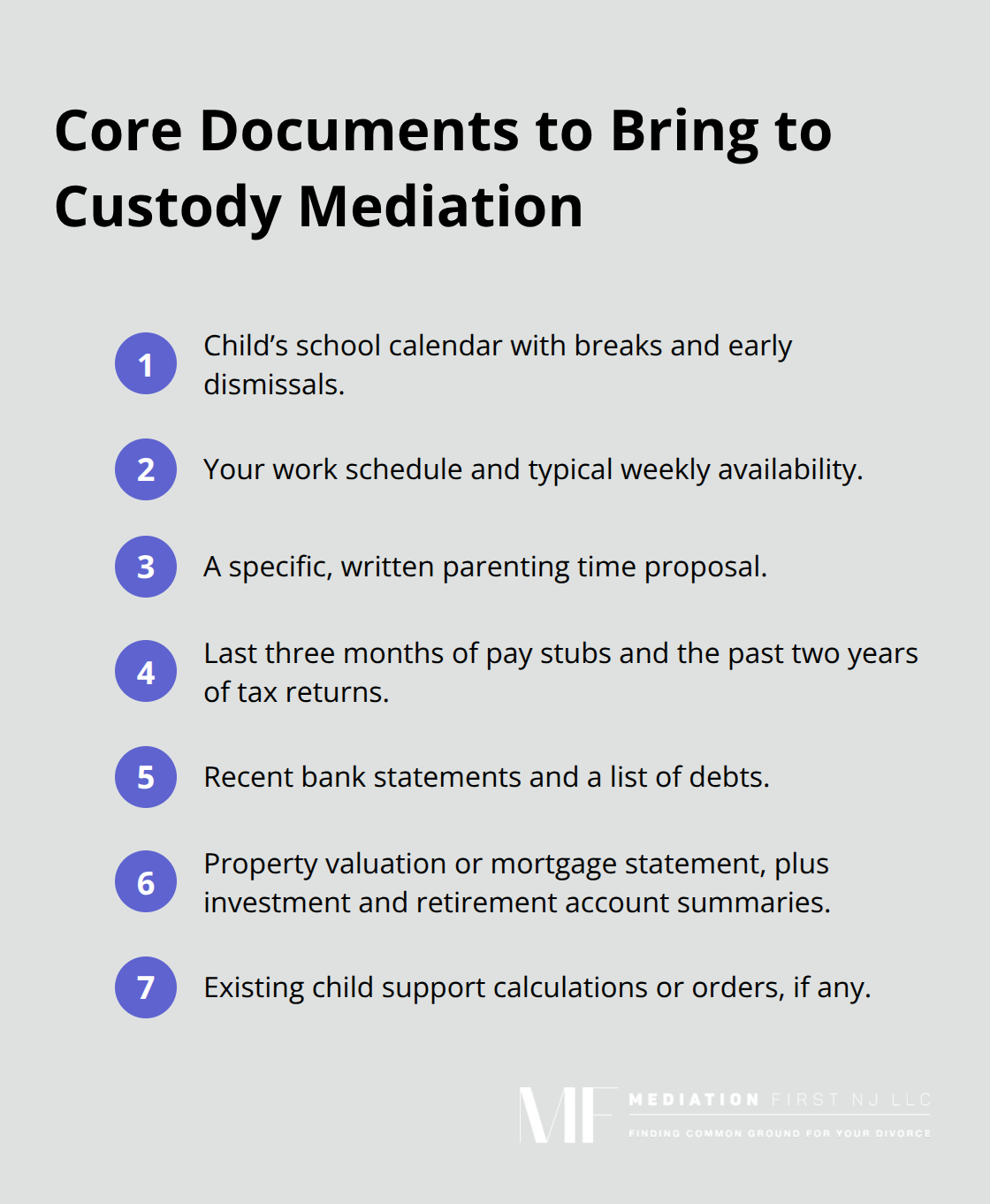
Start with custody and parenting time records. Print your current informal custody arrangement if one exists, or write down how custody actually functions right now. Track what percentage of time your child spends with each parent over the past 60 days. Most parents misjudge this split. If you think you have 50/50 custody but your work schedule and school pickups tell a different story, document the reality. Bring your employment schedule, your child’s school hours, extracurricular timelines, and any existing court orders. Organize your custody and parenting time records to convert these schedules into timeshare percentages that both parents can see and compare. This removes arguments about fairness and grounds negotiations in actual numbers. Your mediator will value concrete data far more than subjective claims about what feels fair.
Gather Financial Documents and Income Statements
Financial documentation matters equally. Collect your last three months of pay stubs, tax returns from the past two years, bank statements, and any child support calculations already in place. If you own a home, bring a recent property valuation or your mortgage statement. Collect documentation for retirement accounts, investment accounts, and any debts. Your mediator needs these figures to discuss child support, parenting costs, and how expenses will be shared. Vague estimates slow everything down. One parent claims they earn $60,000 annually while tax returns show $75,000, and suddenly you’ve lost 30 minutes to verification. Accurate, documented numbers move mediation forward.
Document Your Child’s Needs and Routines
Document your child’s needs and routines with specificity. Write down school start and end times, including whether your school district uses a four-day week or traditional five-day schedule. This detail matters because a four-day week changes how custody schedules function. List your child’s extracurricular activities with days, times, and locations. Include medical appointments, therapy sessions if applicable, and any special needs or accommodations your child requires. If your child has asthma, allergies, medication schedules, or behavioral considerations, document these clearly. A mediator needs to understand whether your proposed custody schedule actually accommodates your child’s real life. Many parents propose schedules that sound good in theory but conflict with school calendars, sports seasons, or medical needs.
Use Calendars to Test Your Proposed Schedule
Print your child’s school calendar highlighting breaks, early dismissal days, and testing windows. These dates anchor custody discussions because they determine whether each parent can actually provide care during the times they claim. Your mediator will reference these dates constantly during negotiations to test whether proposed schedules work in practice. Converting your child’s schedule and your work hours into visual timeshare percentages removes guesswork and lets both parents see exactly how much time each parent spends with the child under different schedule options. Concrete visuals move negotiations forward faster than abstract discussions about fairness.
With your documentation organized and your child’s schedule mapped out, you now have the foundation to develop your actual mediation strategy. The next step involves identifying your priorities, understanding what truly serves your child’s best interests, and preparing the communication approach that will help you reach agreement.
Build Your Strategy Around What Actually Matters
Most parents enter mediation without a clear strategy, which is why they leave frustrated and exhausted. You need to identify what you actually care about versus what you think you should care about. These are different things. Many parents obsess over having exactly 50/50 custody when what they really need is consistency on school pickup days or guaranteed summer weeks. Clarity on this distinction changes everything.
Write down three things that matter most to your family’s functioning: perhaps it’s maintaining your child’s relationship with both parents, keeping your child in their current school, or establishing a schedule that aligns with your work commitments. These become your anchors during negotiation. Everything else is negotiable. This approach prevents you from wasting mediation time on positions that don’t actually serve your family. When the mediator suggests a custody split that gives you 45 percent instead of 50 percent, you can evaluate whether it still accomplishes your actual priority. Most parents cannot answer this question because they never defined their priority in the first place.
What Your Child Actually Needs, Not What You Think Is Fair
Your child’s needs must drive the conversation, not your sense of fairness. Courts operate under the best interests of the child standard, and your mediator will push you toward this framework constantly. This means you need to separate what feels fair to you from what actually serves your child’s development and stability.
A child who thrives on routine needs a consistent schedule even if that means unequal time splits. A child with significant anxiety might need both parents heavily involved in school communication and medical decisions, which shifts focus from custody percentages to decision-making authority. Document your child’s temperament, academic performance, social connections, and any behavioral or emotional patterns. A mediator will ask whether your proposed schedule allows your child to maintain friendships, attend school consistently, and sustain meaningful time with extended family.
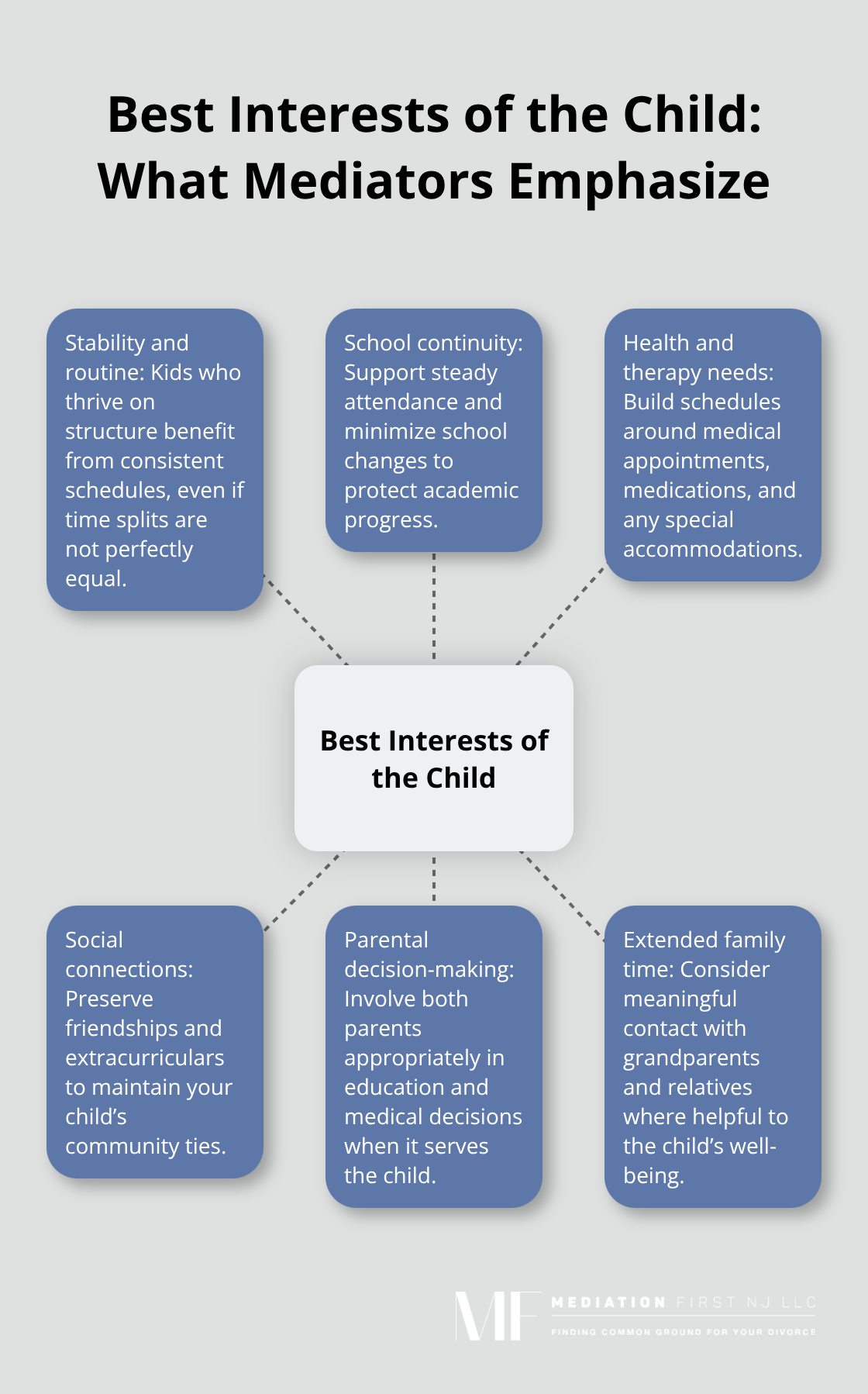
If your proposed schedule requires your child to change schools or move between neighborhoods constantly, it fails the best interests test regardless of how fairly the time divides. Most custody agreements that stick long-term are those where parents prioritized stability and the child’s actual needs over their own sense of what custody should look like.
How You Actually Talk Matters More Than What You Say
Your communication approach during mediation determines whether you reach agreement or spend additional sessions rehashing the same conflicts. Active listening in mediation sounds like corporate jargon until you practice it. It means you listen to understand the other parent’s perspective rather than craft your rebuttal while they speak.
When the other parent explains why they need Thursday evenings free, you listen for the underlying need, not just the logistical request. Maybe they coach a sport, or maybe they have a health condition. Understanding the reason opens options you would never consider if you only heard the surface request. Use concrete language instead of emotional framing. Say your child needs pickup at 3:15 PM on school days because that’s when your work schedule allows it, not that the other parent is unreasonable for suggesting 3:45 PM.
Bring data to support your positions. If you claim your child does better with consistent weekday routines, bring your child’s report card, teacher feedback, or behavioral patterns that support this claim. Mediators respond to evidence far more than emotion. Frame proposals from your perspective with specific options rather than vague demands. Instead of saying you want more time with your child, propose specific weeks or months and explain why those particular times matter. This gives the mediator and the other parent something concrete to work with.
Avoid bringing unrelated issues into the conversation. If the mediation is about custody, discussing your ex’s new partner or past financial mistakes only derails progress and signals that you are not genuinely focused on your child’s interests. Keep discussions centered on your child’s welfare and the practical details that affect your family’s daily life.
Final Thoughts
Preparing for custody mediation successfully requires three concrete actions: organize your documentation, clarify your priorities, and commit to collaborative communication. Parents who arrive with school calendars, income statements, and specific custody proposals reach agreements faster and spend less money than those who approach it without preparation. The difference between a two-hour mediation session and a four-hour scramble often comes down to work done weeks beforehand.
Your priorities matter, but your child’s actual needs matter more. Courts apply the best interests standard, and mediators will push you toward this framework throughout your sessions. If you enter mediation focused on what feels fair to you rather than what serves your child’s stability and development, you will struggle to reach agreement. Document your child’s routines, academic performance, and behavioral patterns to test whether your proposed custody schedule actually works in practice.
Communication during mediation determines whether you move forward or stall. Listen to understand the other parent’s underlying needs, not just their surface requests, and bring data to support your positions. Contact Mediation First NJ LLC to schedule a mediation session and begin moving toward an agreement that works for your family.