

Family conflict doesn’t resolve itself. Money fights, parenting disagreements, and communication breakdowns tear families apart every day, and most people don’t know where to turn.
We at Mediation First NJ LLC believe effective interventions for family conflict start with understanding what’s actually driving the tension. This guide walks you through the root causes of family disputes, why mediation works better than court battles, and concrete strategies you can use right now to rebuild trust and connection.
What Actually Drives Family Conflict
Money sits at the top of family disputes, but the real problem runs deeper than dollars and cents. According to research from the Korean Welfare Panel Study tracking over 5,800 adults in long-term relationships from 2012 to 2022, families that avoid collaborative financial discussions and family mental health face increased mental health risks compared to those who talk through money decisions together. The issue isn’t the amount of money-it’s how families handle disagreements about spending, saving, inheritance, and who pays for what. When one person makes financial decisions without input from others, resentment builds fast. You need to establish who controls what money, what expenses require joint discussion, and how major purchases get decided. Set these rules before conflict erupts, not during a fight about a $5,000 purchase neither of you agreed on.
How Money Arguments Actually Happen
Inheritance disputes, disagreements about supporting aging parents, and arguments over family event expenses create the most destructive financial conflicts. These aren’t abstract debates-they involve real perceptions of fairness and who should sacrifice. One person thinks paying for a parent’s assisted living is a shared responsibility; another believes it’s one sibling’s duty.
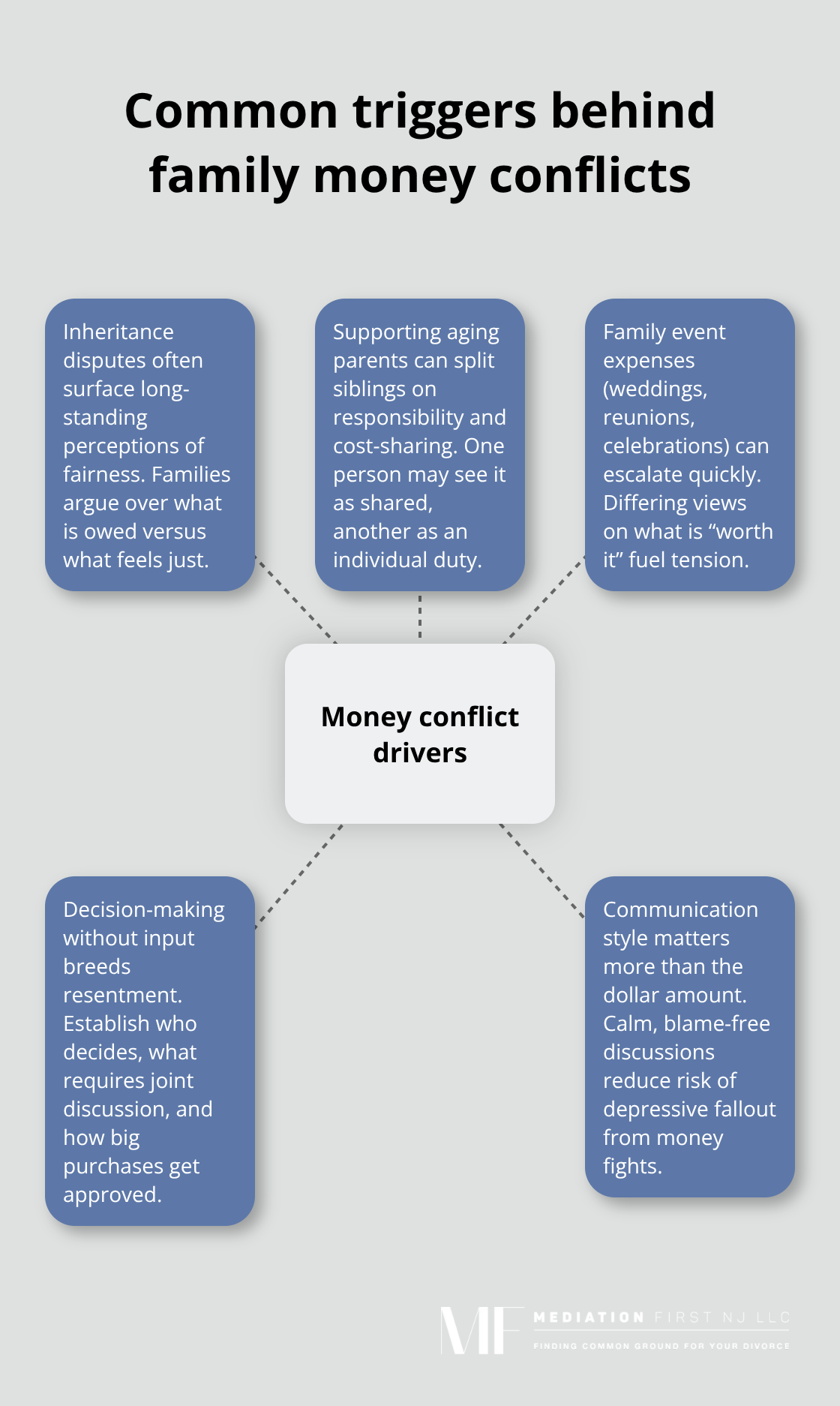
One spouse wants to spend $10,000 on a wedding; the other sees it as wasteful. Families using negative conflict approaches around money showed higher depression risk than families with positive resolution patterns. This means your communication style about finances matters more than the actual disagreement. Talk through money decisions calmly, separate the financial issue from personal criticism, and avoid blame. Instead of saying someone is irresponsible, say you need a different approach to how you both handle spending.
When Parenting Divides Parents
Parenting disagreements escalate quickly because both parents believe they’re protecting the child. One parent enforces strict rules; the other takes a relaxed approach. One wants private school; the other prefers public education. One parent disciplines harshly; the other avoids confrontation. These aren’t small differences-they confuse children and create tension between partners. The research shows that unresolved family conflict directly impacts children’s behavior, reducing anger and oppositional behavior when parents resolve disputes, and even reducing physical symptoms like abdominal pain. Your children absorb conflict stress whether you argue loudly or stay silent about disagreements. You need to align on core parenting values before conflict starts. Discuss discipline, education, screen time, and consequences when you’re calm, not in the moment when a child has misbehaved. If you and your co-parent fundamentally disagree, professional guidance helps you find middle ground that both of you can accept and model for your children.
Communication Breakdown and Unresolved Past Issues
Family conflict often stems from patterns that repeat across years or even decades. One sibling always feels left out; one parent always criticizes; one partner always withdraws during tough conversations. These patterns trap families in cycles where the same fights happen over and over. Unresolved issues from the past-a parent’s favoritism, a broken promise, a betrayal-surface in new conflicts and poison current relationships. You can’t fix what you don’t acknowledge. Families that bring hidden tensions into the light and address them directly move forward; those that ignore old wounds watch them infect every new disagreement. Professional mediation helps families interrupt these cycles and build new communication patterns that actually work.
Mediation as a Solution for Family Disputes
Court battles drain families financially and emotionally. Litigation costs thousands in attorney fees, court costs, and expert witnesses while forcing families into an adversarial system designed for winning and losing, not healing relationships. The process takes months or years, keeping conflict fresh and preventing closure. Worse, judges make final decisions about your family’s future based on limited courtroom time and legal arguments, not on what actually works for your household.
How Mediation Differs from Litigation
Mediation operates on entirely different principles. A neutral mediator facilitates conversations between family members, helping you communicate directly about what matters most and finding solutions you both can accept. You control the outcome, not a judge. The process typically takes weeks rather than months, costs a fraction of litigation, and remains confidential so your family disputes stay private.
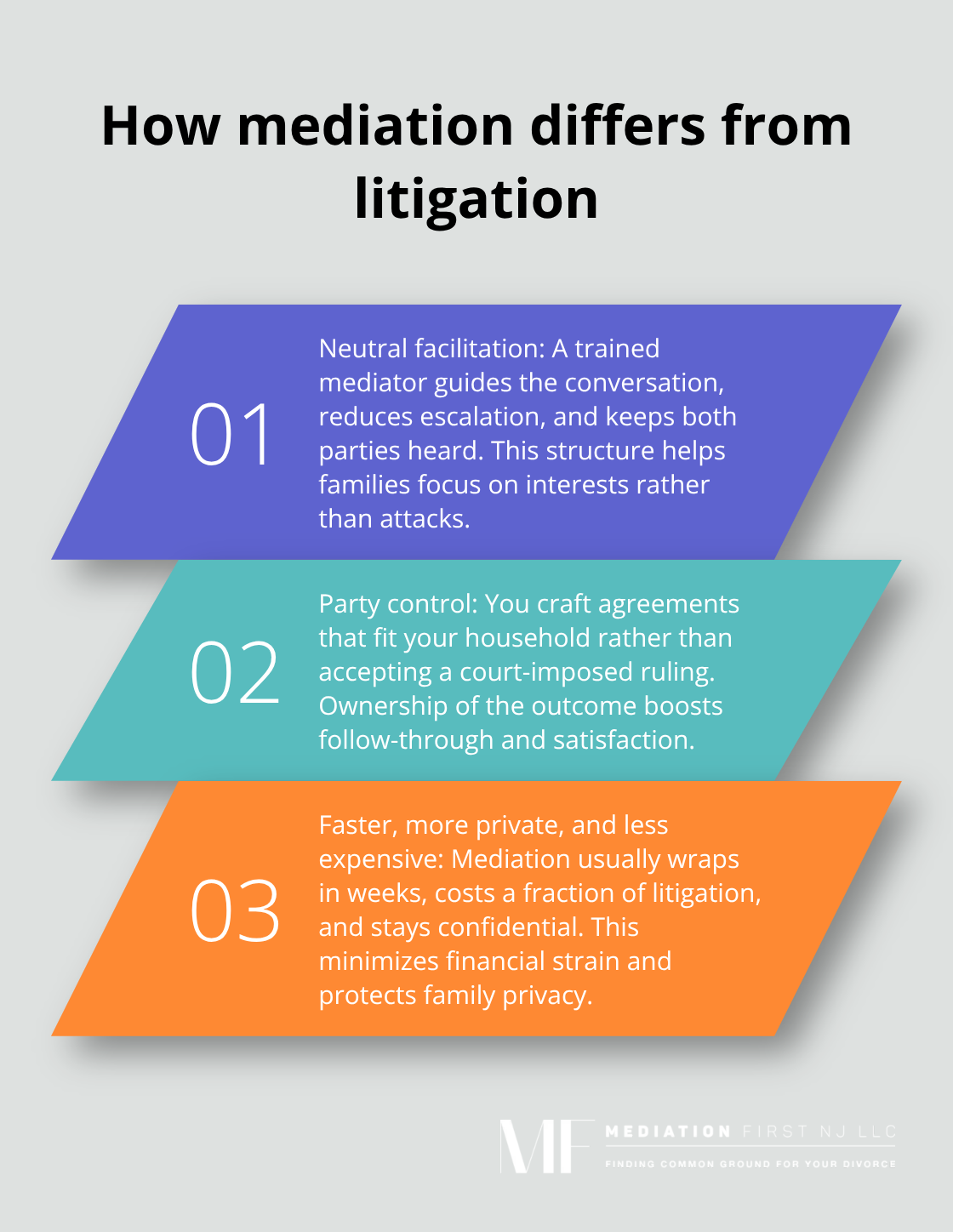
Research shows families that engage in collaborative discussions about conflict experience better mental health outcomes than those locked in adversarial patterns. Mediation forces that collaborative approach. Instead of fighting over positions in court, you discuss interests. One parent doesn’t just demand full custody; you talk about what the child needs, what schedule works for both parents, and how to support the child’s relationship with each parent. One spouse doesn’t simply claim a larger share of assets; you identify what each person values most and build an agreement that reflects those priorities.
The Role of a Neutral Third Party
The mediator’s role is not to judge or decide. The mediator keeps conversations on track, prevents escalation, ensures both people can speak and be heard, and helps translate positions into workable solutions. This matters because family members often can’t hear each other in conflict. One person’s request sounds like an attack; another’s explanation sounds like defensiveness. A skilled mediator reframes language, slows down conversations that accelerate toward anger, and identifies common ground both parties missed.
Mediation works best when both parties genuinely want to resolve the conflict and move forward, not when one person wants to punish the other or when active domestic violence exists. If you’re considering litigation because you don’t trust the other person, mediation may still work if a mediator can establish safety and balance in the conversation.
Benefits of Resolving Conflicts Outside Court
The real advantage appears after resolution. Families that mediate stay out of court and avoid the ongoing legal costs and emotional toll of litigation. More importantly, they build communication patterns that prevent future conflicts. When you’ve learned to talk through disagreements with a mediator’s guidance, you can apply those skills to new disputes without returning to court.
Families that litigate often find themselves back in court years later because the underlying communication problems never got addressed. The mediation process teaches you how to handle disagreements constructively, which means you’re equipped to manage new tensions that arise. This foundation matters far more than any single agreement you reach today.
Understanding how mediation transforms family disputes sets the stage for the practical strategies you can implement immediately to strengthen communication and prevent conflicts from escalating in the first place.
Practical Strategies for Improving Family Communication
How to Actually Listen When Family Members Talk
Most families don’t listen to each other-they wait for their turn to speak. One person shares a concern while the other mentally prepares a rebuttal. One partner explains their position while the other decides the explanation is just an excuse. This pattern kills resolution before it starts. Listening means you genuinely try to understand the other person’s perspective, even when you disagree completely. Research shows that how you respond shapes whether the conversation moves toward resolution or escalates into the same argument you’ve had dozens of times.
When someone speaks, your job is to understand what they actually mean, not to judge whether they’re right. If your spouse says they feel unsupported, don’t immediately defend yourself by listing everything you do. Instead, acknowledge what you hear: there’s some truth to that, or I hadn’t thought of it that way, but I see your point. These phrases work because they validate the other person’s experience without surrendering your position. One partner feels heard, which makes them more willing to listen when you explain your side. Families that practice this reciprocal listening pattern break the cycle where both people feel misunderstood and defensive. The conversation slows down, temperature drops, and actual problem-solving becomes possible instead of just trading accusations.
Setting Boundaries and Establishing Respectful Dialogue
Boundaries in conversation mean you decide what topics are safe to discuss and when, and you enforce those boundaries consistently. Don’t wait until a family gathering to establish ground rules about controversial subjects-set expectations beforehand. Tell family members which topics will derail the conversation and what you’ll do if someone pushes those buttons. If political disagreements always trigger fights, state that clearly: we’re not discussing politics at dinner, and if it comes up, I’m stepping away for ten minutes. This isn’t avoidance; it’s protecting the relationship from predictable explosions.
These moments are choice points-places in conversation where you can respond differently and change the direction entirely. When someone provokes you, you have options: launch into a fight, withdraw silently, or pivot to something constructive. Pivoting means you acknowledge a point and continue forward rather than getting stuck in the provocation. If someone criticizes your parenting, you could respond with defensive anger or say I hear you, and here’s what works for our family instead. This shift in response prevents the conversation from spiraling into the same destructive pattern.
Creating Safe Spaces for Difficult Conversations
Safe spaces for difficult conversations require three things: privacy, uninterrupted time, and a plan to finish. Don’t start a serious conversation when someone is leaving for work or when kids are running around. Schedule it. Tell the other person you need to discuss something important and ask when they have thirty minutes to talk without distractions. During the conversation, let each person speak fully before responding-this gift of generosity often encourages the other person to reciprocate and actually listen to you.

If tension rises, pause, breathe, and use calm language instead of heated words. When you finish, agree on next steps: will you talk again tomorrow, will one person research options, will you try something different this week. Conversations without follow-up plans fade into nothing, and families repeat the same unresolved conflict endlessly. The difference between families that repair relationships and those that stay broken is whether they finish these conversations and actually implement what they discussed.
Final Thoughts
Family conflict doesn’t end with a single conversation or agreement. It ends when you build patterns that prevent the same fights from repeating and when both people commit to handling disagreements differently. The interventions for family conflict that actually work share one thing in common: they require ongoing effort and willingness to change how you communicate.
Money fights, parenting disagreements, and communication breakdowns destroy families not because the issues are unsolvable, but because families try to solve them alone using the same broken patterns that created the conflict in the first place. Most families know what drives their specific conflict and understand how to listen and set boundaries, yet knowing these things and actually doing them are different. Professional mediation provides that bridge by teaching you how to fix problems yourselves through conversations where both people actually hear each other.
A mediator facilitates discussions, slows down escalation before it spirals, and helps you build agreements that reflect what both people genuinely need. If your family is ready to move beyond conflict, Mediation First NJ LLC offers professional mediation services designed to help you reach mutually acceptable agreements outside the court system. The next step is reaching out and scheduling a conversation with a mediator who can assess your situation and explain how mediation works for your specific circumstances.