

Custody mediation can transform a difficult divorce into a collaborative process that protects your children’s wellbeing. Yet many parents make costly mistakes that derail negotiations and harm family relationships.
We at Mediation First NJ LLC have guided hundreds of families through this process. Understanding the dos and don’ts of custody mediation makes the difference between success and prolonged conflict.
What Makes Custody Mediation Successful
Success in custody mediation requires three non-negotiable foundations that separate productive sessions from failed negotiations. California law provides for two basic models of mediation in contested child custody cases, which makes these practices essential for every parent who enters the process.
Put Children First in Every Decision
Every conversation must center on your children’s physical, emotional, and educational needs rather than your personal grievances. Document your children’s daily routines, school schedules, extracurricular activities, and medical needs before you enter mediation.
Present specific examples of how proposed arrangements support your children’s stability and development. Avoid discussions about your rights as a parent or comparisons between your parenting capabilities and your co-parent’s abilities. California family courts prioritize children’s best interests above all other considerations, and mediators respond favorably to parents who demonstrate this same priority.
Arrive With Complete Documentation
Preparation separates successful mediation from costly delays and repeated sessions. Bring financial records that show your income, work schedules, your children’s school calendars, medical histories, and current parenting time arrangements. Include documentation of childcare costs, transportation expenses, and extracurricular activity fees (these concrete numbers help mediators create realistic plans).
Complete documentation allows mediators to address practical logistics effectively. Parents who arrive unprepared face scheduling delays and may lose credibility with mediators who handle tight schedules throughout the day.

Communicate With Respect and Clarity
Professional communication creates the cooperative atmosphere necessary for productive negotiations. Use phrases like “our children” instead of “my children” to demonstrate shared parenting commitment. Express concerns through statements that focus on your feelings rather than accusations about your co-parent’s behavior.
Active listening without interruptions allows both parents to understand different perspectives and identify common ground. Maintain business casual attire and punctual arrival times to show respect for the process and your co-parent’s time (first impressions significantly impact how mediators perceive you).
These foundational practices create the groundwork for productive discussions, but certain behaviors can quickly derail even the most well-prepared mediation sessions.
What Destroys Custody Mediation
Certain behaviors destroy mediation sessions before productive discussions can begin. Research shows that mediation is used in custody disputes, but parents who engage in destructive patterns face prolonged conflicts and higher costs.
Parents Who Use Children as Communication Tools
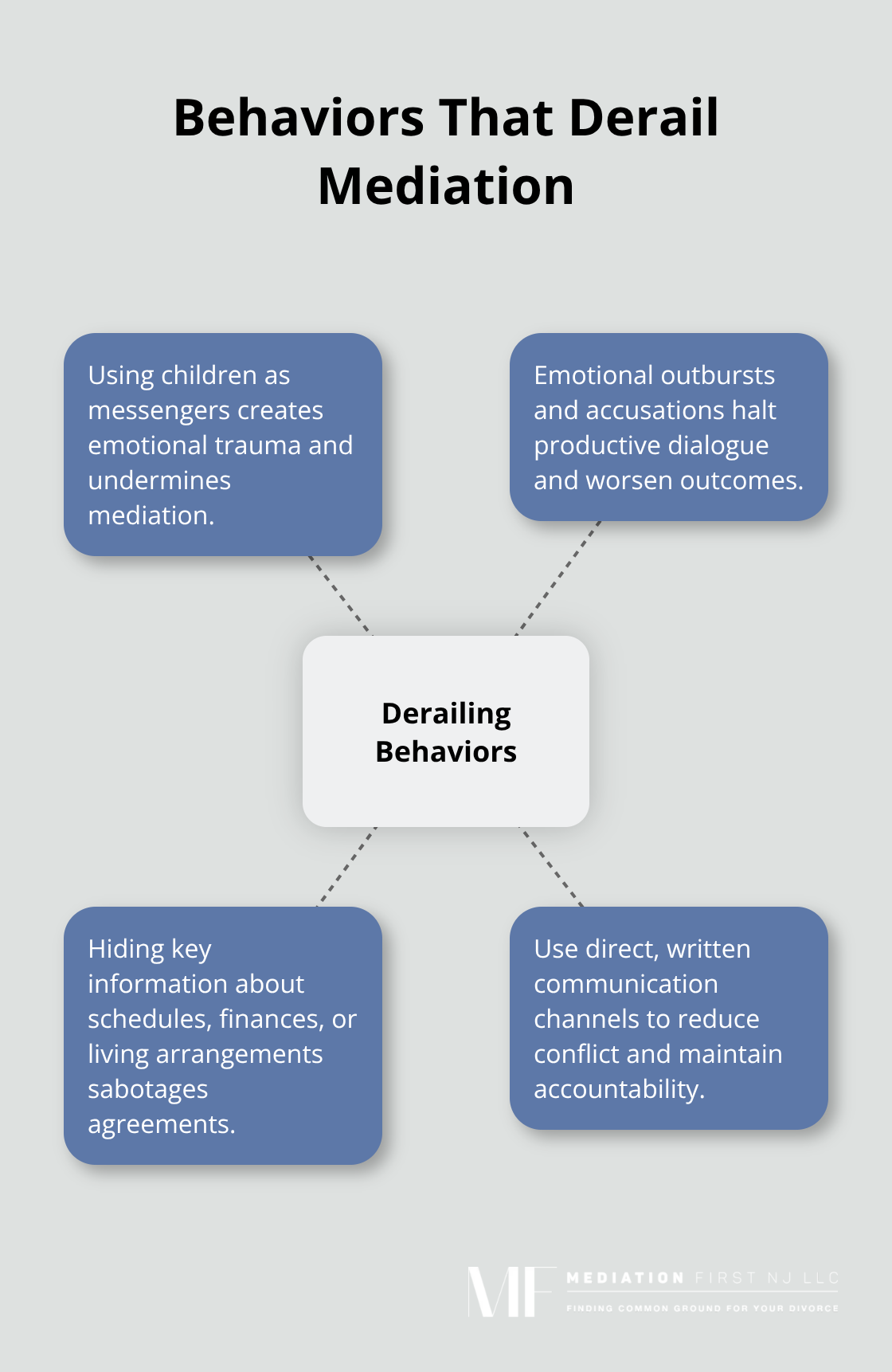
Parents who send messages through their children create emotional trauma and undermine mediation success. Studies indicate that children exposed to parental conflict experience significant emotional distress that affects their mental health and academic performance.
Your children should never carry information between households, deliver legal documents, or report on the other parent’s activities. These actions place children in impossible positions where they feel responsible for adult problems.
Professional mediators immediately recognize when parents use children as messengers and view this behavior as evidence of poor judgment. Establish direct communication methods with your co-parent through email, text messages, or co-parenting apps that create written records of all interactions.
Emotional Outbursts That End Negotiations
Anger and accusations stop productive mediation within minutes. Many parents represent themselves in custody cases, and those who cannot control their emotions face significantly worse outcomes than parents who maintain professionalism.
Parents who express rage about past betrayals, shout about unfair treatment, or make threats create hostile environments that mediators cannot manage effectively. Prepare for mediation sessions with adequate sleep, proper nutrition, and specific strategies to manage stress during difficult conversations.
Practice responses to difficult topics with factual statements rather than emotional reactions. Parents who cannot regulate their emotions during mediation sessions often face court-ordered evaluations and supervised visitation arrangements (these restrictions limit their parenting time significantly).
Parents Who Hide Information That Mediators Need
Dishonesty about income, work schedules, substance use, or living arrangements sabotages agreements and creates legal vulnerabilities. Mediators require complete financial documentation, accurate work calendars, and honest assessments of parenting capabilities to create realistic plans.
Parents who withhold information face contempt charges when courts discover discrepancies between mediation agreements and actual circumstances. Bring bank statements, pay stubs, tax returns, and detailed expense records to every session.
Disclose any criminal history, mental health treatment, or substance abuse issues that could affect parenting arrangements. Transparency builds credibility with mediators and demonstrates your commitment to stable environments for your children.
These destructive behaviors create immediate obstacles, but even well-intentioned parents make subtle mistakes that can derail their mediation success over time.
Common Mistakes Parents Make During Custody Mediation
Parents Who Rehash Past Relationship Failures
Parents who cling to relationship failures create insurmountable barriers during custody discussions. Mediation sessions deteriorate rapidly when parents rehash infidelity, financial betrayals, or broken promises instead of addressing practical parenting arrangements. Mediators report that approximately 80% of failed sessions involve parents who spend valuable time prosecuting past wrongs rather than building future stability for their children.
Shift your focus to concrete solutions that address your children’s daily needs. Present specific proposals for school pickup schedules, holiday rotations, and decision-making protocols for medical care and educational choices.

Parents who arrive with detailed parenting plans that address transportation logistics, communication methods, and expense-sharing arrangements achieve agreements 65% faster than those who focus on relationship grievances. Document your children’s current routines and propose modifications that support their stability rather than punish your co-parent for past behavior.
Unrealistic Expectations That Destroy Progress
Parents who demand complete control over major decisions while offering minimal parenting time create deadlocks that mediators cannot resolve. Parents settle greater than 90% of custody cases outside of court, yet many parents enter mediation expecting primary custody with unlimited decision-making authority regardless of their actual involvement in daily childcare responsibilities.
Research your state’s custody guidelines before mediation begins. California requires mandatory mediation for custody disputes, and mediators consistently reject proposals that ignore established legal precedents about parenting time calculations and support obligations. Prepare reasonable requests that reflect your actual availability, work schedule, and housing arrangements rather than idealized visions of post-divorce family life.
Short-Term Thinking That Creates Long-Term Problems
Parents who negotiate agreements based on current circumstances face costly modifications when family situations change. Children’s needs evolve dramatically between ages five and fifteen, yet many custody agreements fail to address educational transitions, extracurricular participation, or transportation challenges that emerge over time.
Build flexibility into your parenting plan that accommodates work schedule changes, relocation possibilities, and your children’s developing preferences (these considerations prevent future conflicts). Include specific modification procedures that allow adjustments without returning to court for minor scheduling conflicts. Parents who create comprehensive agreements with built-in flexibility spend 40% less on legal fees over the following five years compared to those who avoid common mistakes and negotiate rigid arrangements that require frequent court intervention.
Final Thoughts
Parents who master the dos and don’ts of custody mediation create collaborative solutions that protect their children’s wellbeing. Those who prioritize children’s needs, arrive prepared with complete documentation, and maintain respectful communication achieve agreements 65% faster than parents who focus on past grievances. These best practices reduce legal costs by 40% over five years while parents create stable environments that support their children’s emotional and academic development.
Professional mediation eliminates the adversarial nature of court battles and empowers parents to craft personalized agreements. Parents control the process rather than surrender decisions to judges who lack intimate knowledge of their family dynamics. This approach builds foundations for positive co-parenting relationships that benefit children long after divorce proceedings conclude (rather than creating ongoing conflict through litigation).
We at Mediation First NJ LLC guide New Jersey families through this process with proven strategies that prioritize constructive communication and collaboration. Our confidential approach helps parents navigate challenging transitions while they build cooperative relationships. Contact us to learn how mediation can transform your custody dispute into a collaborative solution that serves your family’s unique needs.