

Divorce mediation offers a structured path forward when a marriage ends. Many people wonder what happens during mediation in a divorce, and the process is far more straightforward than most expect.
At Mediation First NJ LLC, we guide couples through each stage, from the initial consultation to the final agreement. This guide walks you through exactly what to expect at every step.
How Mediation Gets Started
Your first meeting with a mediator sets the tone for everything that follows. What happens in that initial consultation directly impacts whether mediation will work for your situation. The intake process assesses your specific circumstances, explains how mediation operates, and clarifies what you’ll pay and when. This isn’t a casual conversation-it’s a working session where the mediator gathers critical details about your marital assets, debts, children, and the main issues you need to resolve.
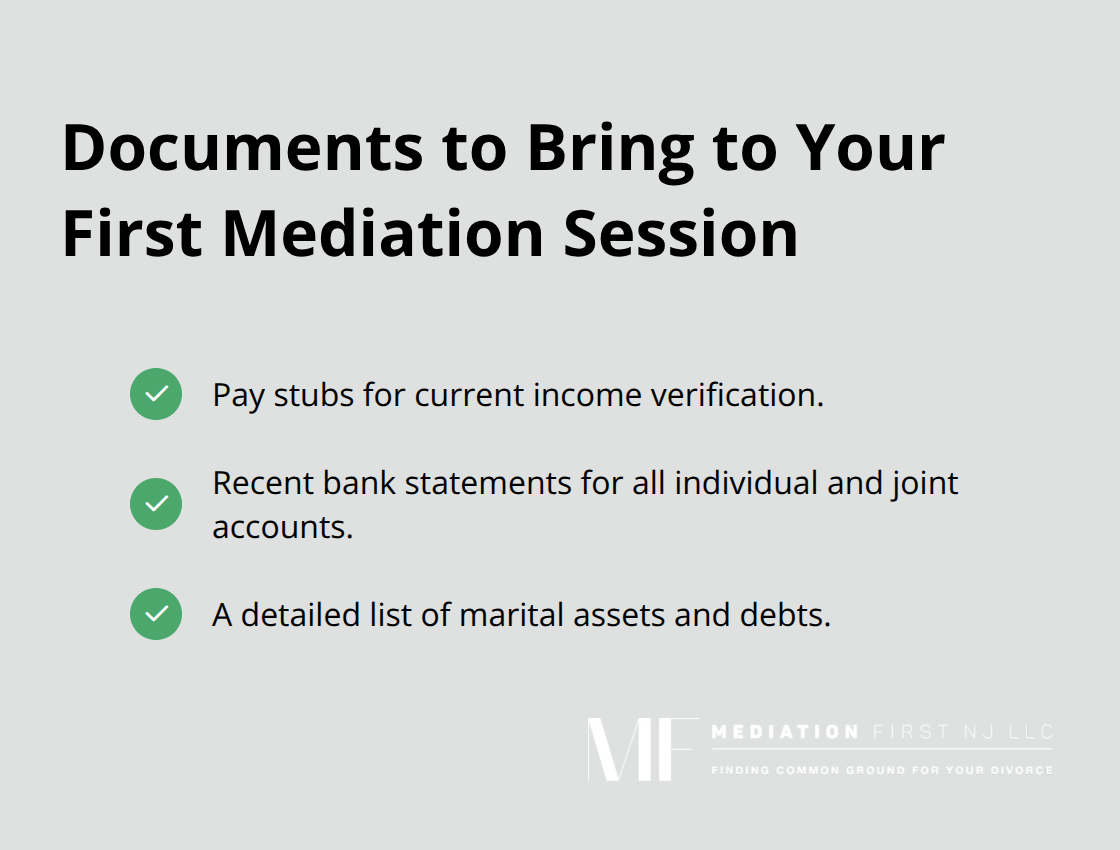
You’ll discuss property division, child custody arrangements, support obligations, and any other concerns driving your divorce. The mediator also explains that mediation is voluntary and nonbinding, meaning any resolution reached must be agreed upon by both parties. Many people feel relief when they learn they’re not locked into anything during this phase. The intake also covers how fees work-typically split between spouses-and what documents you should bring to your first full mediation session, such as pay stubs, bank statements, and a detailed list of marital assets and debts.
Understanding the Mediator’s Neutral Role
The mediator’s neutral role is fundamental, and you need to understand it from day one. Unlike a judge or arbitrator, the mediator doesn’t make decisions or advocate for either spouse. Instead, the mediator facilitates communication, identifies common ground, and helps you both explore solutions. This neutrality only works if both parties trust it, which is why mediators are transparent about how they operate.
The mediator remains impartial throughout the process, treating both spouses fairly and ensuring each person has an equal opportunity to express their needs and concerns. This balanced approach prevents one party from gaining unfair advantage and creates space for genuine problem-solving rather than adversarial positioning.
Why Confidentiality Protects Your Honesty
Confidentiality is equally critical to the mediation process. What you say in mediation stays in mediation and cannot be used in court later if the process fails. This protection encourages honesty and creative problem-solving that wouldn’t happen in litigation. New Jersey law protects mediation communications, meaning they shall not be subject to discovery or admissible in evidence in court proceedings.
This legal shield is powerful because it lets you explore positions without fear they’ll be weaponized against you in trial. You and your spouse can test ideas, acknowledge concerns, and make concessions knowing these statements won’t haunt you if mediation doesn’t succeed. The confidentiality extends to the mediator as well-they cannot testify about what occurred in mediation if the case later goes to court.
Establishing Ground Rules Before Substantive Discussions
You and your spouse should establish ground rules before substantive discussions begin. These rules typically include treating each other respectfully, avoiding interruptions, and staying focused on issues rather than blame. Setting expectations upfront prevents sessions from derailing into arguments that waste time and money.
Ground rules might also address how you’ll handle emotional moments, whether you’ll take breaks when tension rises, and how you’ll communicate between sessions. When both parties agree to these standards at the start, the mediator can reference them if discussions become unproductive. This framework transforms mediation from a potential conflict zone into a structured environment where real progress happens.
With intake complete, neutrality established, and ground rules in place, you’re ready to move into the actual mediation sessions where the real work of identifying your interests and negotiating solutions begins.
What Happens During Mediation Sessions
Mediation sessions operate differently than courtroom proceedings, and understanding the structure helps you prepare mentally and strategically. Most mediators use a combination of joint sessions where both spouses sit together and separate caucuses where the mediator meets with each person privately. Joint sessions work well early in the process when you identify issues and establish communication patterns. Separate caucuses become valuable when emotions run high or when one party needs to discuss sensitive concerns without the other present.

The mediator uses these private meetings to understand each spouse’s true priorities, test proposals confidentially, and carry information between parties that might be difficult to share directly.
How Session Format Adapts to Your Needs
This flexibility means your session format adapts to what actually works, not what some rigid protocol demands. You control whether you want joint or separate time, and experienced mediators know when to shift between formats. If one spouse dominates conversations or if power imbalances exist, separate sessions often produce better results because they prevent one person from controlling the narrative. Research on mediation outcomes shows that sessions maintain focus and prevent fatigue, though your mediator will adjust timing based on complexity and progress.
Uncovering What Actually Matters
During sessions, the mediator guides you through identifying your actual interests rather than just your stated positions. Many people arrive believing they want something specific-like full custody or a particular asset-without examining why that matters to them. The mediator asks clarifying questions to uncover what drives your position. Perhaps you want primary custody because you fear losing connection with your child, not because you want to punish your spouse. Perhaps you want the house because it represents stability, not because of its market value. Once interests surface, solutions emerge that satisfy both parties in ways rigid positions never could.
Brainstorming Solutions That Work for Both Parties
The mediator helps you brainstorm creative options that address what actually matters. On key topics like child support, spousal support, and property division, the mediator often provides information about New Jersey guidelines so you understand what courts typically award. Knowing that New Jersey child support follows specific income-based formulas removes guesswork from negotiations. You can then decide whether to follow guidelines or deviate based on your family’s circumstances.
Moving Through Negotiation and Building Momentum
The negotiation phase involves making proposals, responding to counteroffers, and gradually narrowing differences. Good mediators prevent this from becoming adversarial by reframing offers as problem-solving attempts rather than demands. They highlight areas of agreement to build momentum and focus remaining energy on genuine disputes. As you and your spouse narrow your differences through this structured process, the mediator begins preparing the documentation that will formalize your agreement.
Drafting and Finalizing the Mediation Agreement
Creating the Memorandum of Mediated Settlement Agreement
Once you and your spouse narrow your differences and reach consensus on major issues, the mediator moves toward formalizing what you’ve agreed upon. This stage separates successful mediation from incomplete work. The mediator drafts a Memorandum of Mediated Settlement Agreement, which documents all the terms you’ve negotiated. This memo is shorter and less formal than a full separation agreement, but it captures everything: how you’ll divide property and debts, custody and visitation arrangements, child support amounts, spousal support if applicable, and any other agreements you’ve reached.
The mediator asks clarifying questions during this drafting phase because vague language creates problems later. For example, saying you’ll split retirement accounts equally means nothing without specifying exact account balances as of a specific date and which accounts transfer to whom. New Jersey courts require specific, measurable terms in settlement agreements, so the mediator ensures your memo contains these details before you sign anything. By reviewing and finalizing the draft, both parties can confidently move forward, knowing that their interests and needs have been properly documented.
Legal Review by Independent Attorneys
After the mediator completes the draft, you and your spouse should each hire independent attorneys to review the agreement before signing. This step is not optional if you want genuine legal protection. An attorney reviews whether the settlement complies with New Jersey law, whether you’ve disclosed all assets and debts, and whether the terms actually serve your interests.
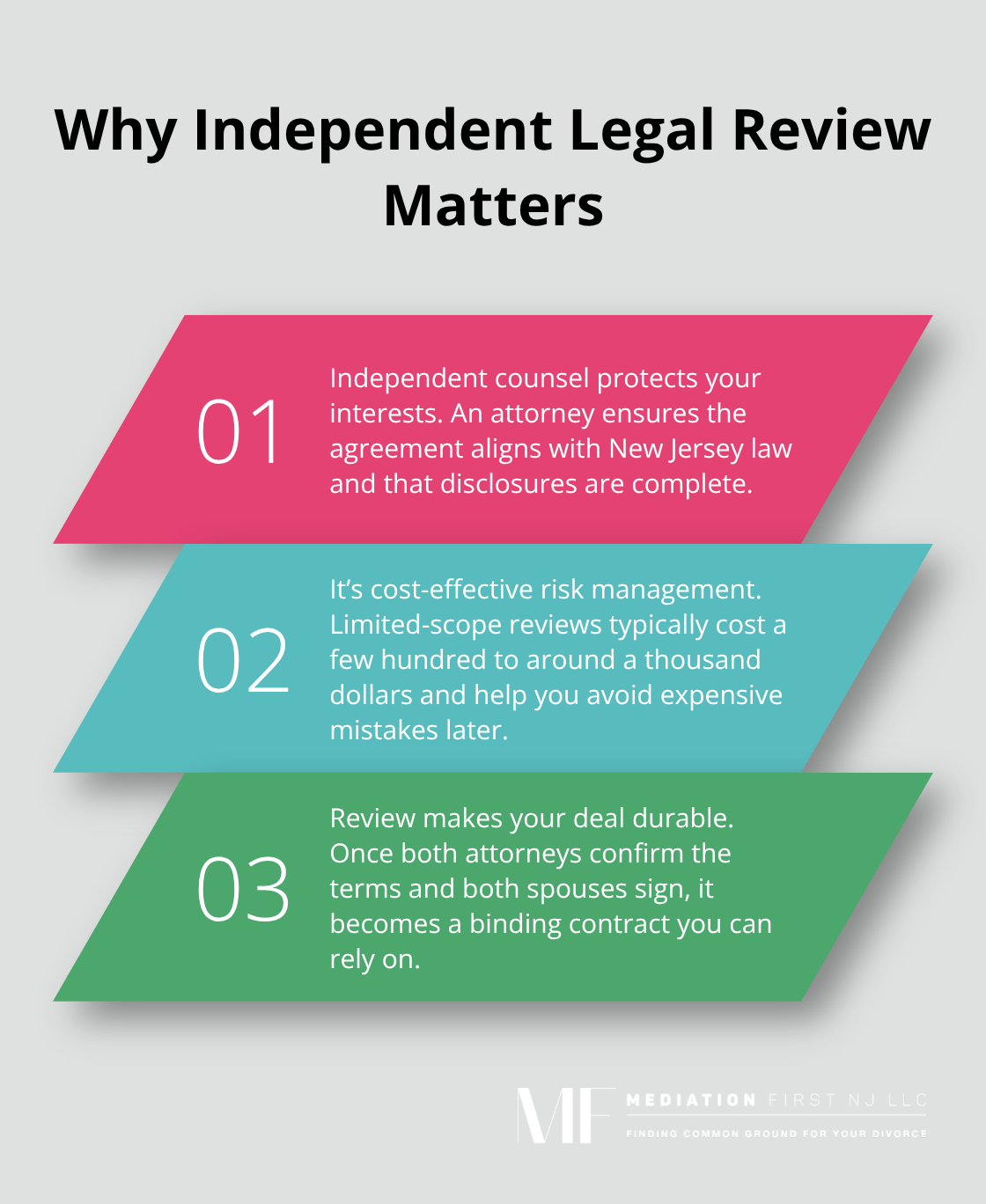
Many people skip this step to save money, then regret it months later when they discover unfavorable tax consequences or when enforcement becomes difficult. The attorney fee for a limited review of a completed settlement typically ranges from a few hundred to a thousand dollars depending on complexity, but this investment protects you from far costlier mistakes. Once both attorneys confirm the agreement is sound and both spouses sign, you have a binding contract.
Filing Documents with the Court
Your attorney files the settlement agreement with the court along with any required forms like the Case Information Statement and the Judgment of Divorce. New Jersey processes uncontested divorces faster than contested ones, and filing a completed settlement agreement often accelerates finalization to sixty to ninety days rather than months of court proceedings. The court reviews your paperwork, and if everything complies with state law, a judge signs off and your divorce becomes final.
Final Thoughts
Mediation transforms divorce from a courtroom battle into a structured negotiation where you maintain control over outcomes. What happens during mediation in a divorce differs fundamentally from litigation because you and your spouse drive the process rather than waiting for a judge to impose decisions. Litigation costs significantly more, stretches across months or years, and produces winners and losers rather than solutions both parties can live with.
Court proceedings are public, adversarial, and leave lasting resentment that complicates co-parenting and future interactions. Mediation costs a fraction of litigation fees, typically concludes within weeks, and preserves your ability to communicate respectfully afterward. Most importantly, mediation gives you control-you decide what matters, what you’ll compromise on, and what your settlement looks like.
After reaching an agreement, each spouse reviews the settlement with an independent attorney to confirm it protects your interests and complies with New Jersey law. Once both attorneys approve and both parties sign, your attorney files the paperwork with the court, and the judge signs the Judgment of Divorce without trial. Mediation First NJ LLC guides couples through this entire process, from initial consultation to final filing.