

Divorce doesn’t have to be a battleground. At Mediation First NJ LLC, we’ve seen firsthand how collaborative divorce solutions can transform a potentially contentious process into a constructive one.
This approach offers couples a way to end their marriage with dignity, respect, and mutual understanding. It’s a path that prioritizes the well-being of all family members, especially children, while allowing for creative problem-solving and customized agreements.
What Is Collaborative Divorce?
Collaborative divorce offers a non-adversarial approach to ending a marriage. This process requires both spouses and their attorneys to commit to resolving all issues without court intervention. The method emphasizes open communication, mutual respect, and problem-solving to reach a fair settlement.
Key Principles of Collaborative Divorce
In collaborative divorce, both parties sign a participation agreement. This document outlines the ground rules and commits everyone to work together in good faith. If the process fails and litigation becomes necessary, the collaborative attorneys must withdraw. This creates a strong incentive for all parties to remain committed to the process.
Full disclosure stands as another cornerstone of collaborative divorce. Both spouses must provide complete and accurate information about their finances and other relevant matters. This transparency builds trust and allows for informed decision-making.
Collaborative Divorce vs. Traditional Litigation
Unlike traditional divorce litigation, collaborative divorce puts control in the hands of the spouses rather than a judge. In court, decisions follow legal precedents and rigid guidelines. Collaborative divorce allows for creative solutions tailored to the unique needs of each family.
Collaborative divorce also tends to be faster and less expensive than litigation. A study by the International Academy of Collaborative Professionals found that 86% of collaborative cases settle within one year (compared to the multi-year process often seen in litigated divorces).

Benefits for Families and Children
One of the most significant advantages of collaborative divorce is its focus on minimizing conflict and emotional stress. This particularly benefits children. A comprehensive review of research from several disciplines regarding long-term effects of divorce on children yields a growing consensus.
Parents who choose collaborative divorce often maintain better co-parenting relationships post-divorce. This cooperative approach sets a positive tone for future interactions, which proves crucial for children’s adjustment.
Collaborative divorce also allows for the involvement of child specialists who can provide insight into the children’s needs and help develop parenting plans that prioritize their well-being. This child-focused approach contrasts sharply with the often adversarial nature of traditional litigation, where children can feel caught in the middle of their parents’ conflict.
The Role of Professionals in Collaborative Divorce
The collaborative process involves a team of professionals working together to support the divorcing couple. This team typically includes:
- Collaborative attorneys (one for each spouse)
- A neutral financial specialist
- A mental health professional or divorce coach
- A child specialist (if children are involved)
These professionals work in tandem to address all aspects of the divorce, from legal and financial matters to emotional and parenting concerns. Their collective expertise helps ensure comprehensive and balanced solutions that consider the entire family’s needs.
As we move forward, let’s explore the specific steps involved in the collaborative divorce process and how it unfolds from start to finish.
How Does the Collaborative Divorce Process Work?
The collaborative law divorce process offers a structured approach that guides couples through their separation with dignity and mutual respect. This method transforms potentially contentious situations into productive dialogues.
Building Your Collaborative Team
The first step in the collaborative process involves the assembly of your team. This typically includes:
- A collaborative attorney for each spouse
- A neutral financial specialist
- A mental health professional or divorce coach
- A child specialist (if children are involved)
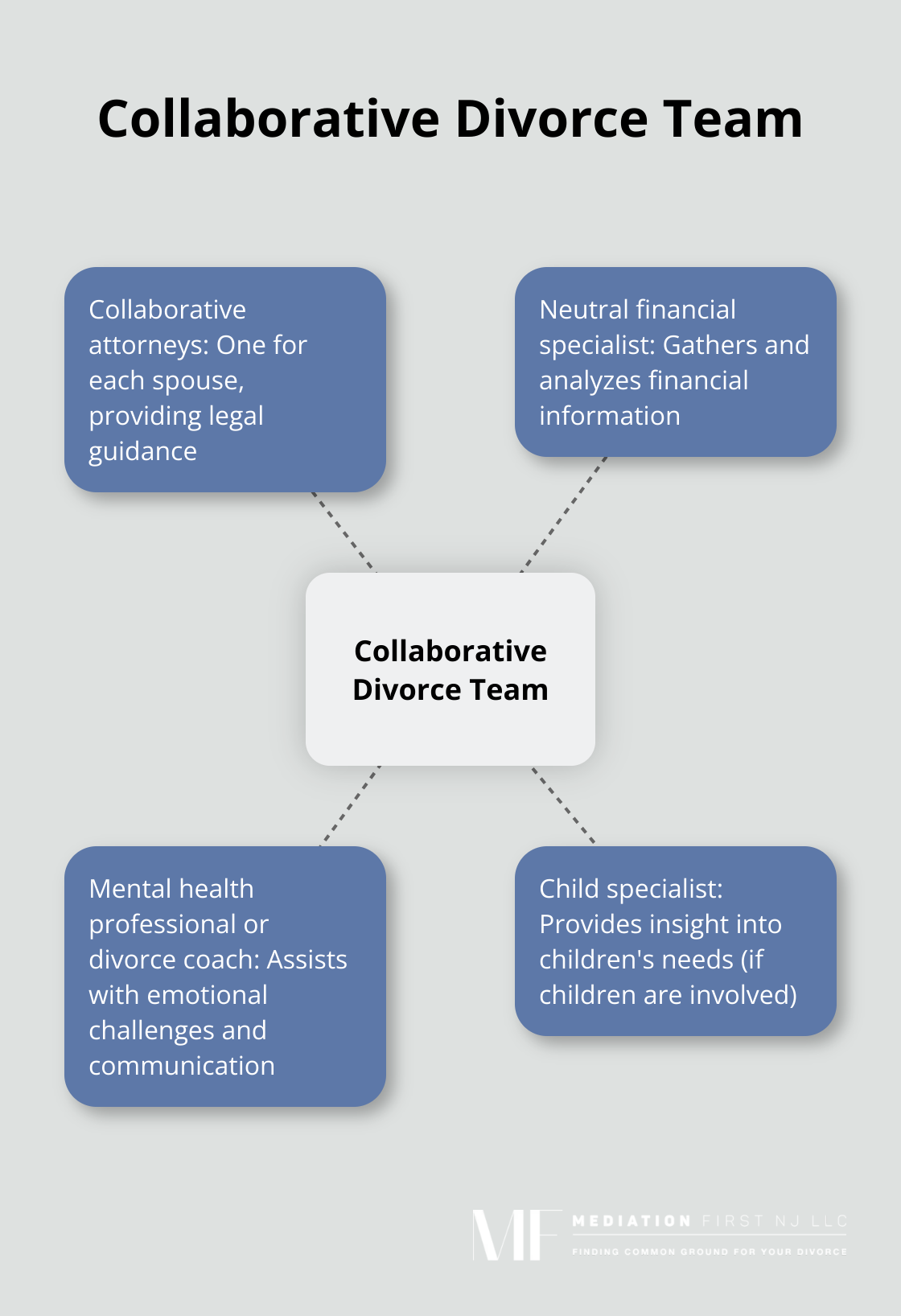
Each professional plays a specific role. Attorneys provide legal guidance, the financial professional gathers comprehensive financial information, and the mental health professional assists with emotional challenges and communication issues. This interdisciplinary approach ensures a comprehensive address of all divorce aspects.
Setting Goals and Expectations
After team assembly, the process begins with initial meetings to set goals and expectations. You and your spouse outline your hopes for the collaborative process. These meetings focus not just on asset division, but on creating a vision for your post-divorce life.
During these initial meetings, you review and sign a participation agreement. This document (a cornerstone of the collaborative process) commits both parties to collaboration and outlines negotiation ground rules.
Negotiation and Problem-Solving
The core of the collaborative process lies in negotiation and problem-solving sessions. These meetings involve open discussions about all relevant issues, from property division to child custody arrangements. Unlike traditional litigation’s adversarial stance, collaborative sessions focus on finding mutually beneficial solutions.
Financial transparency stands as a key element during these sessions. The neutral financial specialist gathers and analyzes all financial information, ensuring both parties clearly understand their financial situation. This transparency often leads to more equitable and sustainable financial agreements.
For couples with children, the child specialist provides vital input in these sessions. They offer insight into the children’s needs and help develop parenting plans that prioritize the children’s well-being. This child-focused approach often results in more effective co-parenting arrangements post-divorce.
Finalizing the Agreement
As negotiations progress, the collaborative team works together to draft a comprehensive settlement agreement. This document outlines all decisions made during the process (from asset division to parenting schedules).
Once finalized, both spouses and their attorneys review the agreement to ensure it accurately reflects the negotiated terms. If adjustments are needed, they occur collaboratively.
The final step involves submission of the agreement to the court for approval. In most cases, this process proceeds smoothly, as courts generally respect agreements reached through collaborative methods.
While structured, the collaborative divorce process remains flexible enough to adapt to each couple’s unique situation. This approach often leads to more satisfying outcomes and smoother transitions for families navigating divorce.
As we move forward, let’s explore the key advantages that make collaborative divorce an attractive option for many couples seeking a more amicable separation.
Why Choose Collaborative Divorce
Emotional Well-being Takes Priority
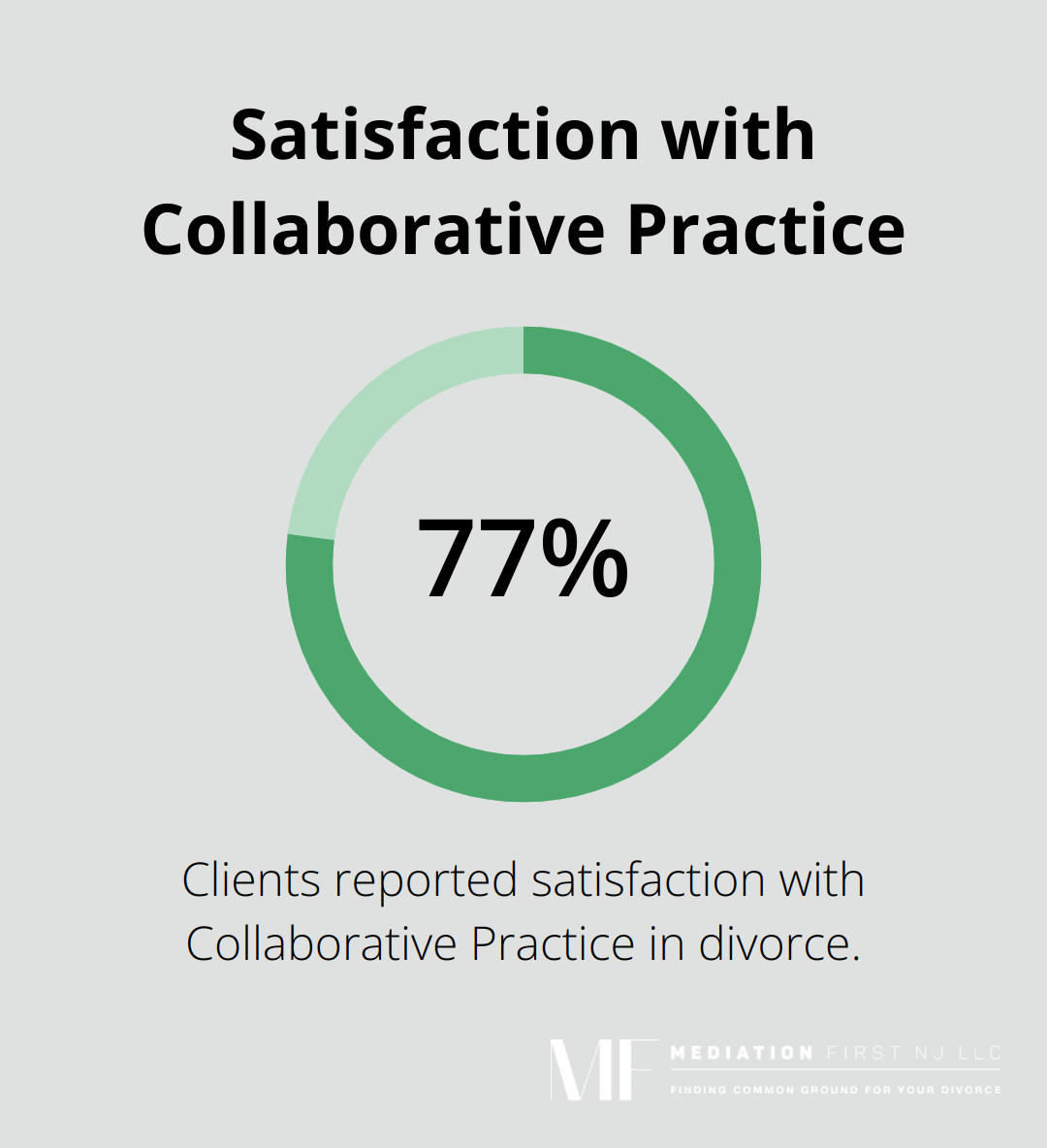
Collaborative divorce puts the emotional health of all parties at the forefront. A study revealed that satisfaction with the process is fairly high across different divorce options, with Collaborative Practice showing 77% satisfaction. This respectful environment promotes open communication and reduces the potential for long-term resentment.
Couples who opt for collaborative divorce often experience less stress and anxiety compared to those who choose litigation. The focus on problem-solving (rather than blame) maintains a more positive atmosphere, even during challenging discussions.
Financial Benefits That Count
Cost-effectiveness stands out as a major advantage of collaborative divorce. Collaborative divorce is generally more affordable than traditional litigation, as parties can complete the discovery process more efficiently. This significant saving results from reduced court fees, fewer billable hours, and the elimination of costly expert witnesses (often required in court battles).
The transparent nature of collaborative divorce allows for more efficient financial planning. With the assistance of a neutral financial specialist, couples can make informed decisions about asset division and support arrangements, potentially avoiding costly mistakes that could impact their long-term financial stability.
Customized Solutions for Unique Family Needs
Divorce doesn’t follow a one-size-fits-all approach, and collaborative law recognizes this fact. Unlike court-imposed decisions, collaborative divorce allows for creative problem-solving that addresses the specific needs of each family.
For example, a couple with a family business might develop a unique co-ownership arrangement that wouldn’t be possible through traditional litigation. Parents with children who have special needs can work with child specialists to create highly customized parenting plans.
This flexibility extends to all aspects of the divorce agreement, from property division to spousal support. The result? Solutions that truly work for your family’s situation, rather than cookie-cutter judgments based on legal precedents.
Preservation of Co-Parenting Relationships
Collaborative divorce fosters a cooperative environment that can lead to better co-parenting relationships post-divorce. The process encourages parents to work together to create parenting plans that prioritize their children’s well-being.
This approach contrasts sharply with the adversarial nature of traditional litigation, which can exacerbate conflict and make future co-parenting more challenging. By choosing collaboration, parents set a positive tone for future interactions, which proves crucial for children’s adjustment to the new family dynamic.
Confidentiality and Privacy
Collaborative divorce offers a level of privacy that traditional court proceedings cannot match. Unlike court hearings, which become part of the public record, collaborative sessions remain confidential. This privacy can protect sensitive personal and financial information from public scrutiny.
For high-profile individuals or those with complex financial situations, this confidentiality can prove invaluable. It allows for open and honest discussions without the fear of public exposure, leading to more comprehensive and satisfactory agreements.
Final Thoughts
Collaborative divorce solutions transform the process of ending a marriage. This approach prioritizes respect, open communication, and mutual problem-solving, which leads to more satisfying outcomes for all parties involved. The reduction of conflict and emotional stress creates a foundation for healthier post-divorce relationships (particularly beneficial when children are involved).
The financial advantages of collaborative divorce are substantial. Lower costs compared to traditional litigation and more efficient use of resources allow couples to preserve their assets for their future. The customized solutions developed through collaboration address the unique needs of each family, resulting in agreements that truly work for everyone involved.
Mediation First NJ LLC specializes in guiding couples through the collaborative divorce process. Our team of experienced mediators helps families in New Jersey navigate the complexities of divorce while fostering a respectful and constructive environment. We encourage you to explore collaborative solutions as you contemplate your options for divorce.