

Custody mediation is stressful enough without worrying about what to wear. Yet your clothing choice matters more than you might think-it shapes how the mediator and the other parent perceive you from the moment you walk in.
At Mediation First NJ LLC, we’ve seen firsthand how dressing appropriately can strengthen your position and demonstrate your commitment to finding solutions for your children. The right outfit signals respect for the process and helps you stay focused on what matters most.
Why Your Appearance Matters in the Mediation Room
People form judgments within seconds of meeting someone. In custody mediation, those initial seconds shape how the mediator evaluates your credibility and how the other parent responds to your proposals. Research on nonverbal communication shows that appearance influences how others perceive your reliability and sincerity. When you walk into a mediation session dressed professionally, you communicate that you take the process seriously and respect everyone involved. Neutral colors like navy, gray, and black work best because they keep attention on your words rather than your outfit.
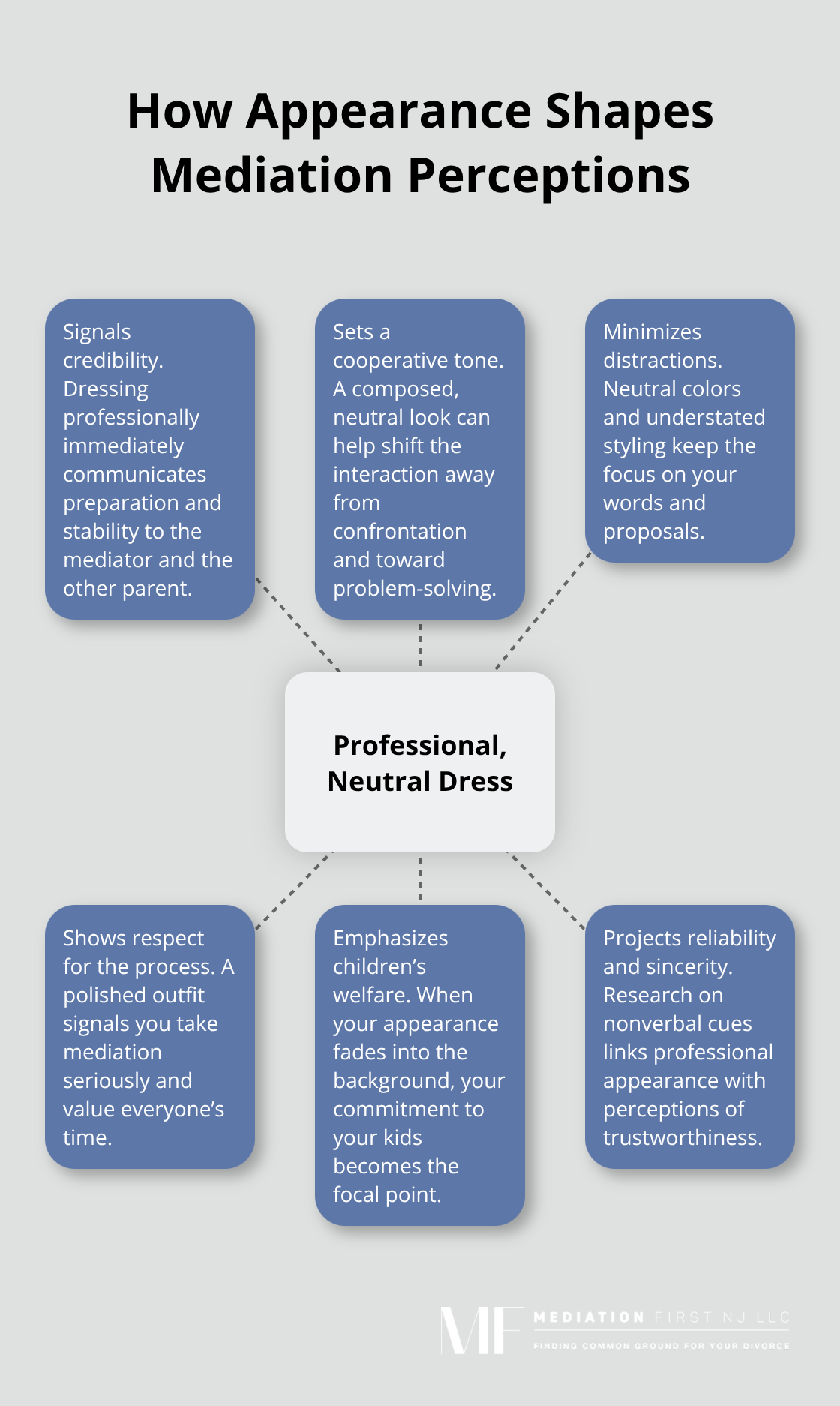
Avoid anything with bold patterns, loud logos, or statement jewelry because these elements distract from your message and can make you appear less composed. The goal isn’t to impress anyone with fashion choices-it’s to fade into the background so your commitment to your children’s welfare becomes the focal point.
Dressing for Credibility
Your clothing directly influences how mediators and the other parent perceive your stability as a co-parent. When you arrive in business casual or business formal attire, you signal that you’ve prepared for this conversation and that you understand its importance. Mediators work with dozens of parents each year, and they notice the difference between someone who treated mediation like a routine appointment and someone who recognized it as a turning point. Clean, well-fitted clothing without wrinkles or stains demonstrates basic respect for yourself and the process. Worn-out jeans, t-shirts with graphics, or anything that looks hastily thrown together sends the opposite message-that you’re not fully invested in finding solutions. The other parent will also form opinions based on your appearance, and if they see you’ve made an effort, it can shift the tone of the entire conversation toward cooperation rather than confrontation.
What Neutral Dressing Actually Accomplishes
Neutral clothing isn’t bland or boring; it’s strategic. A navy blazer over a white or cream shirt, paired with gray slacks or a modest skirt, projects competence without appearing aggressive or overly formal. For men, a collared shirt with dress pants and a blazer works well. For women, avoid plunging necklines, short hems, and anything sheer-these choices distract from your credibility. Closed-toe shoes in black, navy, or brown keep your look grounded and professional. Minimal jewelry (perhaps a watch, simple earrings, and a thin bracelet) allows people to focus on what you’re saying rather than what you’re wearing. This approach isn’t about erasing your personality; it’s about ensuring your appearance supports your position rather than undermining it. When you control visual distractions, you control the conversation.
What to Wear to Custody Mediation
Business Casual Sets the Standard
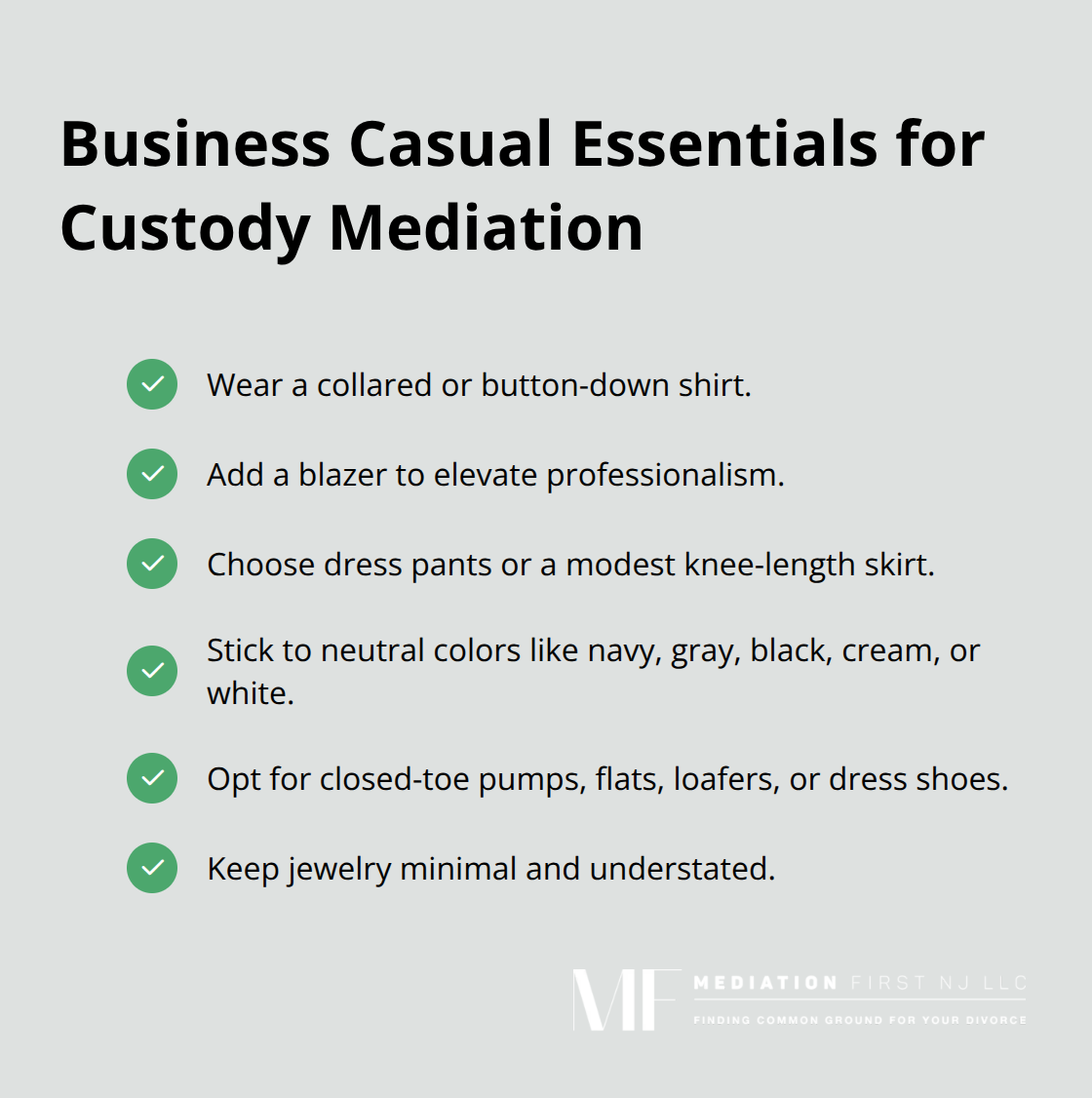
Business casual dress code for mediation is the minimum standard for custody mediation, and anything less signals that you haven’t prepared. Collared shirts, blazers, dress pants, or modest skirts in neutral colors work well. For men, a button-down shirt with dress pants and a blazer strikes the right balance between approachable and serious. For women, a blazer paired with slacks or a knee-length skirt projects competence without appearing stiff or unapproachable. Avoid t-shirts, graphic prints, jeans, and anything that looks like weekend wear.
Mediators notice immediately when someone has made an effort versus someone who didn’t think the session warranted preparation.
Neutral Colors Keep Focus on Your Words
Neutral palettes matter significantly: navy, gray, charcoal, black, cream, and white keep visual focus on your words and proposals rather than your outfit. These colors also photograph well if your mediation involves virtual sessions or if documents are recorded. Skip anything with bold patterns, large logos, or busy designs because they create visual noise and can make you appear less stable or thoughtful. A single pattern, like a subtle stripe or small check, works fine if the overall effect remains understated.
Jewelry and Footwear Communicate Stability
Mediators and the other parent notice jewelry and footwear details. Wear minimal jewelry: a watch, stud earrings, a thin bracelet, or a single pendant. Flashy pieces, dangling earrings, or multiple rings suggest you’re focused on appearance rather than the serious work ahead. Shoes must be closed-toe and professional-simple pumps, flats, loafers, or dress shoes in black, navy, or brown work best. Avoid anything with very high heels because they can make you appear uncomfortable and distracted. Mediation sessions often run two to three hours, so comfort matters more than style.
Fit and Grooming Complete Your Presentation
Wear clothing that fits well and allows you to sit for extended periods without tugging or adjusting. Tight clothing creates visual distraction and makes you appear tense; loose clothing can read as disheveled. Your hair should be neat and groomed, and your nails should be clean with neutral or no polish. If you have tattoos or piercings, cover the tattoos and remove visible piercings before the session. These choices aren’t about judging personal style; they’re about controlling how the mediator and other parent perceive your stability and readiness to co-parent effectively. Once you’ve addressed your appearance, you can focus on the practical preparation that shapes mediation outcomes.
What Not to Wear to Custody Mediation
Knowing what to avoid matters as much as knowing what to wear. Casual clothing signals that you haven’t prepared, and certain choices actively undermine your credibility in the mediation room. Jeans, t-shirts, hoodies, and athletic wear have no place in custody mediation, regardless of how clean or well-maintained they are. These items tell the mediator and the other parent that you’re treating this session like a casual coffee meeting rather than a serious conversation about your children’s future. Worn-out sneakers, flip-flops, and beach sandals create the same problem. Your footwear should be professional and closed-toe because open-toed shoes suggest informality. Similarly, avoid anything that appears stained, wrinkled, or damaged. A single visible stain or rip signals carelessness, and mediators interpret carelessness as a lack of respect for the process. Clothing that doesn’t fit properly also works against you. If garments are too tight, you’ll appear uncomfortable and fidgety; if they’re too loose, you’ll look disheveled and unprepared. The fit should be snug enough to look intentional but loose enough to allow you to sit comfortably for two to three hours without constant adjustment.
Avoid Revealing and Aggressive Styling
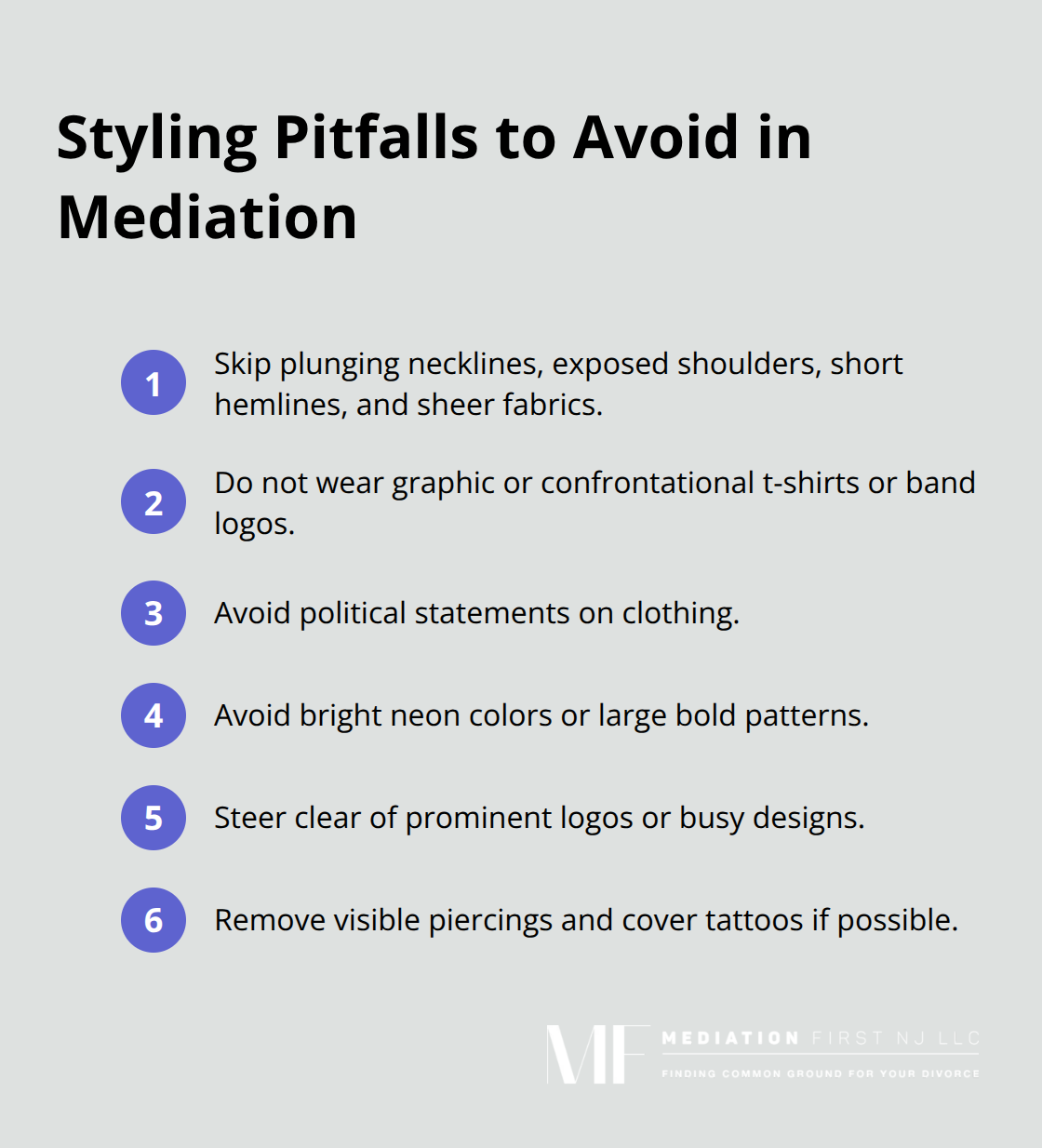
Revealing clothing and aggressive styling choices actively damage your position in mediation. Plunging necklines, exposed shoulders, short hemlines, sheer fabrics, and anything that shows undergarments distract from your words and proposals. Mediators report that parents who dress provocatively or aggressively appear less stable and less focused on their children’s needs. Similarly, skip anything that could intimidate or provoke the other parent. This includes graphic t-shirts with confrontational messages, band logos, or political statements. Avoid clothing in bright neon colors, large bold patterns, or anything with prominent logos because these elements create visual noise and make you appear less composed.
Control Visual Distractions Through Accessories
Excessive jewelry, long artificial nails in bright colors, and elaborate hairstyles work against you for the same reason as bold patterns and logos. Tattoos should be covered if possible, and visible piercings should be removed. These choices aren’t about judgment; they’re about controlling what the mediator and other parent focus on during the session. Stud earrings, a simple watch, and a thin bracelet represent the appropriate level of accessory detail. Dangling earrings, multiple rings, and statement necklaces pull attention away from your proposals and toward your styling choices. Your appearance should fade into the background so your commitment to your children becomes the focal point of attention.
Final Thoughts
Your appearance in custody mediation shapes how the mediator and the other parent respond to your proposals. When you dress professionally in neutral business casual attire, you communicate that you’ve prepared for this conversation and that you respect the process. Clean, well-fitted clothing in neutral colors, minimal jewelry, and professional closed-toe shoes accomplish this goal without drawing attention away from your words.
How to dress for custody mediation comes down to one principle: let your appearance support your credibility rather than undermine it. Avoid casual wear, revealing styles, and anything with bold patterns or logos because these choices signal that you haven’t fully invested in finding solutions. Your grooming matters too-neat hair, clean nails, and covered tattoos demonstrate basic respect for yourself and everyone in the room.
Preparing your appearance forms part of your overall mediation strategy. When you walk in looking composed and intentional, you set a cooperative tone that can shift the entire conversation toward agreement rather than conflict. We at Mediation First NJ LLC help families navigate these transitions by fostering a respectful environment where both parties communicate effectively and reach mutually acceptable agreements.