

Divorce is a challenging process, and choosing the right approach can make a significant difference. At Mediation First NJ LLC, we often see couples grappling with the decision between traditional litigation and mediation.
This guide explores the divorce mediation pros and cons, helping you make an informed choice for your unique situation. We’ll examine the potential benefits and drawbacks, providing a balanced view of this alternative dispute resolution method.
What Is Divorce Mediation?
Divorce mediation offers a collaborative approach to resolving marital disputes. This process involves a neutral third party who facilitates discussions between separating couples. At Mediation First NJ LLC, we witness the transformative power of this method for many couples navigating divorce.
The Mediation Process
Mediation typically consists of several sessions where both parties meet with a mediator. These meetings focus on:
- Identifying key issues
- Gathering relevant information
- Negotiating mutually acceptable solutions
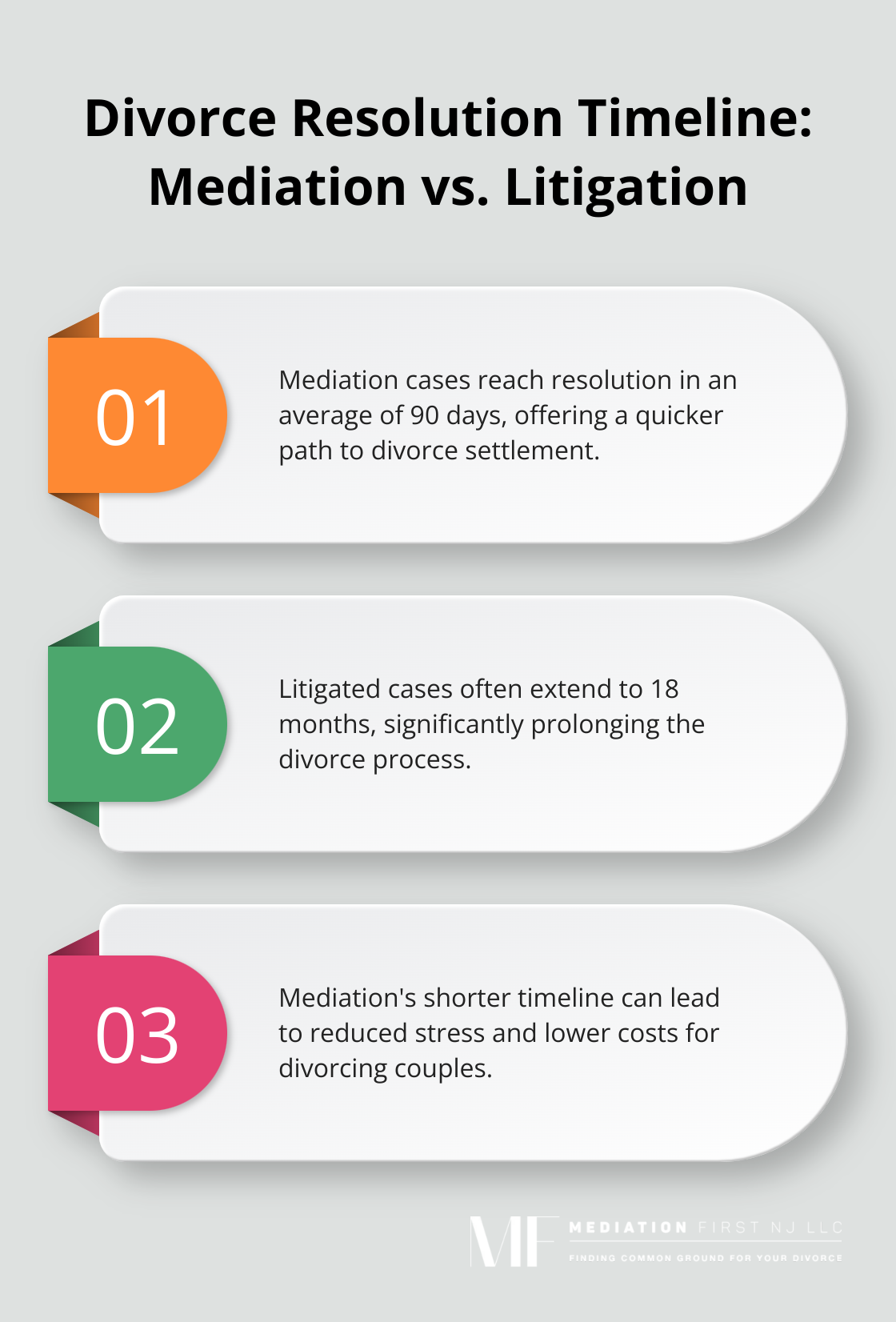
Unlike formal court proceedings, mediation creates a more relaxed atmosphere for open dialogue. The American Bar Association reports that mediation cases reach resolution in an average of 90 days, while litigated cases often stretch to 18 months. This substantial time difference often results in reduced stress and lower costs for divorcing couples.
The Mediator’s Role
Mediators serve as facilitators, not decision-makers. They help couples communicate effectively and explore potential solutions. Mediators provide information about legal processes and typical outcomes but do not offer legal advice. Many couples choose to consult with individual attorneys alongside the mediation process for comprehensive legal guidance.
Mediation vs. Litigation
Traditional litigation often creates an adversarial environment, pitting spouses against each other in court. This approach can escalate conflict and lead to protracted, expensive legal battles. In contrast, mediation promotes cooperation and problem-solving.
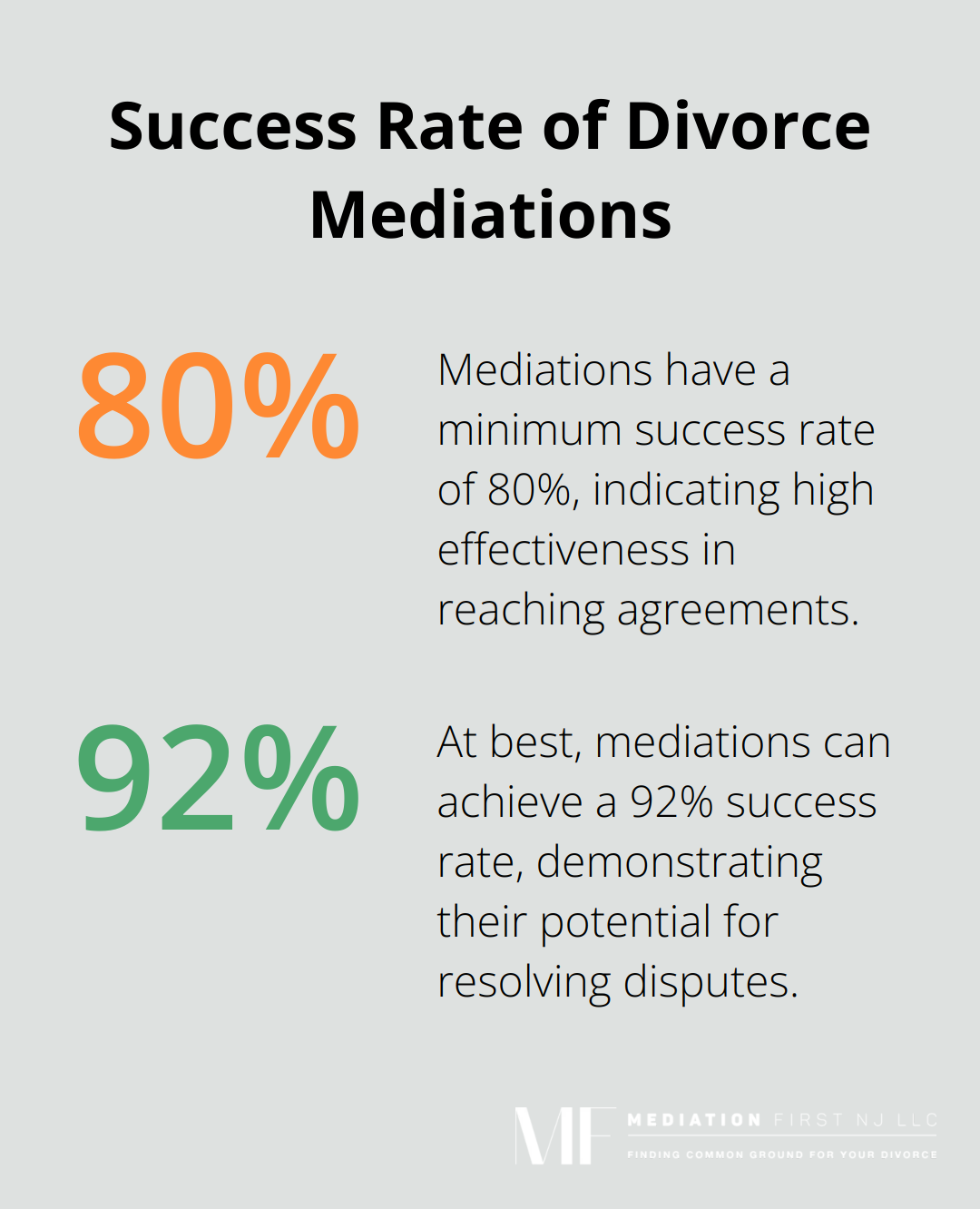
Mediations tend to settle with a success rate of 80-92 percent, making them an effective means of reaching an agreement. This higher success rate often translates to fewer post-divorce conflicts and improved long-term outcomes for families.
Flexibility and Convenience
Mediation offers greater flexibility in scheduling compared to traditional court proceedings. While court dates adhere to the judicial system’s calendar, mediation sessions can accommodate the schedules of both parties. This flexibility proves particularly beneficial for couples juggling busy work schedules or childcare responsibilities.
As we move forward, let’s explore the specific advantages that make divorce mediation an attractive option for many couples seeking a more amicable and efficient resolution to their marital dissolution.
Why Choose Divorce Mediation?
Financial Advantages
Divorce mediation offers a collaborative, cost-effective alternative to traditional litigation. Collaborative law cases tend to be less expensive for both parties than cases handled without collaborative law. These savings result from reduced attorney fees, fewer court appearances, and a more streamlined process.
Time Efficiency
The mediation process moves much faster than traditional court proceedings. While litigated divorces can extend for months (or even years), mediated divorces often conclude in a matter of weeks. This efficiency allows couples to move forward with their lives more quickly, reducing the emotional toll of a prolonged divorce process.
Empowerment and Control
Mediation empowers both parties to actively participate in decision-making. Unlike court proceedings, where a judge makes final decisions, mediation allows parties to craft solutions that work best for their unique situation. This control often leads to more satisfactory outcomes and better compliance with agreements post-divorce.
Mediation also provides a forum for open communication. Couples can express their concerns and priorities directly, which fosters understanding and paves the way for more constructive post-divorce relationships. This proves particularly beneficial when children are involved, as it sets a foundation for effective co-parenting.
Confidentiality and Privacy
Unlike court proceedings (which are matters of public record), mediation sessions remain private and confidential. This privacy can be particularly valuable for couples who wish to keep their personal matters out of the public eye or protect sensitive information about their finances or family dynamics.
The confidential nature of mediation also encourages honest and open communication between parties. This transparency can lead to more comprehensive and fair agreements, as all issues are addressed without fear of public disclosure.
Couples who choose mediation often report feeling more satisfied with both the process and the outcome of their divorce. The cooperative and problem-solving approach of mediation can help reduce the emotional stress associated with divorce and set the stage for more positive future interactions.
As we explore the potential drawbacks of divorce mediation in the next section, it’s important to consider how these advantages might apply to your specific situation.
Challenges in Divorce Mediation
High-Conflict Situations
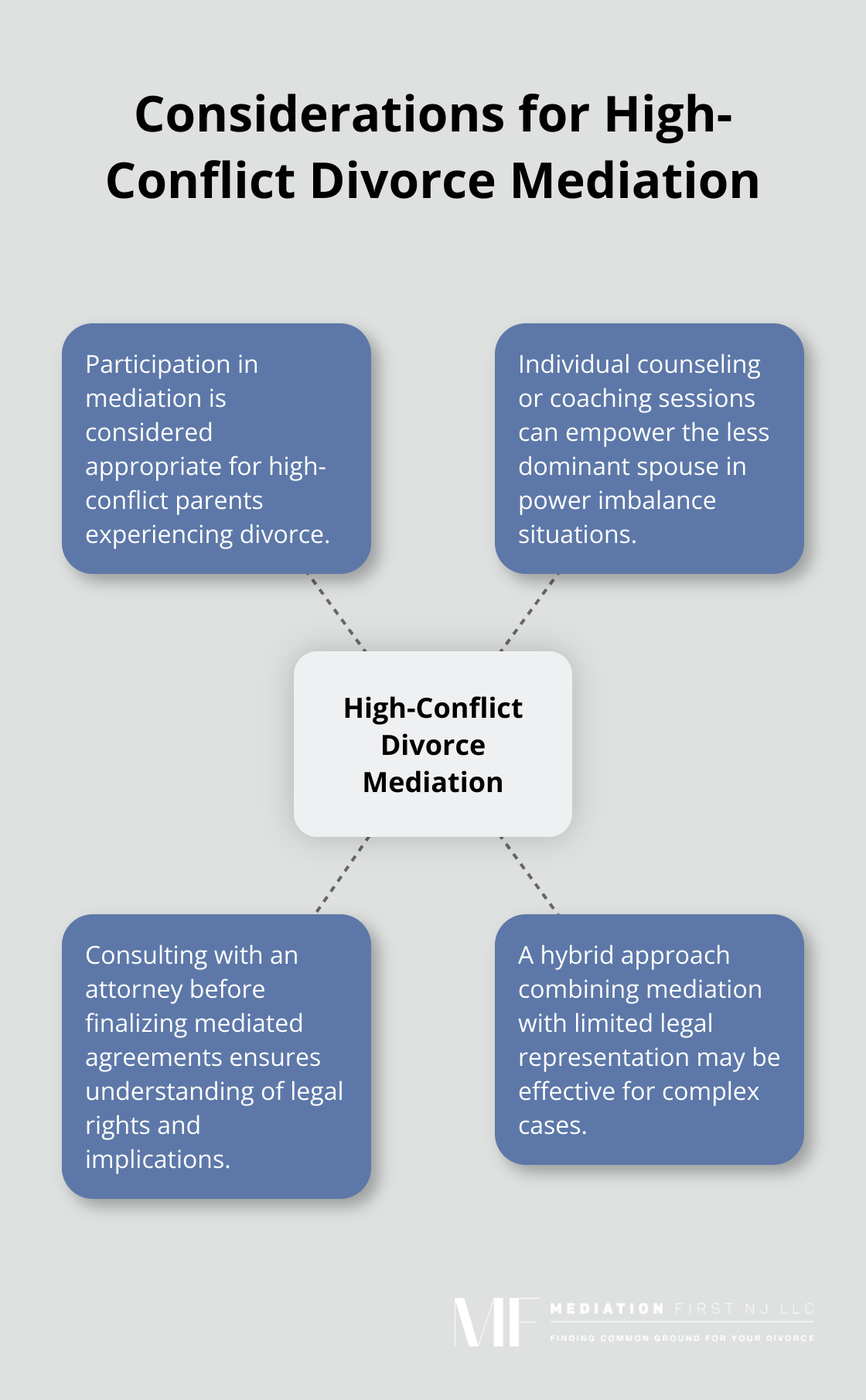
Divorce mediation works best when both parties cooperate. However, high-conflict divorces present significant obstacles. Participation in adversarial adjudication and divorce mediation is considered an appropriate option for high-conflict parents experiencing divorce. This highlights the need to assess your situation realistically before you commit to mediation.
Power Imbalances
Power dynamics significantly influence negotiations. Unfair agreements can result when one spouse possesses more financial knowledge or emotional leverage. Within divorce mediation, a mediator who neglects to frame for power imbalances between a man and woman may exacerbate the lower bargaining power of one party. To address this issue, we recommend individual counseling or coaching sessions alongside mediation. These sessions can empower the less dominant spouse.
Legal Complexities
Spouses might overlook important legal rights or implications without individual legal representation. To mitigate this risk, consult with an attorney before you finalize any mediated agreement. This step ensures you fully understand your rights and the long-term implications of your decisions.
Enforceability Concerns
Mediated agreements do not automatically become legally binding. Courts must formalize these agreements into court orders to make them enforceable. To avoid this problem, have a lawyer review your mediated agreement and properly file it with the court.
Limited Scope
Mediation may not address all aspects of complex divorces. Issues such as hidden assets, complex business valuations, or intricate tax implications might require additional expert involvement. In these cases, a hybrid approach (combining mediation with limited legal representation) might prove more effective.
Final Thoughts
Divorce mediation offers a unique approach to resolving marital disputes, with distinct advantages and potential challenges. The pros and cons of divorce mediation underscore the importance of careful consideration before choosing this path. Your individual circumstances play a crucial role in determining whether mediation suits your divorce.
Mediation often proves more cost-effective and time-efficient than traditional litigation. It empowers couples to maintain control over their decisions, fostering a collaborative environment that can lead to more satisfactory outcomes. However, mediation may not suit all situations (high-conflict cases, power imbalances between spouses, and complex legal issues can present significant hurdles).
We strongly recommend seeking professional advice before making a decision. At Mediation First NJ LLC, we specialize in guiding couples through the mediation process, helping them navigate the complexities of divorce while prioritizing amicable resolutions. Our experienced mediators can assess your situation and provide insights into whether mediation aligns with your needs and goals.